
- World
- Feb 14
BNP secures landslide victory in Bangladesh elections
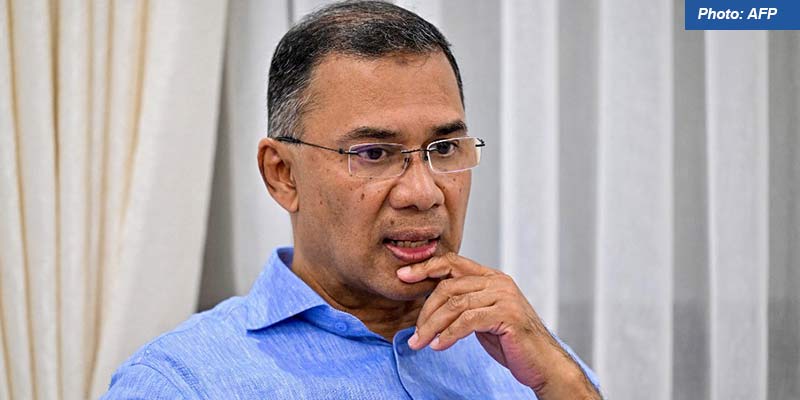
• The Bangladesh Nationalist Party (BNP) secured a sweeping victory with more than two-thirds majority in the landmark parliamentary elections in Bangladesh.
• The 13th Parliamentary elections assumed significance as they were held after a period of tumultuous political vacuum, instability and fragile security situation.
• The student-led protests brought down the 15-year rule of Sheikh Hasina in August 2024.
• The voting for the general election was held on February 12.
• More than 2,000 candidates, including several independents, were in the fray for 299 of the 300 parliamentary constituencies that went to the polls.
• The election was seen as a direct contest between the BNP and its former ally, Jamaat-e-Islami, which led an 11-party alliance.
• Jamaat’s key ally, the National Citizen Party, formed by the Students Against Discrimination, which led the mass protests against Hasina in August 2024, failed to convert its initial popularity into votes and won just six seats. Islami Andolon Bangladesh won one seat, and independent candidates seven.
• Tarique Rahman’s BNP alliance won 212 seats, while right-wing Jamaat-e-Islami secured 77 seats.
• BNP’s top leader Tarique Rahman is set to become the Prime Minister. He will replace the interim government chief Nobel laureate Muhammad Yunus.
• Prime Minister Narendra Modi spoke to Rahman and congratulated him on BNP’s spectacular victory.
• India-Bangladesh relations witnessed a severe strain after the collapse of the Hasina-led government.
• BNP was in power earlier between 2001 and 2006 when Jamaat was its crucial partner, with two of its leaders serving as ministers.
• The last male prime minister was Kazi Zafar Ahmed in 1988. Since 1990, the government has been led by two women, Khaleda Zia and Sheikh Hasina.
Who is Tarique Rahman?
• The 60-year-old is the eldest son of former Prime Minister Khaleda Zia, who died in December 2025, and former President Ziaur Rahman, the founder of the BNP.
• Rahman was born on November 20, 1965, in Dhaka. As a boy, he witnessed Bangladesh’s liberation struggle in 1971.
• He was arrested along with his mother and brother, only to be released on December 16, 1971, when Bangladesh gained independence from Pakistan.
• Ziaur Rahman was assassinated during a military coup in 1981, following which Khaleda Zia entered politics. She first became the Head of State in 1991.
He moved to London in 2008 for medical treatment and remained there while facing multiple criminal cases at home. He was convicted in absentia on charges that included a case linked to an alleged plot to assassinate Sheikh Hasina.
• Those rulings were overturned after Hasina was removed from power in 2024, clearing the legal barriers to his return.
• Rahman has served as the party’s acting chairman since his mother’s imprisonment in 2018.
• Rahman returned to his country after 17 years in exile.
• He contested from two constituencies — Dhaka-17 and Bogura-6, both of which he won.