
- World
- Feb 19
Asia-Pacific at risk of missing Sustainable Development Goals (SDGs)
• At the current pace, the Asia-Pacific region is set to miss a staggering 103 out of 117 measurable Sustainable Development Goals targets by 2030.
• The Asia and the Pacific SDG Progress Report 2026, issued by the United Nations Economic and Social Commission for Asia and the Pacific (ESCAP), also reveals a picture of deeply imbalanced development in the region.
• Adopted by world leaders in 2015, the goals focus on ending extreme poverty and hunger, ensuring access to clean water and sanitation, and providing quality universal education, among other targets, by 2030.
Sustainable Development Goals (SDGs)
• The Sustainable Development Goals (SDGs) were adopted by all UN member states in 2015 as a universal call of action to end poverty, protect the planet and ensure that all people enjoy peace and prosperity by 2030.
• Also known as the Global Goals, the SDGs are a call to action to create a world where no one is left behind.
• It consists of 17 goals and 169 targets.
• The SDGs are the blueprint to achieve a better and more sustainable future for all. They address the global challenges we face.
• The SDGs are a call for action by all countries – poor, rich and middle-income – to promote prosperity while protecting the planet.
• They recognise that ending poverty must go hand-in-hand with strategies that build economic growth and address a range of social needs including education, health, social protection, and job opportunities, while tackling climate change and environmental protection.
• With only five years left until the 2030 deadline, the Asia-Pacific region is falling behind in its pursuit of the Sustainable Development Goals (SDGs).
Environmental backsliding
• Gains in health and well-being, and poverty reduction these past decades, are being overshadowed by severe environmental decline and widening inequalities.
• Greenhouse gas emissions continue to rise. The Red List Index, which measures species’ risk of extinction, shows accelerating biodiversity loss.
• Marine ecosystems are in “serious decline”, economic contribution of sustainable fisheries is shrinking, and freshwater ecosystems are under threat.
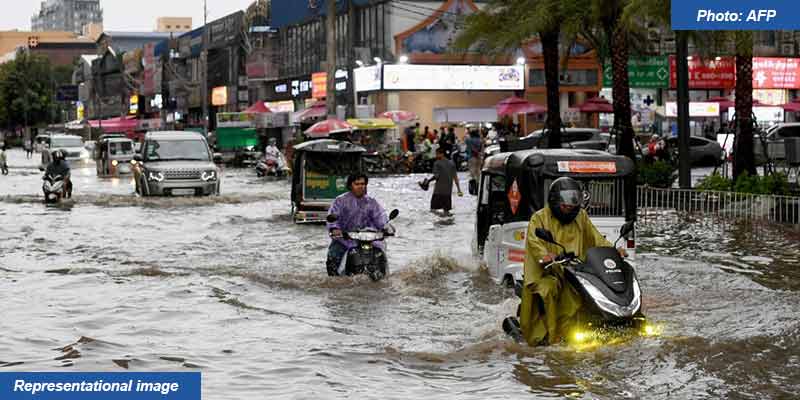
• Urban resilience also remains fragile. Although many countries have adopted disaster risk reduction strategies, indicators tracking the human and economic toll of disasters are worsening, exposing what the report describes as a “dangerous gap between planning and real-world resilience”.
• Evidence shows setbacks in ensuring equal access to education (SDG target 4.5) and compliance with labour rights (SDG target 8.8).
• Furthermore, insufficient data on gender equality (SDG 5) and peace, justice and strong institutions (SDG16), is obscuring policymakers’ understanding of how effectively the most vulnerable are being reached.
• Closing these gaps is essential for informed policymaking and accelerating progress towards the 2030 Agenda.
• In critical areas such as climate action, marine conservation and biodiversity, the situation is not just stalling but rapidly deteriorating.
• For cities and communities, persistent regression, including damage to critical infrastructure, underscores a dangerous gap between planning and resilience on the ground.
• There are areas of solid progress. The region continues to advance on industry, innovation and infrastructure (SDG 9), supported by near-universal mobile network coverage.
• Health outcomes have improved, with sustained reductions in maternal, neonatal and under-five mortality. Income poverty has fallen significantly over the past decades.
• Progress in reducing income poverty and expanding access to electricity are notable achievements for the region.
• Access to electricity is expanding rapidly and is on track to reach its target ahead of schedule.
• Data availability is improving. Today, 55 per cent of SDG indicators have enough data for progress assessment, placing Asia and the Pacific ahead of the rest of the world.
• However, inequality remains stubborn. Progress on income distribution is slow, labour income shares are declining and compliance with labour rights is regressing. Informal employment and youth job prospects remain pressing challenges.
• Education access has improved, but learning outcomes are slipping, with regression in minimum proficiency in reading and mathematics.
• The current development trajectory is unsustainable, and the window for corrective action is closing rapidly.