
- World
- Feb 21
Trump imposes 10% global tariff after Supreme Court setback
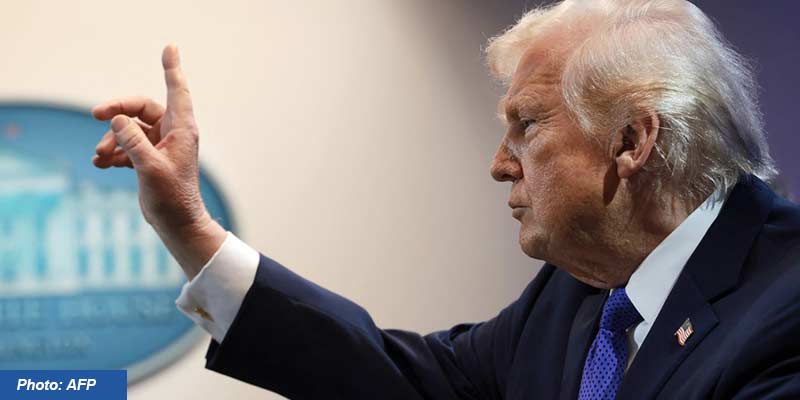
• The US Supreme Court struck down President Donald Trump’s sweeping tariffs that he pursued under a law meant for use in national emergencies in a ruling with major implications for the global economy.
What the court said on IEEPA?
• The 6-3 ruling upheld a lower court’s decision that Trump’s use of this 1977 law exceeded his authority.
• The justices ruled that the International Emergency Economic Powers Act (IEEPA) did not grant Trump the power he claimed to impose tariffs.
• IEEPA authorises the president to broadly regulate commerce after declaring a national emergency. Over the years, Presidents have turned to this law dozens of times, often to place sanctions on other countries. But Trump was the first to use it to implement tariffs.
• According to the ruling, only Congress has the power to impose tariffs during peacetime and that emergency economic legislation could not be used to justify an overarching tariff regime.
Proclamation imposing a temporary import duty
• Following the SC verdict, Trump imposed a 10 per cent global tariff on imports into the United States.
• Trump invoked his authority under section 122 of the Trade Act of 1974, which empowers the President to address certain fundamental international payment problems through surcharges and other special import restrictions.
• The proclamation imposes a 10 per cent ad valorem import duty on articles imported into the United States for a period of 150 days.
• The temporary import duty will take effect February 24.
• The White House said that the Supreme Court’s decision will not deter the President’s effort to reshape the long-distorted global trading system that has undermined the economic and national security of the country, and contributed to fundamental international payment problems.
How will it affect India?
• Under the trade deal, Washington would charge a reduced reciprocal tariff on New Delhi, lowering it from 25 per cent to 18 per cent.
• Shortly after the court verdict, Trump asserted that there is no change in the trade deal with India.