
- World
- Mar 01
Iran’s supreme leader Khamenei killed in ‘Operation Epic Fury’
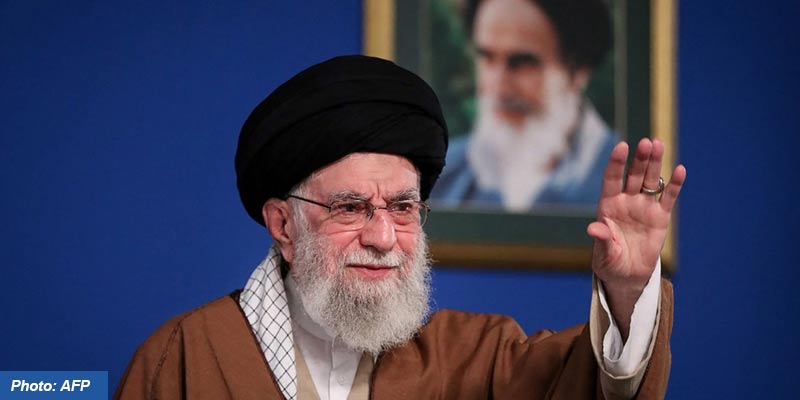
• Iran’s supreme leader Ayatollah Ali Khamenei was killed in a joint attack launched by Israel and the United States. He was 86.
• The military campaign was codenamed ‘Operation Epic Fury’.
• As the head of Iran since 1989, Khamenei was at the heart of the regime’s hardline positions on an Islamic society which persisted despite domestic discontent and protests.
The rise and fall of Khamenei
• Khamenei was born on April 19, 1939 in the northeastern city of Mashad.
• As a young man, he began advanced religious studies in the holy city of Qom under the tutelage of Iran’s future supreme leader Ayatollah Ruhollah Khomeini.
• Khamenei followed Khomeini into politics, joining the Islamic opposition during Shah Mohammad Reza Pahlavi’s reign.
• Launched by Khomeini in 1960, the Islamic opposition aimed to overthrow the Shah, who ruled as an absolute monarch.
• Khamenei was arrested and imprisoned multiple times for participating in anti-regime protests before the fall of the monarchy during the 1979 Iranian Revolution and Khomeini’s subsequent triumphant return to Iran from exile.
• When Khomeini became Iran’s new supreme leader, he appointed Khamenei to an influential position.
• In 1981, Khamenei was elected Iran’s President at the age of 41.
• He was re-elected in 1985, during the Iran-Iraq war.
• The day after Khomeini’s death on June 3, 1989, Khamenei was appointed as Iran’s supreme leader.
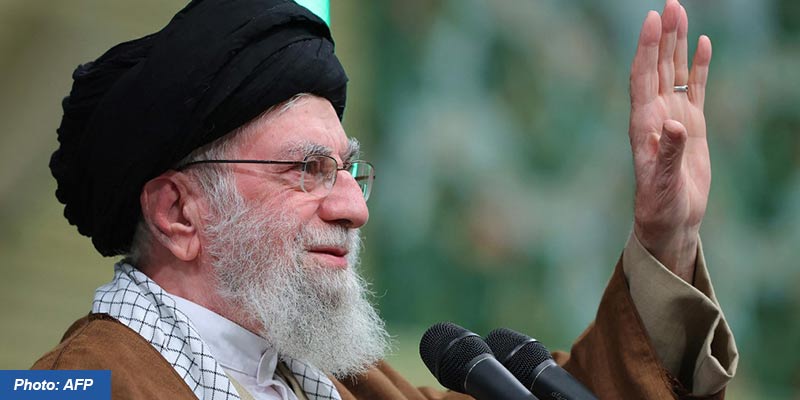
• Khamenei managed to maintain his grip on power with suppressions of street protests, including the 1999 student protest, the Green Movement against the controversial 2009 re-election of President Mahmoud Ahmadinejad, and protests against rising prices in 2017 and 2019.
• He took advantage of the balance of power within the regime and began to use Iran’s security forces, including the Revolutionary Guards, to implement his policies.
• He formed a close relationship with General Qasem Soleimani, who was considered Khamenei’s second in command until he was assassinated by a US drone strike in January 2020.
• In September 2022, a massive protest movement was sparked by the death of Mahsa Amini, a 22-year-old woman. Amini was arrested by Iran’s “morality police” in Tehran. She fell into a coma shortly after collapsing at a detention centre, and died three days later.
• Accusations from the West and Israel that Iran was secretly developing its own nuclear weapon were denied by Tehran.
• Iran spent decades in building a network of regional alliances and proxy militia across the Middle East that accepted Tehran’s leadership and shared its vision of fighting what they called Western imperialism.
• This ‘Axis of Resistance’, as it was collectively called, consists of groups such as Hezbollah in Lebanon, the Popular Mobilisation Forces (PMF) in Iraq, Houthi militants in Yemen, and Hamas in Gaza.
• These groups shared Iran’s opposition to Israel and the US, despite their differing religious/political ideologies.
• For decades, Iran funded and armed these nations to deter attacks on their own soil.
• A 12-day war broke out in June 2025, when Israeli strikes targeted hundreds of military and nuclear sites in Iran, killing high-ranking Iranian officials and nuclear scientists.
• After the US joined the fray, launching strikes on targets in central Iran, all sides accepted a ceasefire deal imposed by US President Donald Trump.
• Khamenei’s death opens a period of deep uncertainty for Iran.