
- World
- Mar 09
IUCN condemn attack at Upemba National Park
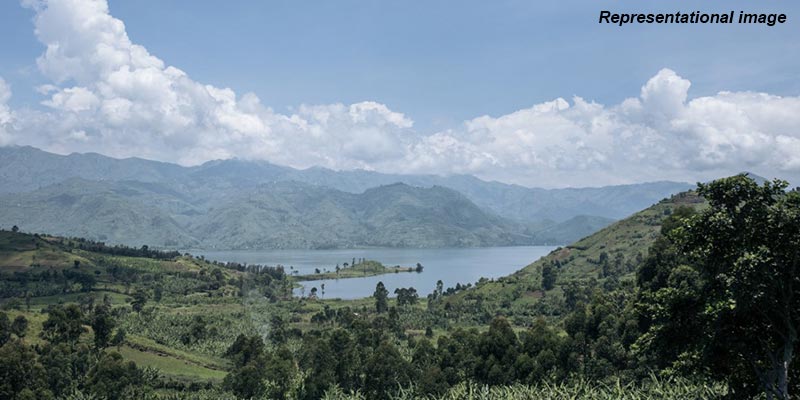
• The International Union for Conservation of Nature (IUCN) condemned the armed attack that took place at the headquarters of Upemba National Park in the Democratic Republic of the Congo on March 3.
• Five park staff members lost their lives in the attack and significant damage was inflicted on the station’s infrastructure.
• The assault took place when Mayi-Mayi militia fighters stormed the park’s headquarters at Lusinga.
Upemba National Park
• Established by royal decree in May 1939, Upemba National Park (UNP) is one of Africa’s oldest national parks.
• It stretches across southeastern Congo, at the intersection of three provinces — Lualaba, Haut-Katanga, and Haut-Lomami.
• At the heart of Africa, UNP shelters an exceptional mosaic of wetlands that connect directly to the greater Congo Basin, one of the planet’s most important ecological engines.
• Within this system, the Lufira Basin stands out for its international recognition as a Ramsar Site, underscoring its global importance as a wetland of international significance.
• Covering a total area of 12,752 sqkm, the park consists of a core protected zone of 9,984 sqkm, an annex zone of 2,768 sqkm, and two hunting reserves — Lubudi-Sampwe and Bena-Mulumbu.
• Upemba is a crucial water reservoir, hosting the sources of numerous rivers, including Kalume Ngongo, Nzenze, and Munte — renowned for its spectacular waterfall.
• The Kamalondo Depression is home to over 80 interconnected lakes, among them Upemba, Mulenda, Kabamba, and Kayumba, all rich in endemic fish species.
International Union for Conservation of Nature (IUCN)
• The International Union for Conservation of Nature (IUCN) was established on October 5, 1948 in the French town of Fontainebleau.
• As the first global environmental union, it brought together governments and civil society with a shared goal to protect nature.
• It provides public, private and non-governmental organisations with the knowledge and tools that enable human progress, economic development and nature conservation to take place together.
• IUCN has evolved into the world’s largest and most diverse environmental network. It harnesses the experience, resources and reach of its more than 1,400 Member organisations and the input of 17,000 experts.
• IUCN's headquarters is situated in Gland, Switzerland.
• IUCN is the global authority on the status of the natural world and the measures needed to safeguard it.