
- World
- Mar 14
NASA gears up for launch of Artemis 2 on April 1
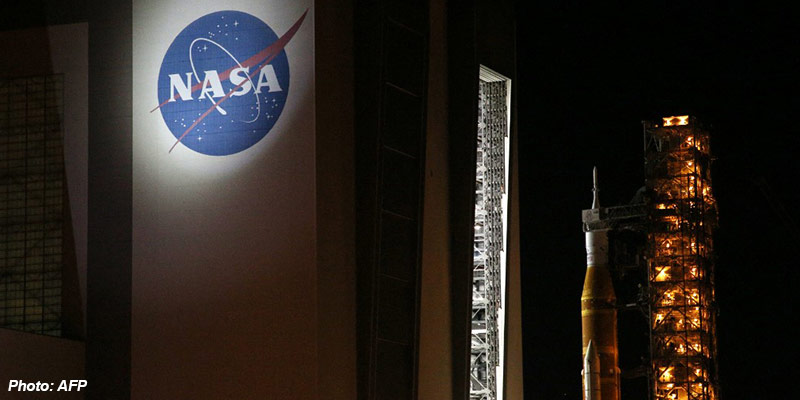
• NASA announced that the launch of Artemis 2 could come as soon as April 1.
• The Artemis 2 mission is meant to be the first flyby of the Moon in more than half a century.
• The 10-day flight will test NASA’s foundational human deep space exploration capabilities.
• NASA completed the Artemis II Flight Readiness Review on March 12.
• The first launch window would be April 1, with several others available in the following days.
Why is this programme called Artemis?
• The first missions to take astronauts to the Moon were called the Apollo Programme.
• The first astronauts landed on the Moon in 1969.
• Artemis is Apollo’s twin sister and the Goddess of the Moon in Greek mythology.
Artemis 1
• Artemis 1 was launched on November 16, 2022.
• The 32-story Space Launch System (SLS) rocket surged off the launch pad to send its Orion capsule on a three-week test journey around the Moon and back without astronauts aboard.
• The mission marked the first flight of the SLS rocket and the Orion capsule together.
Artemis 2
• For the first time since Apollo 17 mission in 1972, NASA is sending humans back on a path toward the Moon with the Artemis 2 mission.
• Artemis 2 is NASA’s first crewed test flight in the Artemis campaign.
• Four astronauts will fly aboard NASA’s Orion spacecraft and confirm the spacecraft’s systems operate as designed in the deep space environment.
• The Artemis 2 mission follows the uncrewed Artemis 1 flight test by demonstrating a broad range of SLS and Orion capabilities for deep space.
• The astronauts will evaluate the spacecraft’s systems, including practicing emergency procedures, testing the radiation shelter, taking part in science experiments, and making observations of the Moon from a closer vantage point than human eyes have had in more than 50 years.
• The Artemis 2 crew will travel approximately 4,600 miles beyond the far side of the Moon.
• They will see the Earth and the Moon from Orion’s windows, with the Moon close in the foreground and the Earth nearly 250,000 miles in the background.
• From the crew’s location, the Moon will look about the size of a basketball held at arm’s length.
• Once Orion and the crew come around the far side of the Moon, they will begin the return leg of their journey home.
• Instead of requiring propulsion on the return, their fuel-efficient trajectory will harness the Earth-Moon gravity field, ensuring Orion will be pulled back naturally by Earth’s gravity for the free-return portion of the mission.
• Orion will splashdown in the Pacific Ocean, and the spacecraft and crew will be recovered with the help of the US Navy.
• This mission will prove Orion’s life support systems are ready to sustain crew on future missions and allow the crew to practice operations essential to the success of Artemis 3 and beyond.
• The Artemis missions will allow astronauts to explore the Moon for scientific discovery, economic benefits, and help build momentum for the first crewed missions to Mars.
• Through Artemis missions, NASA will land the first woman on the surface of the Moon.