
- World
- Mar 30
WTO’s 14th Ministerial Conference concludes in Cameroon
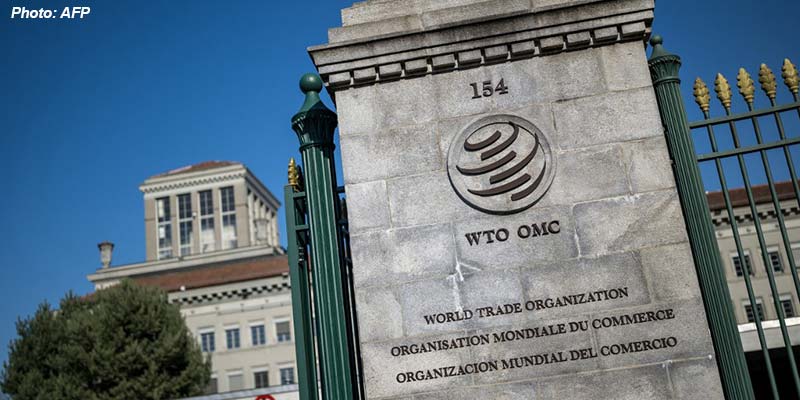
• The World Trade Organisation’s (WTO) 14th Ministerial Conference (MC14) was held in Yaounde, Cameroon from March 26 to 29.
• Ministers from across the world attended the Conference to discuss the challenges and opportunities facing the multilateral trading system and to take action on the future work of the WTO.
• The Conference was chaired by Luc Magloire Mbarga Atangana, Cameroon’s Minister of Trade.
What is MC14?
• The Ministerial Conference is the WTO's top decision-making body.
• The Marrakesh Agreement establishing the WTO instructs members to hold one at least every two years.
• The event is attended by trade ministers and other senior officials from the 166 members of the organisation.
• Typically at these gatherings, ministers review the current work of the WTO, take decisions on issues which the WTO delegations have put before them and on occasion take action to bring new members into the WTO.
MC14 outcomes
Ministers adopted two MC14 decisions that were endorsed earlier by members in Geneva:
i) On improving the integration of small economies into the multilateral trading system.
ii) On enhancing the precise, effective and operational implementation of special and differential treatment provisions in the Agreements on Sanitary and Phytosanitary Measures (SPS) and Technical Barriers to Trade (TBT).
• The ministers also agreed to continue to engage in negotiations on fisheries subsidies, with the aim of making recommendations to the 15th Ministerial Conference to achieve the comprehensive disciplines on fisheries subsidies referred to in Article 12 of the Agreement on Fisheries Subsidies.
Goyal highlights role of the fisheries sector
• Commerce & Industries Minister Piyush Goyal led the Indian delegation for MC14.
• Goyal actively contributed to shaping the Ministerial Decision that sets out the future course of Phase II negotiations on fisheries subsidies relating to overcapacity and overfishing.
• Fisheries subsidies was one of the key agenda items discussed by trade ministers at MC14.
• India highlighted key priorities such as a 25-year transition period for developing countries, stronger disciplines on distant-water industrial fishing fleets, a permanent carve-out for small-scale and artisanal fishers, and subsidy disciplines based on per capita intensity, thereby broadening the scope of Phase II discussions.
• He also highlighted that India is not a heavily industrialised fishing nation and does not have large-scale, distant-water fleets or heavily mechanised operations.
• India’s fisheries subsidies are among the lowest in the world—barely about $15 per fisher family annually—compared to tens of thousands elsewhere.
What is the WTO?
• The World Trade Organisation (WTO) is the only global international organisation dealing with the rules of trade between nations.
• The primary purpose of the WTO is to open trade for the benefit of all.
• At its heart are the WTO agreements, negotiated and signed by the bulk of the world’s trading nations and ratified in their parliaments. The goal is to ensure that trade flows as smoothly, predictably and freely as possible.
• The WTO came into being on January 1, 1995. But its trading system is half a century older.
• Since 1948, the General Agreement on Tariffs and Trade (GATT) had provided the rules for the system.
• Whereas GATT had mainly dealt with trade in goods, the WTO and its agreements cover trade in services, and in traded inventions, creations and designs (intellectual property).
• The WTO provides a forum for negotiating agreements aimed at reducing obstacles to international trade and ensuring a level playing field for all, thus contributing to economic growth and development.
• It also provides a legal and institutional framework for the implementation and monitoring of these agreements, as well as for settling disputes arising from their interpretation and application.
• The WTO currently has 166 members, accounting for 98 per cent of world trade. A total of 25 countries are negotiating membership.
• The WTO’s top level decision-making body is the Ministerial Conference, which meets usually every two years.
• WTO activities are supported by a Secretariat led by the WTO Director-General. The Secretariat is located in Geneva, Switzerland.
• The General Council meets regularly to carry out the functions of WTO. It has representatives (usually ambassadors or equivalent) from all member governments and has the authority to act on behalf of the ministerial conference which only meets about every two years.