
- World
- Apr 04
What is Newcastle disease?
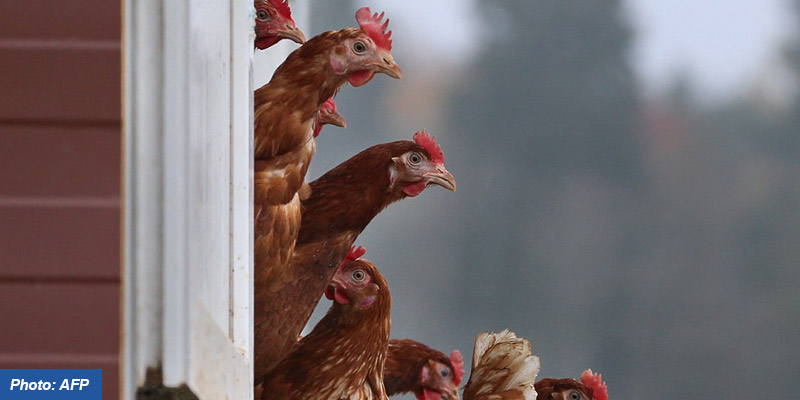
• Outbreaks of Newcastle disease (ND) have been reported in many European countries since January 2026.
• According to the World Organisation of Animal Health (WOAH), the countries that reported outbreaks include Spain, Poland, Germany, Czechia, Lithuania and Slovakia.
• The recent outbreak in Germany marks the first instance of the disease in the country since 2008.
• Nonetheless, this occurred close to other outbreaks occurring in Poland, and strict control measures were rapidly put in place.
• It remains to be seen whether the disease will remain localised to areas close to current outbreaks, or whether it will continue to spread westwards throughout Germany.
What is Newcastle disease?
• Newcastle disease (ND) is a disease of major importance for poultry and other birds.
• It is caused by specified viruses of the avian paramyxovirus type (APMV-I) of the family Paramyxoviridae.
The disease appears in three forms:
i) lentogenic or mild
ii) mesogenic or moderate
iii) velogenic or very virulent.
• Newcastle disease, in its highly pathogenic form, is listed in the World Organisation for Animal Health (WOAH) and must be reported.
• It can present a clinical picture very similar to avian influenza, so laboratory testing is important to confirm the diagnosis.
• The disease is characterised by respiratory and/or nervous signs, partial or complete cessation of egg production or misshapen eggs, greenish watery diarrhoea and oedema of the tissues around the eyes and the neck.
• Newcastle disease is transmitted most often by direct contact with diseased or carrier birds.
• Infected birds may shed the virus in their faeces, contaminating the environment.
• Transmission can then occur by direct contact with feces and respiratory discharges or by contaminated food, water, equipment, and human clothing.
• Newcastle disease viruses can survive for several weeks in the environment, especially in cool weather.
• Newcastle disease is a minor zoonosis (disease of animals that can also infect humans) and can cause conjunctivitis in humans, but the condition is generally very mild and self limiting.