
- World
- Apr 07
- Sreesha V.M
Artemis 2 crew sets record for farthest human spaceflight
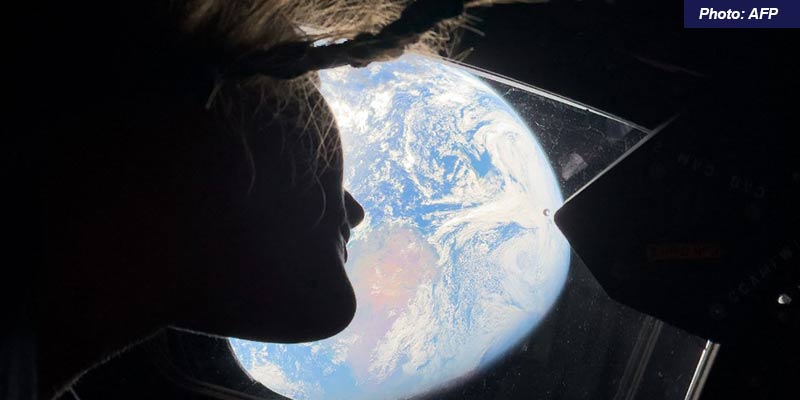
• Four astronauts aboard NASA’s Artemis 2 test flight around the Moon made history, travelling 252,756 miles (406,771 kilometres) from Earth, surpassing the record for human spaceflight’s farthest distance previously set by the Apollo 13 mission in 1970.
• The crew of Artemis 2 travelled 4,101 miles (6,600 kilometres) farther than Apollo 13, before looping back toward our home planet, setting the new record for human spaceflight.
• NASA’s Orion spacecraft began its journey to the Moon following a successful April 1 launch on an SLS (Space Launch System) rocket from the agency’s Kennedy Space Center in Florida.
• After conducting a series of burns to break free of Earth orbit the following day, the spacecraft set its path toward the Moon.
• Six days into the first crewed mission of NASA’s Artemis program, NASA astronauts Reid Wiseman, Victor Glover, and Christina Koch, and CSA (Canadian Space Agency) astronaut Jeremy Hansen continued collecting pictures of the Moon on their voyage away from Earth.
• When they fly past the Moon later, the crew will come within about 4,067 miles (6,545 kilometres) from its surface at the closest approach.
• The astronauts will be the first to see some parts of the far side of the Moon with human eyes. Finally, they will witness a solar eclipse as the Moon passes in front of the Sun.
• During their lunar flyby, a fleet of cameras will capture imagery of the Moon, including features humans have never directly seen. The astronauts will use a variety of digital handheld cameras to conduct high-resolution photography of the lunar surface.
• Photos, videos, mission telemetry, and communication information are all sources of data from the test flight, which will be used to inform future Artemis missions as the agency embarks on development of its Moon Base.
• In addition to their spaceflight record, the crew suggested naming two craters on the Moon during their flight. The first is named in honor of their spacecraft, Integrity.
• The second honors Wiseman’s late wife, Carroll.
• After this mission is complete, the crater name proposals will be formally submitted to the International Astronomical Union, the organisation that governs the naming of celestial bodies and their surface features.
(The author is a trainer for Civil Services aspirants.)