
- World
- Apr 25
WHO’s Big Catch-Up delivers over 100 million childhood vaccinations
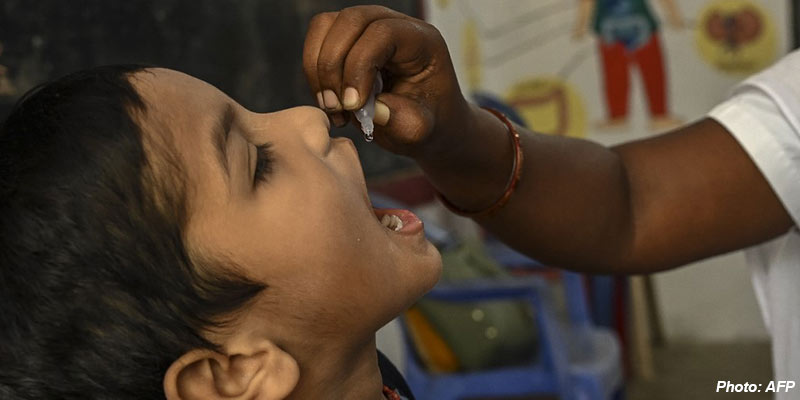
• The Big Catch-Up, a multi-year, multi-country effort to address vaccination declines driven largely by the COVID-19 pandemic has delivered over 100 million vaccine doses to an estimated 18.3 million children across 36 countries.
• It was launched during World Immunisation Week in 2023.
• Of the 18.3 million children reached between 2023 and 2025, an estimated 12.3 million were “zero-dose children” who had not yet received a vaccine and 15 million had never received a measles vaccine.
• The Big Catch-Up also provided 23 million doses of inactivated polio vaccine (IPV) to unvaccinated and under-vaccinated children, an essential intervention to reach polio eradication.
• The programme implementation concluded on March 31.
• The global initiative is forecasted to be on track to meet its target of reaching at least 21 million unimmunised and under-immunised children.
• WHO, UNICEF, and Vaccine Alliance (Gavi), along with countries and communities, are marking World Immunisation Week (April 24-30) with a joint campaign, ‘For every generation, vaccines work’, calling on countries to sustain and expand vaccination coverage at every age.
Significance of Big Catch-Up
• Millions of children every year miss the essential vaccinations they should receive before the age of one.
• Most of them live in fragile, conflict-affected, or underserved communities and are never caught up as they grow older.
• The 36 participating countries across Africa and Asia currently account for 60 per cent of all zero-dose worldwide.
• Pandemic-related immunisation programme disruptions exacerbated this issue, and, in these countries, added millions more zero-dose children to those who already chronically miss out.
• To address this issue, the Big Catch-Up looked beyond infant immunisation, for the first-time ever systematically leveraging routine immunisation systems to make deep inroads into the accumulated global cohort of older children between the ages of one to five — “older” because they should have received critical routine vaccines before the age of one — who remain vulnerable due to missed vaccinations.
• Beyond pandemic recovery, the Big Catch-Up initiative focused on closing the vaccine equity gap.
• Big Catch-Up catalysed long-lasting systems to identify, screen, vaccinate and monitor coverage rates in these older children — including updates to policies on age eligibility.
• Countries also oriented and trained health workers to identify, screen and vaccinate missed children as part of routine care and engaged with communities and civil society to support catch-up efforts.
• By expanding the reach of immunisation to millions of previously missed children and their communities, and investing in systemic improvements, the Big Catch-Up drive has made it easier for the countries to ensure these populations and others like them continue to receive essential health and immunisation services in the future.
Consequences of chronic gaps in routine immunisation
• While catch-up vaccination is an important strategy for closing immunisation gaps, expanding the reach of routine immunisation programmes remains the most effective and sustainable way to protect children and prevent outbreaks of vaccine-preventable diseases.
• In 2024, an estimated 14.3 million infants under the age of one globally failed to receive a single vaccine through routine immunisation programmes.
• The consequences of chronic gaps in routine immunisation are plain to see.
• Measles outbreaks, for example, are rising in every region with around 11 million cases in 2024, and the number of countries facing large outbreaks has almost tripled since 2021.
• This surge is driven by persistent gaps in measles vaccination through routine immunisation programmes, compounded by declining vaccine confidence in some previously high-coverage communities.