
- World
- Apr 27
- Sreesha V.M
Treaty on the Non-Proliferation of Nuclear Weapons (NPT)
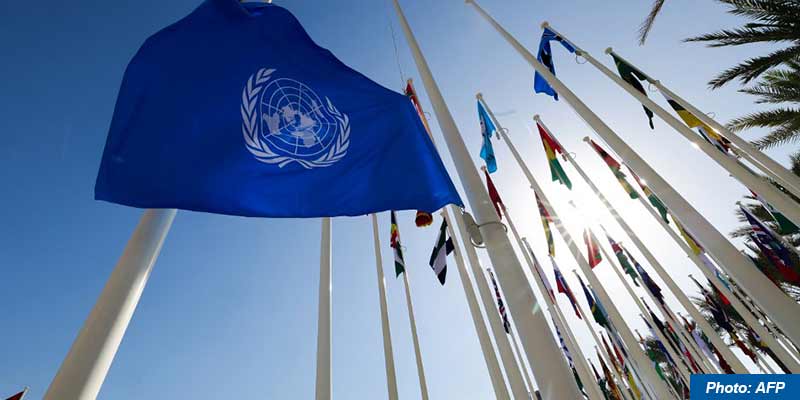
• The Eleventh Review Conference of the Parties to the Treaty on the Non-Proliferation of Nuclear Weapons (NPT) will be held at United Nations Headquarters in New York, from April 27 to May 22.
• The President-designate of the Conference is Ambassador Do Hung Viet, Permanent Representative of Vietnam to the United Nations in New York.
Treaty on the Non-Proliferation of Nuclear Weapons (NPT)
• The NPT is a landmark international treaty whose objective is to prevent the spread of nuclear weapons and weapons technology, to promote cooperation in the peaceful uses of nuclear energy and to further the goal of achieving nuclear disarmament and general and complete disarmament.
• The Treaty represents the only binding commitment in a multilateral treaty to the goal of disarmament by the nuclear-weapon States.
• Opened for signature in 1968, the Treaty entered into force in March 1970.
• On May 11, 1995, the Treaty was extended indefinitely.
• Nuclear-weapon States parties under the Treaty are defined as those that manufactured and exploded a nuclear weapon or other nuclear explosive device before January 1, 1967.
• These countries are China, France, Russia, the United Kingdom, and the United States. All other states are non-nuclear-weapon States under the Treaty.
• A total of 191 States have joined the Treaty, including the five nuclear-weapon States.
• India has not signed the Non-Proliferation Treaty (NPT) as a non-nuclear weapon State.
• Under the NPT, non-nuclear-weapon States parties have committed themselves not to manufacture or otherwise acquire nuclear weapons or other nuclear explosive devices while nuclear-weapon States parties have committed not to in any way assist, encourage or induce any non-nuclear-weapon State party to manufacture or otherwise acquire nuclear weapons or other nuclear explosive devices.
• The Treaty is regarded as the cornerstone of the global nuclear non-proliferation regime and an essential foundation for the pursuit of nuclear disarmament.
• It was designed to prevent the spread of nuclear weapons, to further the goals of nuclear disarmament and general and complete disarmament, and to promote cooperation in the peaceful uses of nuclear energy
• More countries have ratified the NPT than any other arms limitation and disarmament agreement, a testament to the Treaty’s significance.
The NPT has three main pillars:
i) Non-proliferation
ii) Disarmament
iii) Peaceful uses of nuclear energy.
• The treaty provides ongoing security benefits to all States by curbing the proliferation of nuclear weapons and it commits nuclear-weapon States to work towards disarmament.
• The NPT enables the international community to benefit from the peaceful uses of nuclear energy and technology, supporting human health, agriculture, food and water security, and the environment.
• The International Atomic Energy Agency (IAEA) is central to the implementation of NPT commitments on the peaceful uses of nuclear energy through its system of international nuclear safeguards, and as a multilateral forum for supporting the peaceful applications of nuclear technology.
• The Treaty is reviewed every five years. The primary objectives of these five-yearly Review Conferences are to assess developments since the previous conference, to address current challenges, and to identify areas for further progress.
Review Conference
• Conferences to review the operation of the Treaty have been held at five-year intervals since its entry into force in 1970, except for the Review Conference originally scheduled for 2020, postponed due to the COVID-19 pandemic and ultimately held in 2022.
• The Review Conference will assess the implementation of the Treaty since 2022 across its three pillars.
• The Conference will also seek to identify the areas and means through which further progress can be made.
• The 2015 and 2022 Review Conferences were not able to reach agreement on the substantive part of the Final Document.
• The Conference is expected to begin with a General Debate, which will be followed by thematic discussions under each of the three pillars of the Treaty.
• The General Debate will be attended by high-level representatives, including Ministers of Foreign Affairs, as well as senior representatives of key international organisations.
(The author is a trainer for Civil Services aspirants.)