
- World
- Apr 29
266 million people experienced acute food insecurity in 2025
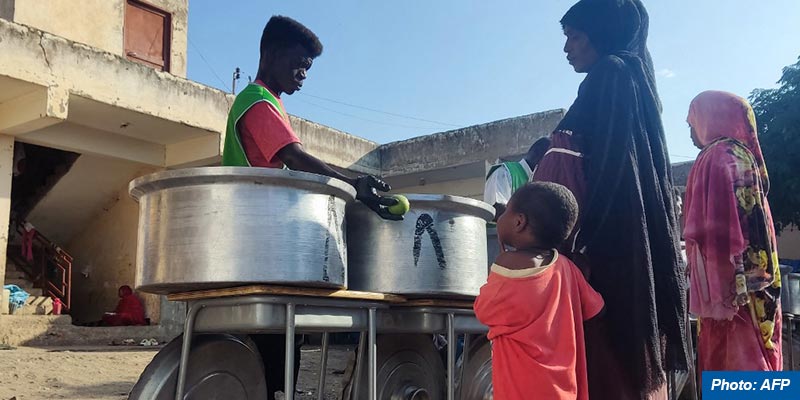
• Acute food insecurity and malnutrition levels remain alarmingly high and deeply entrenched, with crises increasingly concentrated in a core group of countries, according to the Global Report on Food Crises (GRFC) 2026.
• The GNAFC is an international alliance of the United Nations, the European Union, governmental and non-governmental agencies working together to address food crises with evidence-based actions proven to deliver impact.
• The report finds that 266 million people across 47 countries experienced high levels of acute food insecurity in 2025 — nearly a quarter of the population analysed and almost double the share recorded in 2016.
• In 2025, the severity of acute food insecurity was the second highest on record, with the share of people facing extreme hunger remaining at one of the most critical levels seen in the past two decades.
• The number of people facing catastrophic hunger (IPC Phase 5) is nine times higher than it was in 2016.
What is meant by food security?
• The GRFC defines a food crisis as a situation where acute food insecurity requires urgent action to protect and save lives and livelihoods at local or national levels and exceeds the national resources and capacities to respond.
• Food security exists “when all people, at all times, have physical, social and economic access to sufficient, safe and nutritious food that meets their dietary needs and food preferences for an active and healthy life”.
• Acute food insecurity arises when one, some or all dimensions of food security — food availability, access, utilisation and stability — are disrupted, whether by shocks or other factors, so that food insecurity reaches a severity that threatens lives or livelihoods.
• This means that acute food insecurity is defined regardless of the causes, context or duration. It can be persistent over time, largely due to structural causes, or just temporary.
Conflict the primary driver
• Conflict remains the primary driver, accounting for more than half of all people facing severe hunger.
• The report reveals that acute food insecurity remains highly concentrated.
• Ten countries — Afghanistan, Bangladesh, Congo, Myanmar, Nigeria, Pakistan, South Sudan, Sudan, Syrian Arab Republic, and Yemen — accounted for two-thirds of all people facing high levels of acute hunger.
• Afghanistan, South Sudan, Sudan, and Yemen experienced the largest food crises both in terms of the share and absolute number of people facing high levels of acute food insecurity.
• At the most extreme end, famine was identified in Gaza Governorate and parts of Sudan in 2025 by the Integrated Food Security Phase Classification (IPC) system.
• This marks the first time since the GRFC began reporting that famine has been confirmed in two separate contexts in the same year.
• The report also highlights a sharp rise in the severity of hunger.
• More than 39 million people in 32 countries faced emergency levels of food insecurity, while the number of people experiencing catastrophic hunger has increased ninefold since 2016.
Children bearing the brunt
• Acute malnutrition remains a critical and growing concern.
• In 2025 alone, 35.5 million children were acutely malnourished, including nearly 10 million suffering from severe acute malnutrition. Nearly half of food-crisis contexts also faced nutrition crises, reflecting the combined effects of inadequate diets, disease burden, and breakdowns in essential services.
• In the most severe contexts, including Gaza, Myanmar, South Sudan and Sudan, these compounded shocks have resulted in extreme levels of malnutrition and elevated risks of mortality.
Displacement compounding the crisis
• Forced displacement continued to exacerbate food insecurity.
• More than 85 million people were forcibly displaced across food-crisis contexts in 2025, including internally displaced people, asylum-seekers and refugees with people forced to flee consistently facing higher levels of acute hunger than host communities.
Outlook for 2026 remains bleak
• Humanitarian and development financing for food and nutrition responses has fallen back to levels last seen nearly a decade ago, limiting the ability of governments and aid organizations to respond effectively.
• Looking ahead, the report warns that severe levels of acute food insecurity remain critical in multiple contexts in 2026.
• Ongoing conflicts, climate variability and global economic uncertainty — including risks to food markets — are likely to sustain or worsen conditions in many countries.
• In particular, while a full assessment is premature, the escalation of the conflict in the Middle East – in addition to causing further displacement in a region already hosting millions of forcibly displaced and returnees – exposes countries/territories with food crises to both direct and indirect risks of global agrifood market disruptions.
• Immediate food security implications are mainly regional, given the Middle East’s dependence on food imports, but are having immediate impacts on the purchasing power of already-vulnerable communities as energy and logistics costs rise.
• At the same time, Gulf countries are major energy and fertilizer exporters, and continued transport disruptions could create wider spillover risks for global agrifood markets, the report warns.
• The Global Network Against Food Crises underscores that food and nutrition crises are no longer temporary shocks but persistent, predictable, and increasingly concentrated in protracted contexts.
• Addressing them requires boosting sustained, coordinated action that reduces humanitarian needs, builds resilience and tackles root causes.
• Governments, donors, international financial institutions and partners must scale up investment in resilient agrifood systems, climate adaptation, rural livelihoods and inclusive economic opportunities, while strengthening early warning systems and enabling anticipatory action.
• Preventing the most severe outcomes, including famine, also depends on ensuring safe humanitarian access, upholding international humanitarian law, and reinforcing political commitment to address conflict-driven hunger.
• Without a shift in approach, the world risks becoming locked into a cycle of deepening crises, with hunger no longer a temporary emergency but an increasingly persistent feature of global instability.