
- World
- Apr 29
UAE pulls out of OPEC & OPEC+
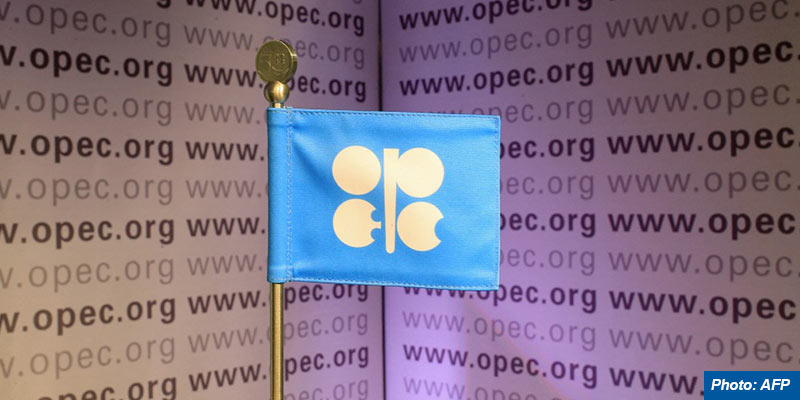
• The United Arab Emirates announced that the country will withdraw from the Organisation of the Petroleum Exporting Countries (OPEC) and OPEC+ with effect from May 1.
• The UAE joined the OPEC in 1967.
• This decision reflects the UAE’s long-term strategic and economic vision and evolving energy profile, including accelerated investment in domestic energy production.
• The exit of the UAE weakens OPEC’s control over global oil supplies and widens a rift between the UAE and its neighbour Saudi Arabia.
• The decision, in the midst of an oil shock due to the Iran War, is likely to create further turbulence for markets.
• Gulf producers have been struggling to ship exports through the Strait of Hormuz, through which a fifth of the world’s crude oil and liquefied natural gas normally passes, because of Iranian threats and attacks against vessels.
• The UAE was producing around 3.4 million barrels of crude a day just before the US-Israeli war with Iran began on February 28.
• The UAE, hard-hit by Iranian attacks, has faced trouble in its relationship with Saudi Arabia, the world’s top oil exporter, after a stand-off between rival forces backed by the two countries in Yemen.
• The decision could free the UAE to increase output once exports via the Gulf resume as it would no longer be governed by OPEC quotas.
• The UAE is the fourth producer to leave the group in recent years. Angola, which joined OPEC in 2007, quit the bloc at the start of 2024, citing disagreements over production levels. Ecuador quit OPEC in 2020 and Qatar in 2019.
• The UAE is a major oil supplier to India. The country accounts for roughly 10 per cent of India’s crude oil imports.
Why the US opposes OPEC?
• During the 1973 Arab-Israeli War, Arab members of the OPEC imposed an embargo against the United States in retaliation for Washington’s decision to re-supply the Israeli military and to gain leverage in the post-war peace negotiations.
• Arab OPEC members also extended the embargo to other countries that supported Israel including the Netherlands, Portugal, and South Africa.
• The embargo both banned petroleum exports to the targeted nations and introduced cuts in oil production.
• Several years of negotiations between oil-producing nations and oil companies had already destabilised a decades-old pricing system, which exacerbated the embargo’s effects.
• The 1973 Oil Embargo acutely strained the US economy that had grown increasingly dependent on foreign oil.
• Oil prices jumped, causing high fuel costs for consumers and fuel shortages.
• The UAE’s exit from OPEC represents a win for US President Donald Trump, who in a 2018 address to the UN General Assembly accused the organisation of “ripping off the rest of the world” by inflating oil prices.
• OPEC’s market power had already been waning in recent years as the US ramped up its production of crude oil.
What is OPEC?
• Crude oil production by the Organisation of the Petroleum Exporting Countries (OPEC) is an important factor that affects oil prices. This organisation seeks to actively manage oil production in its member countries by setting production targets. Historically, crude oil prices have seen increases in times when OPEC production targets are reduced.
• OPEC member countries produce about 40 per cent of the world’s crude oil. Equally important to global prices, OPEC’s oil exports represent about 60 per cent of the total petroleum traded internationally.
• Because of this market share, OPEC’s actions can, and do, influence international oil prices. In particular, indications of changes in crude oil production from Saudi Arabia, OPEC’s largest producer, frequently affect oil prices.
Origin of OPEC
• The OPEC is a permanent, inter-governmental organisation, created at the Baghdad Conference in September 1960 by Iran, Iraq, Kuwait, Saudi Arabia and Venezuela.
• OPEC’s formation occurred at a time of transition in the international economic and political landscape, with extensive decolonisation and the birth of many new independent countries in the developing world.
• The international oil market was dominated by the “Seven Sisters” multinational companies and was largely separate from that of the former Soviet Union and other centrally planned economies.
• OPEC developed its collective vision, set up its objectives and established its Secretariat. It adopted a ‘Declaratory Statement of Petroleum Policy in Member Countries’ in 1968, which emphasised the inalienable right of all countries to exercise permanent sovereignty over their natural resources in the interest of their national development.
• The statute stipulates that “any country with a substantial net export of crude petroleum, which has fundamentally similar interests to those of the member countries, may become a full member, if accepted by a majority of three-fourths of full members, including the concurring votes of all founder members”.
• Currently, the organisation has a total of 11 member countries. They are: Algeria, Congo, Equatorial Guinea, Gabon, Iran, Iraq, Kuwait, Libya, Nigeria, Saudi Arabia, and Venezuela.
• OPEC had its headquarters in Geneva in the first five years of its existence. This was moved to Vienna in Austria on September 1, 1965.
• OPEC regularly meets to set oil production targets and coordinate output to help manage global oil prices for the entire group.
OPEC’s objectives are to coordinate and unify petroleum policies among member countries, in order to:
i) Secure fair and stable prices for petroleum producers.
ii) Ensure an efficient, economic and regular supply of petroleum to consuming nations.
iii) Secure a fair return on capital to those investing in the industry.
What is OPEC+?
• OPEC+ is a group of oil-producing nations, made up of the members of the OPEC, and 10 other non-OPEC members.
• The non-OPEC members are: Azerbaijan, Bahrain, Brunei, Kazakhstan, Malaysia, Mexico, Oman, Russia, Sudan, South Sudan.
• The OPEC bloc is nominally led by Saudi Arabia, the group’s largest oil producer, while Russia is the biggest player among the non-OPEC countries.
• The format was born in 2017 with a deal to coordinate oil production among the countries in a bid to stabilise prices. Since then, the group has reached deals for members to voluntarily cut and ramp-up production in response to changes in global oil prices.
• The OPEC and OPEC+ countries combined produce about 60 per cent of global oil production.