
- World
- May 15
Ebola outbreak kills 65 in Congo
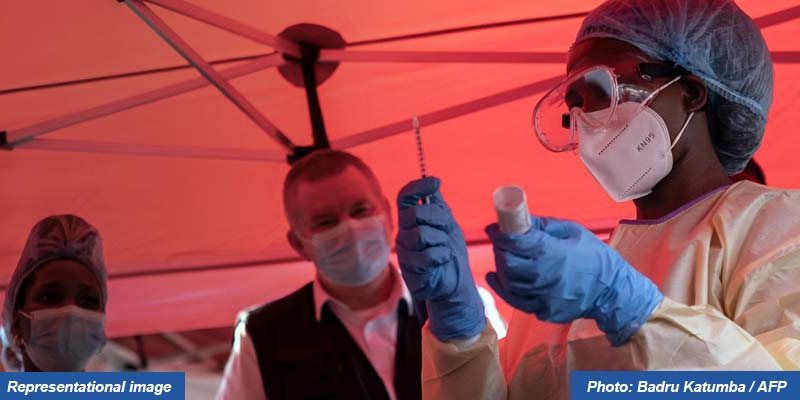
• The Africa Centres for Disease Control and Prevention confirmed Ebola outbreak in Democratic Republic of Congo’s Ituri province.
• About 246 suspected cases and 65 deaths have been reported, mainly in the Mongwalu and Rwampara health zones, while four deaths had been reported among laboratory-confirmed cases.
• Initial findings suggested the presence of a non-Zaire strain of the virus, with sequencing ongoing to further characterise it.
Ebola virus disease
• Ebola virus disease (EVD), formerly known as Ebola haemorrhagic fever, is a severe, often fatal illness affecting humans and other primates.
• The virus is transmitted to people from wild animals (such as fruit bats, porcupines and non-human primates) and then spreads in the human population through direct contact with the blood, secretions, organs or other bodily fluids of infected people, and with surfaces and materials contaminated with these fluids.
• Ebola enters the body through cuts in the skin or when touching one’s eyes, nose or mouth.
• The symptoms of Ebola infection can be sudden and include fever, fatigue, muscle pain, headache and sore throat. These are followed by vomiting, diarrhoea, rash, and internal and external bleeding.
• The average EVD case fatality rate is around 50 per cent. Case fatality rates have varied from 25 per cent to 90 per cent in past outbreaks.
• EVD first appeared in 1976 in two simultaneous outbreaks, one in what is now Nzara, South Sudan, and the other in Yambuku, Democratic Republic of the Congo (DRC). The latter occurred in a village near the Ebola River, from which the disease takes its name.
• The 2014-2016 outbreak in West Africa was the largest Ebola outbreak since the virus was first discovered in 1976.
• Community engagement is key to successfully controlling outbreaks.
• There is as yet no proven treatment available for EVD. Supportive care — rehydration with oral or intravenous fluids — and treatment of specific symptoms improves survival. However, a range of potential treatments including blood products, immune therapies and drug therapies are currently being evaluated.
• Two vaccines have been approved for EVD.
• There is an effective vaccine for the Zaire type of Ebola, which is mostly found in Guinea and the Democratic Republic of the Congo. It is treated with antibodies. These antibody medicines are given intravenously and increase the chances of survival.