
- World
- May 21
International Tea Day on May 21
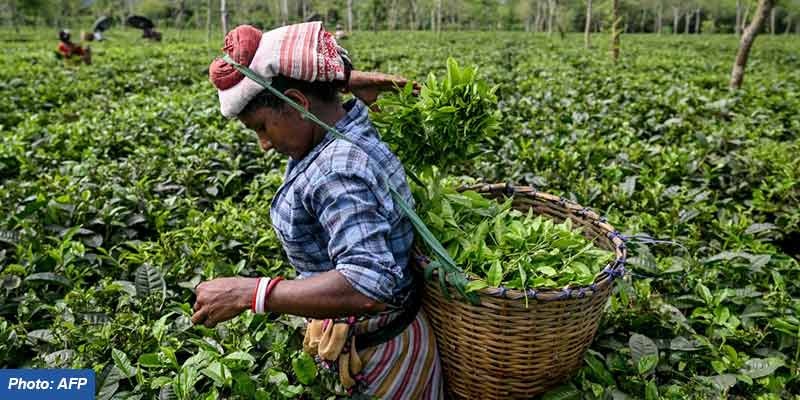
• The United Nations observes International Tea Day annually on May 21.
• Recognising the long history and the cultural and economic significance of tea around the world, as well as the significant role it plays in rural development, poverty reduction and food security in developing countries, the UN General Assembly proclaimed May 21 as International Tea Day.
• Tea production and processing are a main source of livelihoods for millions of families.
• The celebration promotes the sustainable production, consumption, and trade of tea, and offers an opportunity for actors at global, regional and national levels to ensure that the tea sector continues to play a role in reducing extreme poverty, fighting hunger and safeguarding natural resources.
Key facts on tea industry:
• Tea is one of the world’s oldest beverages and is the most consumed drink in the world, after water.
• Tea holds deep cultural and social significance in many communities worldwide, representing not only a widely consumed beverage but also an important symbol of hospitality, tradition, and social connection.
• Tea is available in many varieties, which differ according to the applied oxidation and fermentation technique.
• Global tea production amounts to around $19.5 billion annually.
• In 2025, world production of tea is estimated at around 7.3 million tonnes.
• Tea cultivation provides employment and income to millions of smallholder growers, who are supplementing or even replacing production of larger tea estates in many countries.
• While three quarters of tea produced is consumed domestically, tea is a widely traded commodity.
• Tea production and processing represent a source of livelihoods for millions of families, including millions in the least developed countries.
• The tea sector is a multi-billion-dollar industry that supports economies and contributes to sustainable agrifood systems.
• The tea sector plays a vital role in socio-economic development, representing a major source of employment and income for millions of poor families worldwide.
• Tea production and processing empower individuals — especially women — by promoting economic inclusion and strengthening community resilience.
Major tea producers and exporters in the world
• Major tea producing and exporting countries are China, India, Kenya, and Sri Lanka.
• In 2024, India achieved a significant milestone in the global tea industry, surpassing Sri Lanka to become the world’s second-largest exporter of tea.
• India exports tea to several countries, with the UAE, Iraq, USA, Russia and Iran emerging as top destinations.
Tea producing states in India
• In India, tea is cultivated in 15 states of which Assam, West Bengal, Tamil Nadu and Kerala are the major tea growing states.
• They account for 98 per cent of the total production in the country.
• Other traditional states where tea is grown are Tripura, Himachal Pradesh, Uttarakhand, Bihar and Karnataka.
• The non-traditional states that have entered the tea map of India include Arunachal Pradesh, Manipur, Meghalaya, Mizoram, Nagaland, and Sikkim.
• World’s finest teas like Darjeeling, Assam, Sikkim, Nilgiris and Kangra which are famous for their delicate flavour are produced in India.
What is the role of Tea Board India?
• Tea Board India was established on April 1, 1954 as per the provisions of Section 4 of the Tea Act, 1953.
• The Board is assigned with the overall development of the tea industry in India and functioning under the administrative control of the Department of Commerce.
• The Board is constituted of 31 members (including chairman) drawn from Members of Parliament, tea producers, tea traders, tea brokers, consumers, and representatives of governments from the principal tea producing states, and trade unions. The Board is reconstituted every three years.
• The Head Office of the Board is located in Kolkata, West Bengal.
• Tea Board has two zonal offices at Guwahati (Assam) and Coonoor (Tamil Nadu), 15 Regional Offices and one overseas office at Moscow, which is being managed by embassy officials.
• The Board functions as an apex body concerned with overall development of the tea industry in India.