
- World
- May 25
79th World Health Assembly concludes in Geneva
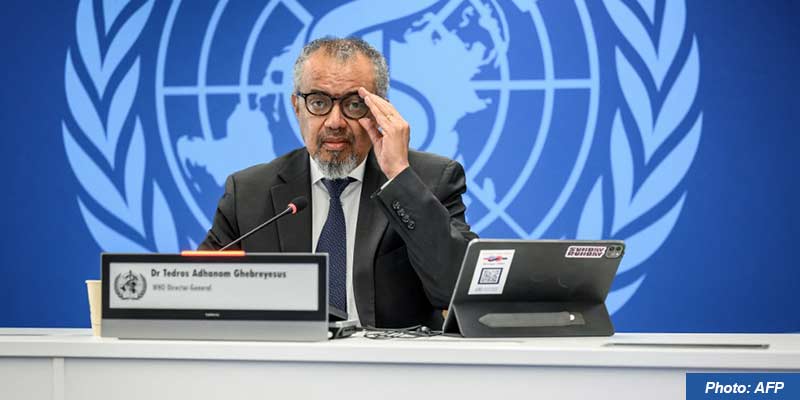
• The 79th World Health Assembly (WHA79) concluded in Geneva, Switzerland on May 23.
• Member States adopted more than 20 decisions and 13 resolutions on health issues.
• The Assembly also covered a range of political and administrative issues, including the agreement to reform the global health architecture through a Member State-led, WHO-hosted joint process.
• At the closing of the Assembly, WHO Director-General Tedros Adhanom Ghebreyesus presented a ceremonial gavel in appreciation to the president of WHA79, Victor Atallah Lajam, Minister of Health of the Dominican Republic.
Key outcomes of WHA79:
1) Member States adopting resolutions on several major health priorities, including:
• Tuberculosis control
• Emergency and critical care
• Precision medicine
• Stroke prevention and treatment
• Neglected tropical diseases (NTDs)
• Diagnostic imaging
• Pharmacovigilance and medicine safety
• Transplantation and liver disease.
2) Amendments to the WHO Code on ethical international recruitment of health workers
• Member States approved a resolution to amend the WHO Global Code of Practice on the International Recruitment of Health Personnel and to strengthen its implementation.
• The resolution marks an important step toward the vision that everyone, everywhere can access competent and motivated health and care workers – a foundation for both universal health coverage and global health security.
• Key revisions to the Code include the incorporation of provisions covering health personnel recruited internationally for employment as care workers and clarification on the applicability of the Code’s recommendations during emergencies.
• The Code also encourages co-investment in health systems and the health workforce to ensure international recruitment generates proportional benefits for both source and destination countries.
3) Strategy placing health at the heart of economic policy
• The World Health Assembly approved a decision to adopt the Strategy on the economics of health for all (2026-2030), marking a significant step towards aligning economic systems with health, equity and sustainable development.
• The strategy sets out a vision of a world in which the economy both serves and benefits from the achievement of health for all, placing people, well-being and equity at the centre of policy and financing decisions.
• It outlines actions to ensure that health is systematically integrated into economic, fiscal and industrial policies, while strengthening the case for investment in health and enabling the sustainable financing of universal health coverage.
3) First resolution on radiation and health
• The Assembly has approved a resolution on Radiation and health: strengthening global protection, preparedness and response, marking the first time WHO Member States have agreed on a comprehensive approach covering both ionizing and non-ionizing radiation.
• The resolution recognises widespread exposure to radiation globally — from environmental, occupational, medical sources, as well as emergency situations — and the associated health risks, including both acute and long-term effects such as cancer.
• Through this resolution, Member States commit to strengthening national systems for radiation protection, including improved monitoring of exposure, workforce training, and the integration of radiation risk management into broader public health programmes.
• It also emphasizes the safe and equitable use of radiation in medical imaging, radiotherapy, and radiopharmaceuticals.
4) Updated action plan to reduce deaths from antimicrobial resistance
• Countries approved the Global Action Plan on Antimicrobial Resistance (GAP-AMR) for 2026-2036, renewing commitments to strengthen the global response to AMR.
• The GAP-AMR 2026-2036 aims to preserve the ability to treat human, animal and plant infections by expanding equitable access to and appropriate use of effective antimicrobials, reducing infections through a One Health approach.
• By 2030, the plan aims to enable the attainment of the 2024 UN General Assembly target of 10 per cent reduction in bacterial AMR-associated deaths in humans, while also reducing antimicrobial use in agrifood systems, and minimizing environmental pollution from resistant microbes and antimicrobial residues.
Nadda addresses the plenary session
• Union Minister of Health and Family Welfare J.P. Nadda addressed the plenary session of WHA79 in Geneva, reiterating India’s steadfast commitment to equitable, inclusive and people-centric healthcare under the guiding principle of “Health for All”.
• Nadda highlighted India's progress towards universal health coverage by citing the establishment of over 1.85 lakh Ayushman Arogya Mandirs across the country.
• The minister also highlighted that the Ayushman Bharat Digital Mission has created over 880 million unique digital health identities to facilitate longitudinal health records.
• He said that Ayushman Bharat Pradhan Mantri Jan Arogya Yojana (AB-PMJAY) which he termed world's largest public health programme — covers nearly 600 million beneficiaries.
• On the growing role of AI in healthcare, the minister said India has recently launched the Strategy for Artificial Intelligence in Healthcare, as he stressed the need for ethical frameworks in deploying emerging technologies.