
- World
- Jun 15
Curacao makes its debut in FIFA World Cup
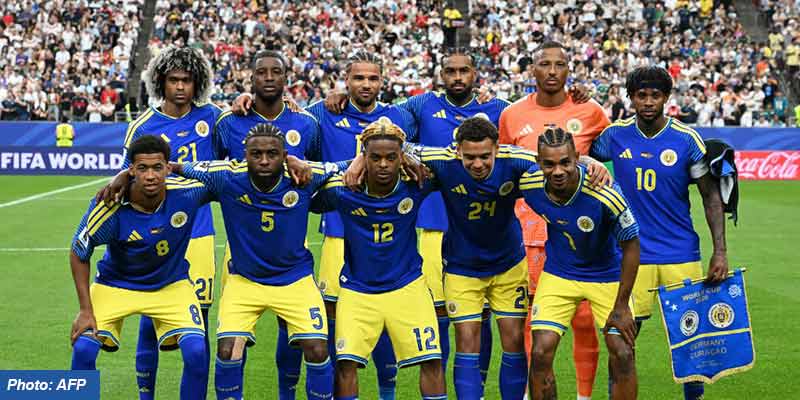
• The tiny Caribbean island of Curaçao made its debut in the FIFA World Cup against the four-time champions’ Germany.
• Germany began their World Cup campaign with a thumping 7-1 victory over Curacao in Houston on June 14.
• Felix Nmecha, Nico Schlotterbeck, Kai Havertz (two), Jamal Musiala, Nathaniel Brown and Deniz Undav scored goals for the German side.
• But the biggest cheer from the crowd came for Livano Comenencia’s 21st-minute equaliser for Curacao to score their first goal at a World Cup as they became the smallest nation by population size and area to play in the World Cup.
• Curacao’s Dick Advocaat became the oldest coach in World Cup history at the age of 78.
Key points on Curacao:
• Curacao is a small Caribbean island located off the northern coast of Venezuela, approximately 65 kilometers north of the Paraguana Peninsula.
• According to the Central Bureau of Statistics in Curacao, the country has a population of 156,115 persons as of January 2025.
• Iceland, with a population of just over 350,000 was the smallest country to reach the World Cup when it qualified for the tournament in Russia in 2018.
• Curacao, also part of the Dutch Caribbean, is known for its colourful colonial architecture, vibrant arts scene, and diverse cultural heritage.
• The island’s unique blend of Dutch, Caribbean, and Afro-Caribbean influences is reflected in its cuisine, music, and festivals.
• Beyond its cultural attractions, Curacao offers excellent diving and snorkeling opportunities in its crystal-clear waters, vibrant coral reefs, and underwater caves.
• Curacao has a total area of 444 km². The island is relatively flat with some hills, the highest being Christoffelberg at 372 meters (1,224 feet) above sea level.
• The island was granted a separate status within the Kingdom of the Netherlands in 2010, allowing for autonomy in internal affairs, while remaining part of the Kingdom.
• The official currency is the Netherlands Antillean Guilder (ANG).
• The official languages are Dutch and Papiamento, a Creole language that blends elements of Portuguese, Spanish, Dutch, West African, and indigenous languages. English and Spanish are also commonly spoken due to the island’s tourism and international ties.