
- World
- Jun 18
FAO, WFP identify 13 hunger hotspots
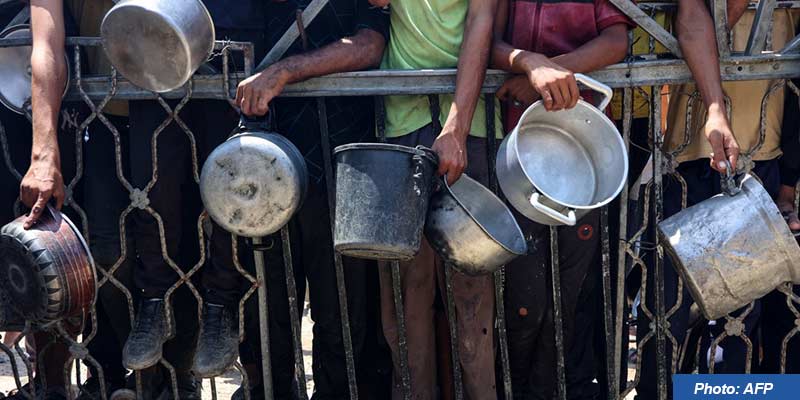
• The Food and Agriculture Organisation of the United Nations (FAO) and the United Nations World Food Programme (WFP) warned that acute food insecurity is expected to worsen further for millions of people across 13 countries deemed “hunger hotspots” between June and November 2026.
• The Hunger Hotspots report is released twice a year through the Global Network Against Food Crises.
Hotspots of highest concern
• In Sudan, a risk of ‘famine’ has been identified in 14 areas across North Darfur, South Darfur and South Kordofan through September 2026, and is expected to persist in 13 areas through the harvest period into January 2027. An estimated 19.5 million people — 41 per cent of the population — faced high levels of acute food insecurity (IPC Phase 3 or above) through May 2026, including 5 million in ‘emergency’ (IPC Phase 4). The situation is expected to worsen further, with the number of people in ‘catastrophe’ (IPC Phase 5) projected to rise to 200,000 across 15 areas in June-September 2026, up from 135,000 in February-May 2026.
• In South Sudan, 7.8 million people — 55 per cent of the population — are projected to face ‘crisis’ or worse levels of acute food insecurity (IPC Phase 3 or above) between April and July 2026, including 2.5 million people in ‘emergency’ (IPC Phase 4) and approximately 73,000 people facing ‘catastrophe’ (IPC Phase 5). Four counties are projected to face the risk of ‘famine’ through July 2026.
• In Yemen, acute food insecurity is expected to remain among the most severe globally in 2026. In earlier estimates, 18.3 million people were projected to face crisis or worse (IPC Phase 3 or above) levels of acute food insecurity, representing over half the population. This includes 5.5 million people in emergency (IPC Phase 4) and 41,000 people projected to face catastrophe (IPC Phase 5) in Sanaa-based authority-controlled areas in 2026. According to more recent partial analysis, nearly 5.4 million people in government-controlled areas are projected to face crisis or worse (IPC Phase 3 or above) levels of acute food insecurity between June and September 2026.
• Nigeria has also moved into the highest-concern group, where around 34.8 million people are projected to face high levels of acute food insecurity (Cadre Harmonise Phase 3 or above) during June-August 2026, including 1.8 million in emergency (CH Phase 4) and some 15,000 in catastrophe (CH Phase 5) in Borno State.
• In Palestine, conditions in the Gaza Strip have improved since the October 2025 ceasefire but remain fragile. The entire territory faced a risk of famine through mid-April 2026, with 1.6 million people acutely food insecure and requiring urgent assistance (77 per cent of the population analysed) including over half a million people in emergency (IPC Phase 4) and 1,900 people projected to face catastrophe (IPC Phase 5). No projection was available covering the hunger hotspots outlook period of June to November 2026 at the time of the report’s drafting.
• In Somalia, around 6 million people were projected to face high levels of acute food insecurity between April and June 2026, including nearly 1.9 million projected to face Emergency (IPC Phase 4) levels. There is also now a risk of famine identified in Burhakaba District. This reflects the broader deterioration in acute food insecurity conditions in the country, stemming from multiple years of drought, record-low crop production, conflict and the ripple effects of the Middle East conflict.
Hotspots of very high concern
• Afghanistan remains a hotspot of very high concern, facing consecutive droughts, high food prices, and escalating conflict.
• In the Democratic Republic of the Congo, acute food insecurity remains severe, driven by conflict in eastern provinces and large-scale displacement. The resurgence of Ebola is adding a dangerous new layer of risk, threatening to worsen acute hunger by disrupting markets, mobility and humanitarian operations.
• Haiti, previously among hotspots of highest concern, has moved into the very high concern category, reflecting limited and localised improvements including slowing inflation and better access along some road corridors, though conditions remain very fragile.
Other hotspots
• Myanmar has been reclassified from a hotspot of very high concern to a hotspot.
• Mali remains a hotspot, but it is no longer classified as a hotspot of highest concern due to a reduction in the number of people projected to face catastrophic levels of acute food insecurity during the outlook period.
• Lebanon and Madagascar have been added to the list of hotspots as a result of the escalation of hostilities in late February 2026 and adverse and erratic weather conditions, respectively.
• About 266 million people across these countries are facing severe food insecurity.
IPC levels
• IPC3 refers to ‘Crisis’ levels of food insecurity, in which households either have food consumption gaps that are reflected by high or above-usual acute malnutrition, or are marginally able to meet minimum food needs but only by depleting essential livelihood assets or through crisis-coping strategies.
• IPC4 refers to ‘Emergency’ levels of food insecurity in which households either have large food consumption gaps which are reflected in very high acute malnutrition and excess mortality, or are able to mitigate large food consumption gaps but only by employing emergency livelihood strategies and asset liquidation.
• IPC5 refers to ‘Catastrophe/Famine’ levels of food insecurity in which households have an extreme lack of food and/or other basic needs even after full employment of coping strategies. Starvation, death, destitution and extremely critical acute malnutrition levels are evident. (For Famine classification, an area needs to have extreme critical levels of acute malnutrition and mortality).
Drivers of acute food insecurity
• Armed conflict and violence remain the primary drivers of acute food insecurity, affecting 12 of the 13 contexts.
• Global economic stress – characterised by slower growth, renewed inflationary pressures and conflict-related shocks to energy, freight and fertiliser markets – continues to compound vulnerabilities, deepening acute food insecurity across several hotspots.
• Weather extremes and increasing climate variability are further intensifying acute food insecurity.
• Climate forecasts indicate a transition towards El Nino conditions during the outlook period, likely resulting in uneven rainfall patterns that may disrupt agricultural production.
• Conflict in the Middle East and the latest Ebola epidemic in eastern Democratic Republic of the Congo may further disrupt markets and humanitarian access.
• Despite escalating needs, humanitarian assistance to food sectors in crisis contexts has declined by an estimated 59 per cent between 2022 and 2025, returning to levels last seen in 2016-2017.
• This decline comes at a time when the share of the population analysed facing high levels of acute food insecurity has doubled globally.
• Funding gaps are already aggravating acute food insecurity and malnutrition in many contexts.
• At the same time, reductions in assessments, monitoring and analytical capacity are weakening the evidence base needed for effective prioritisation of assistance and operational decision-making, particularly in underfunded, high-risk contexts.
• In this constrained environment, stronger collaboration between humanitarian and development actors is essential to maximise impact and avoid fragmented responses.
• Enhanced coordination is needed not only to address immediate needs, but also to tackle the underlying drivers of food insecurity.
• Investments in resilience-building interventions remain vital for populations heavily dependent on humanitarian assistance and most vulnerable to funding reductions.
Human-made famines
• Modern famines are almost always human-made, foreseeable and preventable. Famine is often the result of conflict and constraints on access, and exacerbated by critical gaps in collective response, including weak coordination, delayed action, and insufficient funding.
• Addressing these gaps requires greater coherence in political commitments, funding allocations and programming across the humanitarian-development-peace nexus.
• Acting early — when signs of acute food insecurity and malnutrition emerge — is essential, alongside sustained support to livelihoods and improved access to basic services.
• Against this backdrop, urgent, targeted humanitarian action is needed to save lives and livelihoods across all identified hotspots, especially those of highest concern, to prevent starvation and further loss of life.
• At the same time, greater investment in anticipatory action is needed to mitigate emerging risks and reduce the impact of disasters.
• Early intervention not only saves lives but also minimises food gaps and protects assets and livelihoods at substantially lower cost than delayed responses.