
- World
- Jun 23
Keir Starmer announces resignation as British Prime Minister
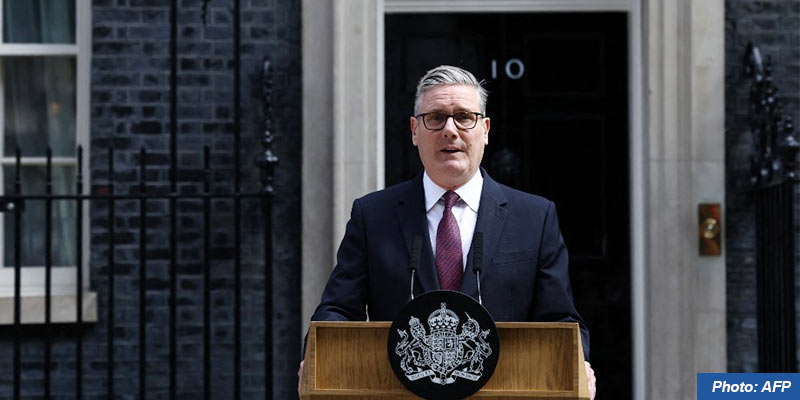
• Keir Starmer announced his resignation as British Prime Minister and the leader of the Labour Party on June 22.
• The 63-year-old said he will remain in post until a new leader and PM is elected by the governing party.
• Starmer led the Labour Party to power after 14 years in opposition with a landslide general election victory over the Conservatives in July 2024.
• After an initial phase of popularity, his ratings as PM plummeted in recent months over some controversial decisions.
• The biggest damage to Starmer’s premiership was the appointment of former Labour Party grandee Peter Mandelson as US ambassador despite his known links with convicted paedophile Jeffrey Epstein.
• Mandelson’s eventual sacking, coupled with some unpopular domestic decisions on welfare reforms and U-turns around taxes and social benefits, made his position untenable with most of his Cabinet advising him to step aside for a change in leadership direction.
• His domestic authority all but evaporated following dire local and regional election results in May.
• Starmer said he had spoken to King Charles III to inform him of the decision.
• Starmer’s resignation means the UK is now on the hunt for its seventh Prime Minister in 10 years.
Other British PMs since 2016:
i) David Cameron (2010 to 2016): Cameron, who won an election majority in 2015, announced his resignation in June 2016 — a day after British voters voted to leave the European Union in a pivotal referendum that he had campaigned hard against.
ii) Theresa May (2016 to 2019): May served from 2016 to May 2019, when she ended a failed three-year quest to lead Britain out of the European Union. While May successfully struck a divorce deal with the EU, her fellow Conservative Party members refused to accept the deal.
iii) Boris Johnson (2019 to 2022): Johnson oversaw Britain’s exit from the EU and steered the country through the COVID-19 pandemic, but he was brought down after a series of ethics scandals tarnished his administration.
iv) Liz Truss (2022): Truss became Britain’s shortest-serving PM when she announced her resignation in October 2022, just six weeks after taking office.
v) Rishi Sunak (2022 to 2024): Sunak took over from Truss in 2022. He stepped down in 2024 after his party suffered defeat in elections.
All eyes on Andy Burnham
• Starmer will now ask the National Executive Committee (NEC) of the Labour Party to set out the timetable for selecting his successor, with nominations opening on July 9 and the process to be completed by the summer recess of Parliament, scheduled for July 17.
• The NEC will set out the process to elect a new leader.
• In the case of a contest, this will ensure a new leader is in place before Parliament returns in September.
• Andy Burnham, who returns to the House of Commons after winning a parliamentary by-election, is seen as the frontrunner in the race to replace Starmer at 10 Downing Street.
• Burnham is a former Labour minister under Tony Blair and Gordon Brown. He has been mayor of Greater Manchester since 2017.