
- World
- Jun 24
IMO announces evacuation plan in Strait of Hormuz
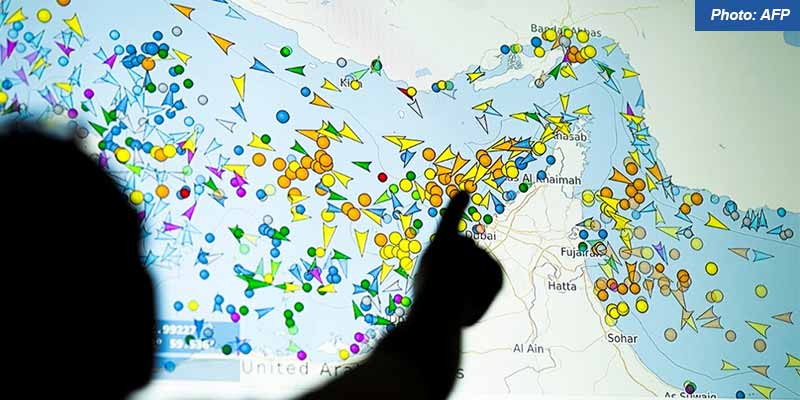
• The International Maritime Organisation (IMO) will begin implementing an evacuation plan for more than 11,000 seafarers stranded in the Strait of Hormuz.
• The development follows months of hardship and distress for thousands of seafarers and comes on the heels of the Memorandum of Understanding between Iran and the United States.
• The large-scale operation will be carried out in cooperation with Iran, Oman, other coastal States, the United States and the maritime industry.
• IMO had secured the necessary safety guarantees and verified conditions for safe navigation.
• IMO Secretary-General Arsenio Dominguez paid tribute to 14 seafarers who lost their lives during the recent escalation of the Middle East conflict.
• Dominguez underlined that IMO remains fully committed to ensuring the safety of seafarers and the continuity of global trade.
• The operation represents a significant step towards easing the “humanitarian impact on thousands of seafarers who have faced months of uncertainty, restricted movement and mounting welfare concerns”.
Strait of Hormuz
• The Strait of Hormuz, located between Oman and Iran, connects the Persian Gulf with the Gulf of Oman and the Arabian Sea.
• The Strait of Hormuz is the world's most important oil chokepoint because large volumes of oil flow through the strait.
• Chokepoints are narrow channels along widely used global sea routes that are critical to global energy security.
• The narrow channel, approximately 33 kilometres wide at the narrowest point, separates Iran (north) from the Arabian Peninsula (south).
• The inability of oil to transit a major chokepoint, even temporarily, can lead to substantial supply delays and higher shipping costs, resulting in higher world energy prices.
• Although most chokepoints can be circumvented by using other routes that add significantly to transit time, some chokepoints have no practical alternatives.
• Large volumes of oil flow through the Strait of Hormuz, and very few alternative options exist to move oil out of the strait if it is closed.
• In 2024, oil flow through the strait averaged 20 million barrels per day (bpd), or the equivalent of about 20 per cent of global petroleum liquids consumption.
• The bulk of oil exports from regional powerhouses — Saudi Arabia, Iraq, UAE, Qatar, Iran, and Kuwait — must transit this narrow waterway.
What is the role of IMO?
• The International Maritime Organisation (IMO) is a specialised agency of the United Nations which is responsible for measures to improve the safety and security of international shipping and to prevent pollution from ships.
• It has an integral role in meeting the targets set out in United Nations Sustainable Development Goal (SDG) 14: Conserve and sustainably use the oceans, seas and marine resources for sustainable development.
• It was established by means of a Convention adopted under the auspices of the United Nations in Geneva on March 17, 1948 and met for the first time in January 1959.
• It currently has 176 Member States and three Associate Members. There are 68 inter-governmental organisations which have observer status with IMO, and 98 international non-governmental organisations in consultative status with IMO.
• International shipping transports more than 80 per cent of global trade to peoples and communities all over the world. Shipping is the most efficient and cost-effective method of international transportation for most goods. It provides a dependable, low-cost means of transporting goods globally, facilitating commerce and helping to create prosperity among nations and peoples.
• The mission of the IMO is to promote safe, secure, environmentally sound, efficient and sustainable shipping through cooperation.
• It is also involved in legal matters, including liability and compensation issues and the facilitation of international maritime traffic.
• Its role is to create a level playing-field so that ship operators cannot address their financial issues by simply cutting corners and compromising on safety, security and environmental performance.
• IMO, has promoted the adoption of some 50 conventions and protocols and adopted more than 1000 codes and recommendations concerning maritime safety and security, the prevention of pollution from shipping and other related matters.
• With regard to the protection of the marine environment, a series of conventions and other instruments, which are periodically updated and amended, have been adopted to address the prevention of pollution, preparedness and response to marine pollution incidents and compensation for pollution damage.
Structure of IMO
• The organisation is led by the Secretary General supported by a Secretariat based at IMO headquarters in London. Secretary Generals are appointed for a maximum of two terms, each lasting four years.
The Organisation consists of an Assembly, a Council and five main Committees:
i) The Maritime Safety Committee
ii) The Marine Environment Protection Committee
iii) The Legal Committee
iv) The Technical Cooperation Committee
v) The Facilitation Committee.
• The IMO Assembly consists of all member states and is the highest governing body of the organisation. It is responsible for approving the work programme, voting the budget and determining the IMO’s financial arrangements.
• The IMO Council is elected by the Assembly for terms of two years. It acts as the executive organ of IMO and is responsible, under the Assembly, for supervising the work of the organisation.
• Between sessions of the Assembly, the council performs the functions of the assembly, except that of making recommendations to governments on maritime safety and pollution prevention.