
- World
- Jun 25
What is Omega block weather pattern?
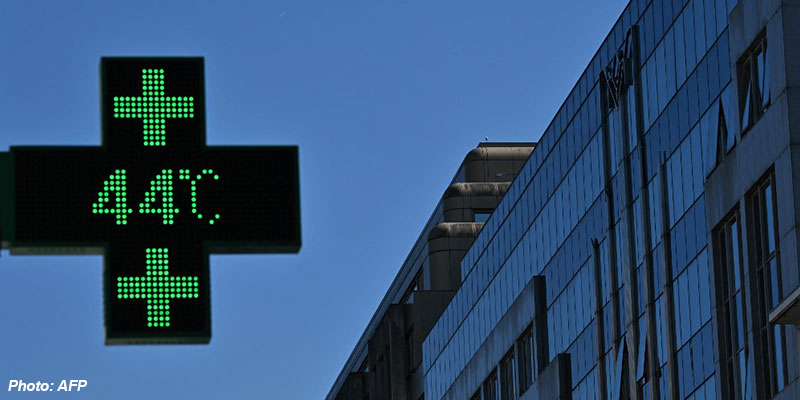
• A record-breaking heatwave has impacted millions of people in Europe, with knock-on impacts on economic activities, infrastructure, agriculture and ecosystems.
• The heatwave disrupted power supplies, shut schools and cultural landmarks.
• The heatwave is being driven by a weather pattern known as an Omega block.
• France recorded its hottest day on record on June 24, beating the record set the previous day, with an average national temperature of 30° Celsius, above previous records set in July 2019 and August 2003. Overnight temperatures also set a new national record. Authorities warned of a high risk of forest fires amid a worsening drought.
• Spain recorded its hottest June days on record on June 23 and 24. In a number of locations, temperatures were well above 40°C.
• The UK’s Met Office reported a new daily maximum air temperature record (provisional) for June, with 36.1°C reported at Gosport in southern England on June 24. This comes just weeks after May also saw UK daily temperature records broken.
• Germany’s national weather service issued widespread red alerts, including for Bonn and cities of Frankfurt and Cologne.
• The Swiss cities of Geneva, Basel and Zurich were also under red alert.
• The heatwave will spread over large parts of Western, Central, and Southern Europe within the next two weeks, according to one of WMO’s regional European climate monitoring centres.
What is blocked weather pattern?
• Blocking patterns occurs when centers of high pressure and/or low pressure set up over a region in such a way that they prevent other weather systems from moving through.
• When the blocking pattern is in place other systems are forced to go around it.
• Blocking patterns can remain in place for several days, resulting in long spans of persistent weather for locations under the block.
What is Omega block?
• Omega blocks get their name because the upper air pattern looks like the Greek letter omega (Ω).
• Omega blocks are a combination of two cutoff lows with one blocking high sandwiched between them.
• Because of their size, Omega blocks are often quite persistent and can lead to flooding and drought conditions, depending upon the location under the pattern.
• Cooler temperatures and precipitation accompany the lows, while warm and clear conditions prevail under the high.
• Under normal conditions, the jet stream carries weather systems steadily from west to east. But during an Omega block, that flow becomes disrupted and can buckle dramatically north and south, isolating the pressure systems.
• Weaker steering winds and temperature contrasts in the atmosphere contribute to these slow-moving, locked patterns.
• The result is that hot, still air gets lodged over the same area.