
- World
- Jun 29
331 million people used drugs in 2024, shows UNODC report
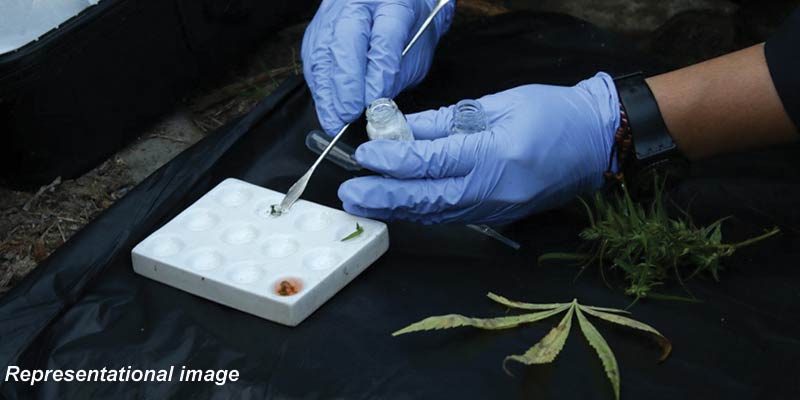
• An estimated 331 million people used drugs in 2024, equivalent to 6.2 per cent of the world’s population aged 15 to 64.
• This is 34 per cent more than a decade ago and is partly a result of around 10 per cent growth in population, but it also reflects an increase in the prevalence of drug use from 5.2 per cent in 2014, and the availability of new and more accurate data.
• This was revealed in the World Drug Report 2026 of the United Nations Office on Drugs and Crime (UNODC) released on June 26.
Key points of the World Drug Report 2026:
• The Americas and Asia are home to the largest number of people who use drugs (105 million in each region), followed by Africa (74 million), but the highest prevalence of drug use is found in Oceania (15.5 per cent) and the Americas (15 per cent), followed by Africa (8.6 per cent).
• Drug traffickers are exploiting technologies and global instability to introduce novel drugs, experiment with different trade routes and methods, and aggressively push into new markets.
• Cannabis remains the most widely used drug by far, with 256 million users in 2024, followed by opioids (63 million), amphetamines (32 million), cocaine (25 million) and ecstasy (21 million).
• The report also highlights the rapid evolution of synthetic drugs. In 2024, authorities identified 755 new psychoactive substances, including 118 reported for the first time, while the number of different drugs detected in seizures is now five times higher than before the year 2000.
• The global opioid market is reaching a turning point. Following Afghanistan’s 2022 ban on opium cultivation, illicit heroin production has fallen sharply.
• Although opium production in Myanmar increased from 420 tonnes in 2021 to more than 1,000 tonnes in 2025, together with production in Laos and Mexico it has not replaced the more than 6,000 tonnes Afghanistan produced in 2022.
• Instead, traffickers appear to be increasingly turning to synthetic opioids such as fentanyls, nitazenes and orphines.
• The report warns that a shift away from plant-based opiates could permanently transform the global opioid market, with potentially greater health risks as some synthetic opioids are even more potent than fentanyl.
• Methamphetamine has become a truly global market, with new trafficking routes expanding across the Near and Middle East, Africa and parts of Europe.
• Seizures have grown by an average of 13 per cent each year, while suppliers have expanded beyond Myanmar to include North America, West and Southern Africa, and Southwest Asia.
• At the same time, cannabis trafficking has become increasingly international, with 57 countries and territories outside North America identifying the region as a source of seized cannabis between 2015 and 2024, compared with just 11 during the previous decade.
• The harms associated with drug use are shaped not only by the substances themselves but also by poverty, homelessness, poor mental health and unequal access to healthcare.
• Women remain significantly less likely than men to receive treatment despite progressing more rapidly to drug dependence.
• Globally, only one in 23 women with drug use disorders receives treatment, compared with one in nine men. Women who inject drugs are also 20 per cent more likely to be living with HIV than men.
• Refugees and internally displaced people are more vulnerable to drug use disorders while often struggling to access treatment, as humanitarian responses understandably prioritize food, shelter and other immediate needs.
• Conflict and drug trafficking reinforce one another, creating a cycle in which instability fuels illicit markets while trafficking profits help finance further violence.
What is UNODC?
• The United Nations Office on Drugs and Crime (UNODC) was established in 1997.
• It was a result of the merging of the United Nations Centre for International Crime Prevention and the United Nations International Drug Control Programme, in order to focus and enhance its capacity to address the inter-related issues of drug control, crime and international terrorism in all its forms.
• UNODC is the guardian of most of the conventions related to these issues, including the international drug control conventions which resulted from UN drug conferences.
• UNODC has its headquarters in Vienna, Austria.
• It has a network of field offices across the globe, covering some 150 countries.
• It provides normative and technical support along with reliable data and analysis to inform policymaking and programmatic responses.
• UNODC’s mandate areas encompass preventing and countering transnational organised crime, corruption and terrorism, addressing the world drug problem, and enhancing and strengthening criminal justice systems.
• Its technical assistance includes training and equipping judges, police officers and border officials to enhance law enforcement and judicial capacities.
• By providing legislative and policy assistance, the UNODC assists Member States in reducing impunity and aligning policies and legislation with international standards.
• UNODC research provides high-quality, essential evidence to inform decision-making and operational responses to multifaceted challenges in the fields of drugs and crime.
• UNODC works to make the world safer from drugs, crime, terrorism and corruption.