
- World
- Jun 29
International Day of the Tropics on June 29
• The United Nations observes International Day of the Tropics on June 29.
• It aims to raise awareness to the specific challenges faced by tropical areas, the far-reaching implications of the issues affecting the world’s tropical zone and the need, at all levels, to raise awareness and to underline the important role that countries in the tropics will play in achieving the Sustainable Development Goals.
• The inaugural State of the Tropics Report was launched on June 29, 2014.
• Marking the anniversary of the report’s launch the UN General Assembly adopted a resolution in 2016, which declared that June 29 of each year is to be observed as the International Day of the Tropics.
Tropics region
• The Tropics are a region of the Earth, roughly defined as the area between the tropic of Cancer and the tropic of Capricorn.
• The Tropics surround the Earth’s Equator within the latitudes of the Tropics of Cancer and Capricorn at ±23.5 degrees
• Although topography and other factors contribute to climatic variation, tropical locations are typically warm and experience little seasonal change in day-to-day temperature.
• An important feature of the Tropics is the prevalence of rain in the moist inner regions near the equator, and that the seasonality of rainfall increases with the distance from the equator.
• The tropical region faces several challenges such as climate change, deforestation, logging, urbanisation and demographic changes.
• Tropical nations have made significant progress but face a variety of challenges that demand focused attention across a range of development indicators and data in order to achieve sustainable development.
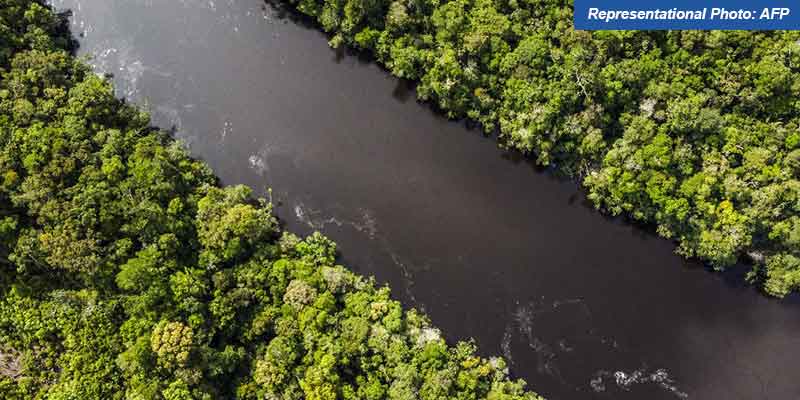
• Nearly half of the world’s forests are located in the Tropics.
• It is home to 80 per cent of terrestrial biodiversity, as well as 95 per cent of the world’s coral and mangrove ecosystems.
• The Tropics have just over half of the world’s renewable water resources (54 per cent), yet almost half their population is considered vulnerable to water stress.
• The Tropics are key to solving the climate challenge because the tropical forests are important carbon sinks.
• Tropical rainforests, such as those in the Amazon and the Congo river basins, are important sources of carbon sequestration and invaluable in their ability to fight climate change.
• By 2050, the region will host most of the world’s people and two-thirds of its children.
• Consistent with the higher levels of poverty, more people experience undernourishment in the Tropics than in the rest of the world.
• The proportion of the urban population living in slum conditions is higher in the Tropics than in the rest of the World.