
- World
- Jun 30
International Asteroid Day on June 30
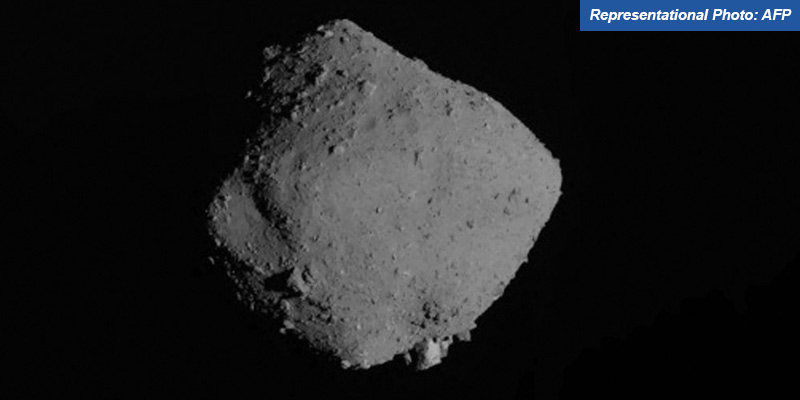
• The United Nations observes International Asteroid Day on June 30.
• It aims to raise public awareness about the asteroid impact hazard and to inform the public about the crisis communication actions to be taken at the global level in case of a credible near-Earth object threat.
• It also commemorates the Tunguska impact over Siberia, Russian Federation, on June 30, 1908.
• The Tunguska asteroid event in Siberia was the Earth’s largest asteroid impact in recorded history.
Difference between asteroids, comets and meteors
• Near-Earth Objects (NEOs) represent potentially catastrophic threats to our planet. A near-Earth object is an asteroid or comet which passes close to the Earth’s orbit.
• Asteroids, sometimes called minor planets, are rocky, airless remnants left over from the early formation of our solar system about 4.6 billion years ago. Most asteroids are found in a ring between the orbit of Mars and Jupiter called the asteroid belt. Asteroids range in size from Vesta — the largest at about 530 kilometers in diameter — to bodies that are less than 33 feet across. The total mass of all the asteroids combined is less than that of Earth’s Moon. Some asteroids are round, some are elongated, and some even have a satellite.
• A comet also orbits the Sun, but unlike an asteroid, it is composed of ice and dust. So, when a comet gets close to the Sun, its ice and dust content start to vaporise. So, when seen in a telescope, a comet appears fuzzy and/or has a tail.
• A meteoroid is a small piece of asteroid or a comet, typically pebble-sized, but could be a little smaller or a little larger, and often created from a collision. When a meteoroid gets close to the Earth and enters the Earth’s atmosphere, it’s called a meteor. And a meteor enters the Earth’s atmosphere at a very high speed. So it burns up and produces a streak of light called a shooting star. If a meteor survives the burn and lands on the ground, it’s called a meteorite.
2029 — International Year of Asteroid Awareness and Planetary Defence
• On April 13, 2029, the asteroid 99942 Apophis will pass safely at a distance of about 32,000 kilometers above Earth's surface, within the geostationary orbit, posing no threat to the planet.
• This extremely close approach will make the asteroid visible to billions of people with the naked eye in the clear night sky.
• This will be a once-in-a-millennium event and a unique occasion for a worldwide campaign to raise awareness with regard to asteroids, their scientific and resource value and the potential hazard they pose.
• In 2024, the UN General Assembly declared 2029 the International Year of Asteroid Awareness and Planetary Defence to take advantage of the close approach of 99942 Apophis and raise global awareness about asteroids.
• This initiative aims to highlight the collaborative efforts of the Committee on the Peaceful Uses of Outer Space in mitigating potential hazards from near-Earth objects, while also providing an opportunity for a global educational campaign.