
- World
- Jul 11
World Population Day on July 11
• The United Nations observes World Population Day on July 11.
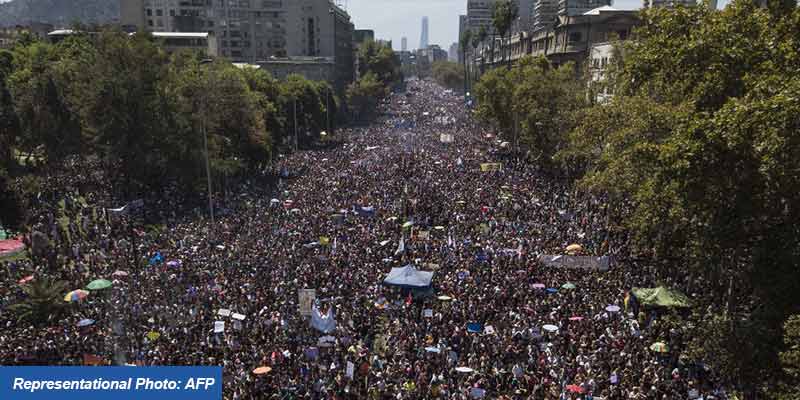
• It took hundreds of thousands of years for the world population to grow to one billion. Then in just another 200 years or so, it grew sevenfold.
• In 2011, the global population reached the 7 billion mark, it stands at almost 7.9 billion in 2021, and it is expected to grow to around 8.5 billion in 2030, 9.7 billion in 2050, and 10.9 billion in 2100.
• This dramatic growth has been driven largely by increasing numbers of people surviving to reproductive age, and has been accompanied by major changes in fertility rates, increasing urbanisation and accelerating migration. These trends will have far-reaching implications for generations to come.
• The recent past has seen enormous changes in fertility rates and life expectancy.
• In the early 1970s, women had on average 4.5 children each. By 2015, total fertility for the world had fallen to below 2.5 children per woman.
• Meanwhile, average global lifespans have risen, from 64.6 years in the early 1990s to 72.6 years in 2019.
• In addition, the world is seeing high levels of urbanisation and accelerating migration.
• 2007 was the first year in which more people lived in urban areas than in rural areas, and by 2050 about 66 per cent of the world population will be living in cities.
• These megatrends have far-reaching implications. They affect economic development, employment, income distribution, poverty and social protections.
• They also affect efforts to ensure universal access to health care, education, housing, sanitation, water, food and energy.
• To more sustainably address the needs of individuals, policymakers must understand how many people are living on the planet, where they are, how old they are, and how many people will come after them.
This year’s theme
• This year’s theme is ‘Realising the hopes and aspirations of young people – today and for the future’.
• The theme draws on a new report based on one of the largest global surveys of its kind, capturing the views of more than 108,000 internet-connected young adults aged 18 to 39 across 73 countries.
• Titled ‘Lives, Choices and Futures - Demographic Futures Survey’, the report offers a global snapshot of what young adults today want from relationships, family life and the future — and what they feel is standing in their way.
Key findings of the survey:
• Two-thirds of the global population now live in areas where fertility rates are below 2.1 children per woman—the threshold needed to keep population size stable.
• For most young adults, financial security is the top priority in forming a partnership (81 per cent), while economic and housing barriers are the most common obstacle (57 per cent).
• Over two-thirds of young people prefer marriage — 36 per cent before cohabitation and 34 per cent after. Only 16 per cent prefer remaining single.
• Among 25-39 year olds who want a partner, one-quarter are single and not dating.
• Over 40 per cent of young people spend more than two hours daily on social media or online entertainment — more than any other online activity surveyed.
• Two children is the most commonly reported ideal family size in five out of seven regional groupings.