
- World
- Jul 14
China achieves controlled recovery of reusable rocket booster
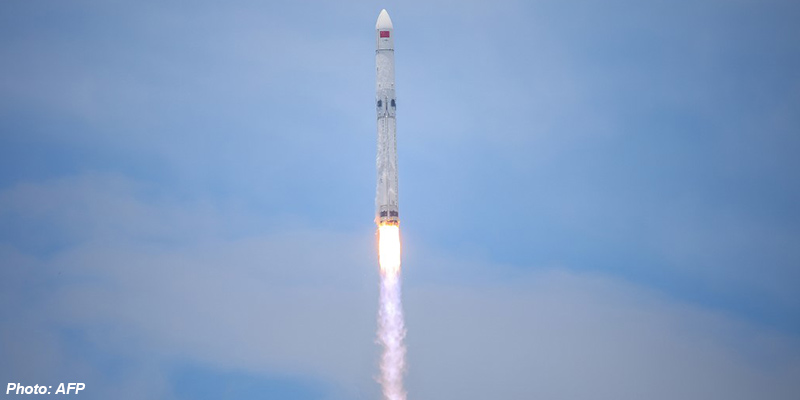
• China achieved its first controlled recovery of an orbital-class reusable rocket booster after the maiden launch of its Long March-10B carrier rocket.
• It marks a major milestone in the country’s reusable space technology.
• The achievement comes over a decade after US-based SpaceX became the first company to successfully recover an orbital-class rocket booster in December 2015.
• The Long March-10B is a reusable liquid-fuelled commercial launch vehicle measuring about 63 metres in height and five metres in diameter.
• It has a lift-off thrust of about 890 tonnes and a lift-off mass of around 760 tonnes.
• In its reusable configuration, the rocket is capable of carrying a payload of 16 tonnes to Low Earth Orbit.
• The Long March-10B carrier rocket was launched from south China’s Hainan Province and successfully placed its payload into the designated orbit.
• A controlled recovery of a carrier rocket’s first stage involves safely returning a rocket booster back to Earth for reuse after it delivers its payload.
• After the separation of the rocket’s first and second stages, the first-stage booster returned and was successfully captured on a sea-based platform using a net-capture system.
• Both the launch and the recovery of the first-stage booster were completed successfully.
• Unlike SpaceX, whose boosters typically land on ground-based or drone-ship landing pads, the Long March-10B’s first-stage booster was recovered at its launch site on a sea-based platform.