
- World
- Jul 30
Online scam centres fuel human trafficking worldwide, warns IOM
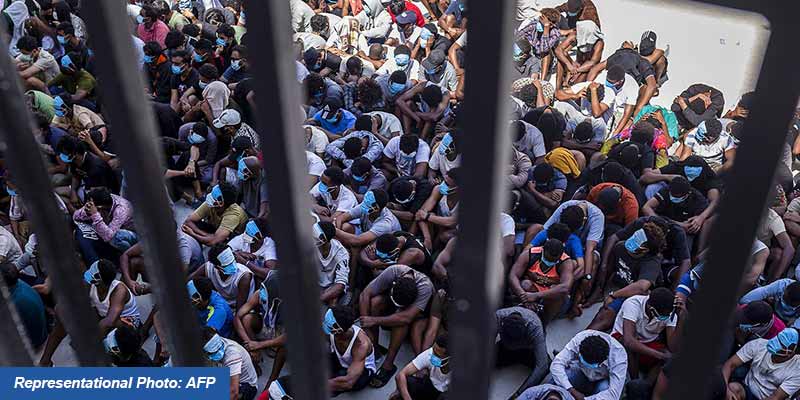
• The United Nations observes the World Day against Trafficking in Persons on July 30.
• This year’s theme, “Trapped Behind the Scam”, draws attention to a rapidly expanding form of human trafficking in which transnational organised crime groups exploit people to carry out industrial-scale financial fraud.
• The UN International Organisation for Migration (IOM) issued an alert over the rapidly expanding, multibillion-dollar criminal industry that turns job seekers into forced cybercriminals.
• Victims are trafficked for forced criminality and compelled to participate in online scam operations.
• This form of exploitation is closely linked to cybercrime, financial fraud, money laundering, and corruption, demonstrating the increasingly interconnected nature of organised crime.
Trafficking victims forced into scam networks
• Hundreds of thousands of people worldwide have been trafficked by criminal networks and forced to participate in online scams in a multibillion-dollar criminal industry.
• Recruiters target people who speak English well and often hold degrees, advertising what look like ordinary jobs on social media.
• Once they arrive, many are locked inside compounds, stripped of their documents, subjected to constant surveillance, and forced through violence, threats and debt bondage to carry out online scam operations targeting people worldwide.
• Survivors report enduring torture, sexual abuse, starvation and solitary confinement.
• Within these compounds, victims are forced to conduct cyber-enabled fraud, including romance scams, cryptocurrency fraud, and other online schemes targeting people around the world.
• The scale of the crime is staggering. New United Nations Office on Drugs and Crime (UNODC) data estimates combined annual losses from scam offences across East Asia, South-East Asia, Australia, and New Zealand are between $88.3 billion and $114.1 billion for 2025 alone, much of it tied to organised crime, and scam compounds across the region are believed to hold hundreds of thousands of trafficked workers.
• As trafficking in persons for forced criminality continues to expand across Asia and increasingly beyond the region, IOM has launched its new Regional Strategy Response to Trafficking in Persons for Forced Criminality in Asia and the Pacific (2026-2030).
• IOM insists that people forced to run scams from inside these compounds are trafficking victims, not criminals, and should be protected rather than prosecuted.
• Rescue is only the first step. Survivors often face severe trauma, stigma, debt, missing identity documents and the fear of prosecution, requiring sustained support to return home safely and rebuild their lives.
• IOM’s response includes identifying victims, referring them to protection services, providing direct assistance, coordinating with consular authorities, supporting safe return and reintegration, and working with governments and law enforcement partners to strengthen victim identification, cross-border cooperation and accountability for traffickers.
• The strategy outlines IOM’s vision for addressing one of the fastest-growing forms of human trafficking, with a strong focus on victim protection, prevention, cross-border cooperation and stronger partnerships to disrupt trafficking networks.
• Between 2022 and 2025, IOM assisted more than 3,500 victims of trafficking for forced criminality across South-East Asia, from 39 countries, with the largest numbers originating from Indonesia, India, Sri Lanka, Ethiopia, Kenya, and Bangladesh.