
- World
- Aug 06
Strengthening El Nino may push 49 million more people into acute hunger
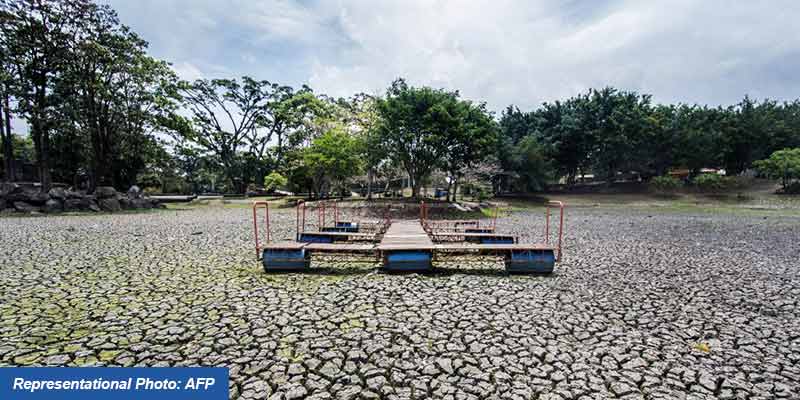
• At least 49 million more people in highly vulnerable communities globally are set to be pushed into acute hunger because of the strengthening El Nino weather phenomenon, the UN World Food Programme (WFP) said.
• El Nino is expected to peak between September and December 2026.
• In many locations the effects will be felt throughout 2027, due to impacts on future harvest cycles.
• Drought, flooding and extreme temperatures are already putting communities at risk.
• Working closely with Food and Agriculture OrganiSation of the United Nations (FAO), United Nations Office for the Coordination of Humanitarian Affairs (OCHA) and other partners, WFP has active anticipatory action plans in over 50 countries, is supporting governments in their preparations, and helping communities to reduce risks.
Key points of the WFP report:
• The 2015-2016 El Nino impacted the food security of 60-100 million people. WFP’s early analysis projects that this 2026-2027 El Nino could push at least 49 million more people into acute food insecurity by the end of 2027.
• After analysing 45 countries already considered food insecure — and where El Nino will significantly influence rainfall patterns, temperatures, floods and droughts — the agency expects the total number of acutely food-insecure people to rise from 225 million to 274 million people, an increase of approximately 22 per cent.
• The largest impacts are expected in parts of Central America and southern Africa, with significant effects also anticipated in eastern Africa and south and southeast Asia.
• Latin America and the Caribbean could see one of the sharpest rises in food insecurity with more than 16 million people affected.
• Particularly, Central America is projected to have the largest proportional increase (83.1 per cent) of all analysed areas.
• Countries already grappling with poverty, conflict, economic instability and repeated weather extremes will likely bear the brunt of El Nino, and that its impact will not be experienced uniformly.
• Some countries are already experiencing below-average rainfall, flooding, and unusually hot temperatures, while others are expected to face deteriorating conditions during upcoming planting seasons and harvests.
What is El Nino and La Nina?
• El Nino and La Nina events are a natural part of the global climate system. They occur when the Pacific Ocean and the atmosphere above it change from their neutral (‘normal’) state for several seasons.
• It occurs on average every two to seven years, and typically lasts nine to 12 months.
• El Nino, which is the warming of the waters in the Pacific Ocean near South America, is generally associated with the weakening of monsoon winds and dry weather in India.
• It influences weather and storm patterns in different parts of the world. But it takes place in the context of a climate being changed by human activities.
• It is associated with increased rainfall in the Horn of Africa and the southern US, and unusually dry and warm conditions in Southeast Asia, Australia and southern Africa.
• La Nina, which is the opposite of El Nino, typically brings good rainfall during the monsoon season.
• These changes in the Pacific Ocean and its overlying atmosphere occur in a cycle known as the El Nino-Southern Oscillation (ENSO).
• The term ‘El Nino’ translates from Spanish as ‘the boy-child’. Peruvian fishermen originally used the term to describe the appearance, around Christmas, of a warm ocean current off the South American coast. It is now the commonly accepted term to describe the warming of the central and eastern tropical Pacific Ocean. ‘La Nina’ translates as ‘girl-child’ and is the opposite ENSO phase to El Nino.
• However, naturally occurring climate events such as La Nina and El Nino events are taking place in the broader context of human-induced climate change, which is increasing global temperatures, exacerbating extreme weather and climate, and impacting seasonal rainfall and temperature patterns.