
- World
- Aug 12
Syrian court sentences former President Bashar al-Assad to death
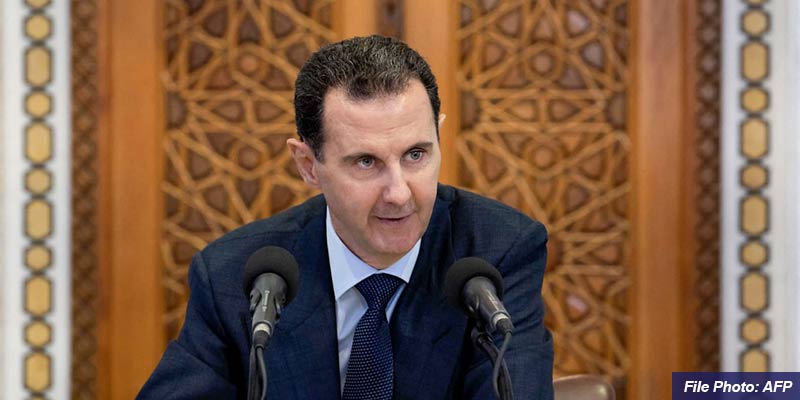
• A Syrian court sentenced ousted Syrian President Bashar Assad to death in absentia for crimes against humanity and war crimes during Syria’s 14-year conflict that left about half a million people dead.
• Assad fled to Russia after the government's fall in December 2024 and received political asylum.
• It ended more than five decades of iron-fisted rule by his family and opened a new chapter for Syria.
Syrian civil war
• After independence from France in 1946, instability afflicted Syria and there was a series of military coups.
• A state of emergency was in place from 1963 to 2011.
• The country was ruled by the Assad family from 1970, when Hafez al-Assad came to power in a military coup.
• Hafez al-Assad remained in power until his death in 2000.
• Then, his son Bashar al-Assad assumed the presidency.
• The peaceful pro-democracy protests that started on March 15, 2011 were met with brutal repression.
• The crisis began as a result of a violent government crackdown on public demonstrations in support of teenagers who were arrested for anti-government graffiti in the southern town of Daraa.
• The arrests sparked public demonstrations throughout Syria which were violently suppressed by government security forces.
• Assad turned the full power of the Syrian military against his opponents as he sought to crush the rebellion inspired by the Arab Spring movement that had toppled leaders in Egypt and Tunisia.
• The conflict quickly escalated and the country descended into a civil war.
• In the initial months of the crisis, as many as 2,000 civilians were killed, with thousands more suffering enforced disappearances, torture, deprivation of liberty and persecution.
• Since 2011, Syria spiraled into a brutal conflict, with civilians subjected to medieval sieges, chemical weapon attacks and barrel bombs.
• Over the years, hundreds of thousands of civilians were killed and more than 12 million forced to flee their homes, including over six million who fled as refugees to neighbouring countries.
• Assad’s grip on power appeared to be slipping in the first years of the war, as much of Syria fell to insurgents, some of them backed by Turkey, Gulf Arab states and the United States.
• The arrival of Russia’s air force in 2015 allowed Assad to go on the offensive.
• In late 2024, insurgents seized a moment of opportunity, attacking when Iran had been weakened by conflict with Israel and Russia was distracted by its war in Ukraine.
Syria on the road to recovery
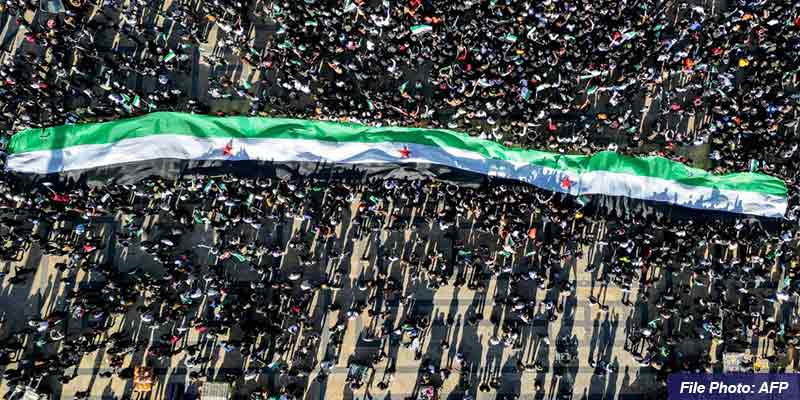
• The overthrow of Bashar Assad’s government in December 2024 marked a watershed moment in Syria’s modern history, ending more than five decades of family rule and more than 13 years of devastating conflict.
• Since then, Syria’s new leader Ahmed al-Sharaa has engaged more closely with the international community and undertaken significant reforms, promising accountability for past atrocity crimes.
• The international community began to ease sanctions against the country, in an attempt to improve the humanitarian situation and revive the battered economy.
• Syria’s political transition has reached an important institutional milestone with the establishment of a People’s Assembly and Constitutional Supreme Court.
• Since December 2024, as many as 1.7 million refugees and 1.9 million internally displaced persons have returned to their communities.
• As many as 5.5 million people remain displaced within Syria and more than 6 million Syrian refugees remain abroad.
• An estimated 15.6 million people — nearly two thirds of the population — still require humanitarian assistance.