
- World
- Aug 17
UNCCD COP17 opens in Ulaanbaatar, Mongolia
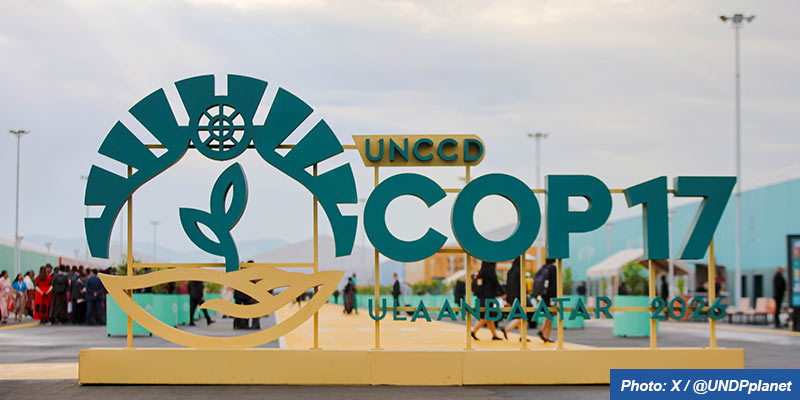
• The 17th session of the Conference of the Parties (COP17) to the United Nations Convention to Combat Desertification (UNCCD) began in Ulaanbaatar, Mongolia on August 17.
• The theme of the event is ‘Restoring Land. Restoring Hope’.
• This the first of the three major environmental COPs of 2026.
• The UNCCD COP17 in Ulaanbaatar will be followed by CBD COP17 in Yerevan, Armenia, and conclude with UNFCCC COP31 in Antalya, Turkey.
Significance of COP17
• Land and drought resilience, alongside water and food security as drivers of peace and prosperity, anchors development in the pressing global priorities today.
• Over the past decade, countries have committed to restoring one billion hectares of degraded land by 2030, and more than 70 now have national drought plans.
• Land degradation is already affecting up to 40 per cent of the world’s land, with far-reaching impacts on food production, water availability, livelihoods and economic stability.
• Failure to accelerate land restoration and drought resilience would deepen poverty, displacement, fragility and ecosystem collapse, while undermining progress across climate and biodiversity goals.
• The outcomes of COP17 will have major implications for global food security, resilience and sustainable development, particularly for vulnerable dryland countries and communities.
Focus on Mongolia
• Due to its geographical location and extreme continental climate, Mongolia is one of the 10 countries most affected by global warming and climate change.
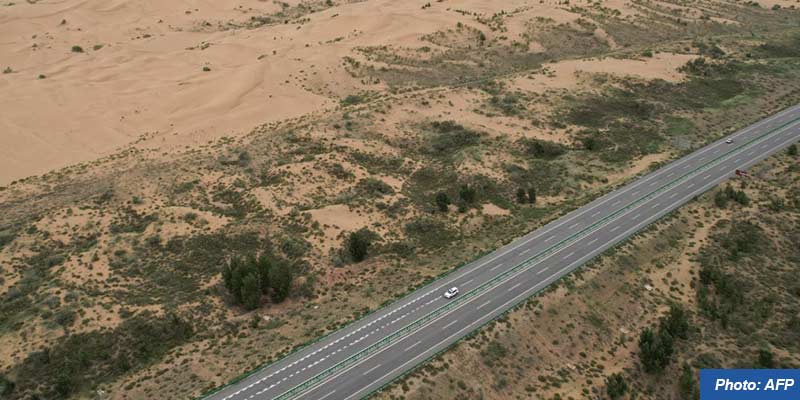
• With a vast territory of 1.56 million square kilometers, Mongolia is among the countries most affected by desertification and land degradation, with nearly 77 per cent of its land already degraded.
• Hosting UNCCD COP17 in Ulaanbaatar will place international focus on land restoration priorities, including approaches that safeguard livelihoods, food security and ecosystems in dryland regions.
• COP17 is taking place during the United Nations International Year of Rangelands and Pastoralists (IYRP 2026), declared by the United Nations General Assembly and championed by Mongolia.
• This presents a major opportunity to accelerate action on the sustainable management, restoration and conservation of rangelands, while spotlighting the needs of pastoralist communities who depend directly on these ecosystems for their livelihoods.
• Mountain rangelands provide natural forage, support biodiversity, regulate water flows and store carbon, while pastoral systems support food security, livelihoods and cultural heritage.
• Pastoral practices – including mobility and transhumance – can help restore degraded lands and strengthen climate adaptation, biodiversity conservation and disaster risk reduction.
What to expect at COP17?
• COP17 is expected to bring together delegates from UNCCD’s 197 Parties, alongside leaders from government, business and civil society, as well as scientists, youth, Indigenous Peoples, pastoralists and smallholder farmers.
• They will convene to forge solutions to the interconnected challenges of desertification, land degradation and drought, recognising that restoring land is also essential to reducing instability, preventing displacement and strengthening human and national security in vulnerable regions.
• During the two-week conference, participants will engage in a high-level segment including ministerial dialogues, alongside multistakeholder forums and thematic discussions on science – policy integration, innovation and solutions, tools and technologies, and financing.
• In addition to formal negotiations, COP17 is expected to catalyze collective action on rangelands, resilience and water, as well as food systems and soil health.
The United Nations Convention to Combat Desertification
• The United Nations Convention to Combat Desertification (UNCCD) is the sole legally binding international agreement linking environment and development to sustainable land management.
• The Convention addresses specifically the arid, semi-arid and dry sub-humid areas, known as the drylands, where some of the most vulnerable ecosystems and peoples can be found.
• The Convention was adopted in Paris on June 17, 1994 and entered into force on December 26, 1996 after the 50th ratification was received.
• It is the only legally binding framework set up to address desertification and the effects of drought.
• There are 197 Parties to the Convention, including 196 country Parties and the European Union.
• The Convention’s 197 Parties work together to improve the living conditions for people in drylands, to maintain and restore land and soil productivity, and to mitigate the effects of drought.
• Parties to the Convention meet in Conferences of the Parties (COP) every two years, as well as in technical meetings throughout the year, to advance the aims and ambitions of the Convention and achieve progress in its implementation.
• It unites governments, scientists, policymakers, private sector and communities around a shared vision and global action to restore and manage the world’s land for the sustainability of humanity and the planet.
• The UNCCD is particularly committed to a bottom-up approach, encouraging the participation of local people in combating desertification and land degradation.
• The UNCCD Secretariat facilitates cooperation between developed and developing countries, particularly around knowledge and technology transfer for sustainable land management.
• The permanent secretariat of the UNCCD was established during the first Conference of the Parties (COP 1) held in Rome, Italy in October 1997. The secretariat subsequently moved to Bonn, Germany, in 1999.