
- World
- Sep 16
International Day for the Preservation of the Ozone Layer on September 16
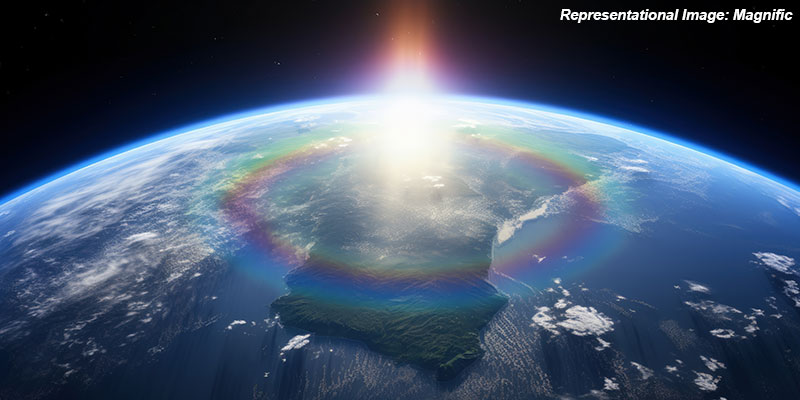
• The United Nations observes the International Day for the Preservation of the Ozone Layer on September 16.
• The day commemorates the date of the signing of the Montreal Protocol on Substances that Deplete the Ozone Layer in 1987.
• This year’s theme is “Global action for a cooler planet”.
What is ozone layer?
• Ozone is a highly reactive form of oxygen. Ozone is composed of three atoms of oxygen.
• Ozone occurs both in the Earth’s upper atmosphere and at ground level.
• Tropospheric or ground-level ozone is formed primarily from photochemical reactions between two major classes of air pollutants, volatile organic compounds (VOC) and nitrogen oxides (NOx). Ozone at ground level is a harmful air pollutant, because of its effects on people and the environment, and it is the main ingredient in “smog”.
• Although ozone is present in small concentrations throughout the atmosphere, most (around 90 per cent) exists in the stratosphere, a layer 10 to 50 kilometres above the Earth’s surface.
• In the upper atmosphere, ozone forms a protective layer that shields us from the Sun’s ultraviolet rays.
• The stratospheric ozone layer is Earth’s “sunscreen” – protecting living things from too much ultraviolet radiation from the Sun.
• This beneficial ozone has been partially destroyed by man-made chemicals, causing what is sometimes called a “hole in the ozone”.
Ozone depletion
• A number of commonly used chemicals have been found to be extremely damaging to the ozone layer.
• Halocarbons are chemicals in which one or more carbon atoms are linked to one or more halogen atoms (fluorine, chlorine, bromine or iodine).
• Halocarbons containing bromine usually have much higher ozone-depleting potential (ODP) than those containing chlorine.
• The man-made chemicals that have provided most of the chlorine and bromine for ozone depletion are methyl bromide, methyl chloroform, carbon tetrachloride and families of chemicals known as halons, chlorofluorocarbons (CFCs) and hydrochlorofluorocarbons (HCFCs).
Vienna Convention for the Protection of the Ozone Layer
• The scientific confirmation of the depletion of the ozone layer prompted the international community to establish a mechanism for cooperation to take action to protect the ozone layer.
• This was formalised in the Vienna Convention for the Protection of the Ozone Layer, which was adopted and signed by 28 countries, on March 22, 1985.
What is Montreal Protocol and its Kigali Amendment?
• Montreal Protocol on Substances that Deplete the Ozone Layer is an international environmental treaty adopted in September 1987 for protection of the ozone layer by phasing out the production and consumption of man-made chemicals, referred to as ozone depleting substances (ODS).
• The Montreal Protocol sits under the Vienna Convention for the Protection of the Ozone Layer. The Vienna Convention was adopted in 1985 following international discussion of scientific discoveries in the 1970s and 1980s highlighting the adverse effect of human activity on ozone levels in the stratosphere and the discovery of the “ozone hole”.
• On September 16, 2009, the Vienna Convention and the Montreal Protocol became the first treaties in the history of the United Nations to achieve universal ratification.
• The Montreal Protocol is signed by over 190 Parties.
• The Protocol requires the control of nearly 100 chemicals, in several categories. For each group or annex of chemicals, the Treaty sets out a timetable for the phase-out of production and consumption of those substances, with the aim of eventually eliminating them completely.
• The Parties to the Protocol meet once in a year to make decisions aimed at ensuring the successful implementation of the agreement.
• In October 2016, during the 28th Meeting of the Parties to the Montreal Protocol on Substances that Deplete the Ozone Layer in Kigali (in Rwanda), more than 170 countries agreed to amend the Protocol.
• The Kigali Amendment requires participating nations to phase down production and use of hydrofluorocarbons by 85 per cent over the next 14 years, as part of a global phaseout intended to slow climate change.
• More than 170 nations, including India, China and Russia, have formally ratified the amendment, which scientists say could help the world avoid a half-degree Celsius of global warming.
• India became a Party to the Montreal Protocol on Substances that Deplete the Ozone Layer on June 19, 1992 and since then has ratified the amendments to the Montreal Protocol.
• In August 2021, the Union Cabinet gave its nod for ratification of the Kigali Amendment for phase down of hydrofluorocarbons (HFCs).