
- World
- Sep 18
Migrant fatalities along Central Mediterranean route rise, says IOM
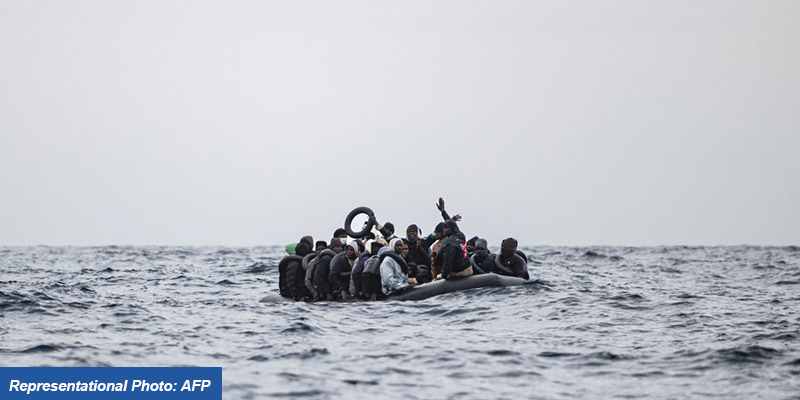
• Arrivals to Europe have fallen sharply this year but deaths along the Central Mediterranean routes keep climbing, according to new data from the International Organisation for Migration (IOM).
• Nearly 60,000 migrants and refugees have arrived in Europe by sea so far in 2026.
• That is down 39 per cent from 98,040 during the same period last year.
• Yet, at least 2,292 people have died or gone missing attempting the crossing, up from 1,999 for the same period last year.
• The Mediterranean and Atlantic routes are the deadliest maritime routes in the world.
• The steepest drop was on the Central Mediterranean route to Italy. Arrivals there fell 55 per cent, from 48,231 to 21,393. But deaths on that route rose too, from 844 to 996.
• Greece recorded 20,428 arrivals, down from 25,427. Deaths on the Eastern Mediterranean route jumped from 284 to 417.
• Spain saw 16,794 arrivals across the Atlantic and Western Mediterranean routes, down from 22,855. Fatalities there remained high, at 879.
• Interceptions continue at scale. Between January and mid-September, 17,067 migrants were intercepted at sea and returned to Libya, according to Libyan Coast Guard figures tracked by IOM.
International Organisation for Migration (IOM)
• Established in 1951, the International Organisation for Migration (IOM) is the leading inter-governmental organisation in the field of migration.
• IOM works to ensure the orderly and humane management of migration, to promote international cooperation on migration issues, to assist in the search for practical solutions to migration problems and to provide humanitarian assistance to migrants in need, including refugees and internally displaced people.
• In 2016, IOM entered into an agreement with the United Nations, becoming one of its specialised agencies.
• With 174 Member States and eight States holding observer status and offices in over 100 countries, IOM is dedicated to promoting humane and orderly migration for the benefit of all.
• The IOM Constitution recognises the link between migration and economic, social and cultural development, as well as to the right of freedom of movement.
IOM works in the four broad areas of migration management:
i) Migration and development
ii) Facilitating migration
iii) Regulating migration
iv) Forced migration.
• IOM activities, that cut across these areas, include the promotion of international migration law, policy debate and guidance, protection of migrants’ rights, migration health and the gender dimension of migration.