
- World
- Sep 23
International Day of Sign Languages on September 23
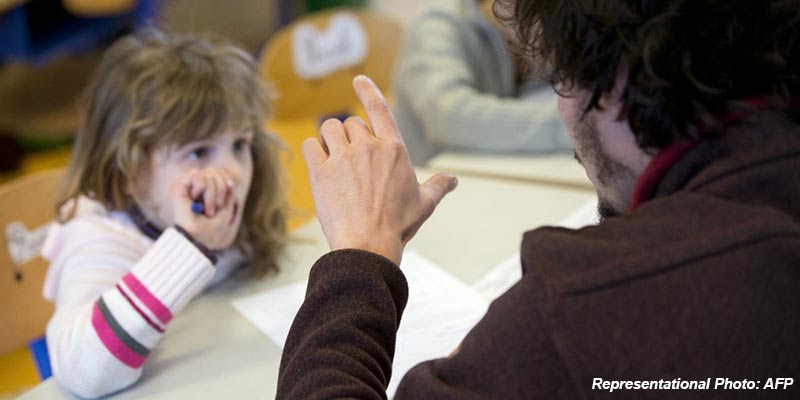
• The United Nations observes September 23 as the International Day of Sign Languages in order to raise awareness of the importance of sign language in the full realisation of the human rights of people who are deaf.
• This year’s theme “Declaring Deaf People’s Human Rights”, highlights the importance of recognising, protecting and promoting deaf people’s human rights, including full access through national sign languages.
• The choice of September 23 commemorates the date that the World Federation of the Deaf (WFD) was established in 1951.
The year 2026 holds particular significance as it marks two important milestones:
i) The 75th anniversary of the World Federation of the Deaf (WFD).
ii) 20 years since the adoption of the UN Convention on the Rights of Persons with Disabilities (CRPD), which has been a key instrument for advocacy, driving change, shaping policies, and strengthening the recognition of national sign languages.
• The WFD is a federation of 140 national associations of deaf people.
• According to the World Federation of the Deaf, there are more than 70 million deaf people worldwide. Collectively, they use more than 300 different sign languages.
• The Convention on the Rights of Persons with Disabilities recognises and promotes the use of sign languages. It makes clear that sign languages are equal in status to spoken languages and obligates states parties to facilitate the learning of sign language and promote the linguistic identity of the deaf community.
Key facts on hearing issues:
• Over 5 per cent of the world’s population (430 million people) require rehabilitation to address their disabling hearing loss.
• By 2050, nearly 2.5 billion people are projected to have some degree of hearing loss, and more than 700 million — or one in every 10 people — will require hearing rehabilitation.
• Around 95.1 million children aged 5-19 years live with hearing loss worldwide.
• Unaddressed hearing loss poses an annual global cost of almost $1 trillion.
• Over one billion young adults are at risk of permanent, avoidable hearing loss due to unsafe listening practices.
Indian Sign Language
• As per the 2011 Census, there are 50.71 lakh persons with hearing disability and 19.98 lakh persons with speech disability in India out of total 2.68 crore persons with disability.
• Sign languages are visual-gestural manual languages that use movements of the hands, facial expressions, and head/body positions to convey linguistic messages.
• Sign languages are the main form of communication for people who are deaf or hard of hearing, but they also have a lot to offer for everyone.
• Indian Sign Language (ISL) is not at all similar to Hindi, to English, or to any other spoken language in India. It has its own structure and is not a hand representation of any spoken language.
• The government has set up Indian Sign Language Research and Training Centre (ISLRTC), New Delhi with the objective of developing manpower for using, teaching and conducting research in Indian Sign Language.
• ISLRTC is an autonomous organisation established under Societies Registration Act XXI of 1860, established on September 28, 2015.
• It is under the aegis of Department of Empowerment of Persons with Disabilities (Divyangjan), Union Ministry of Social Justice and Empowerment.