
- World
- Sep 25
What are the impacts of sea level rise?
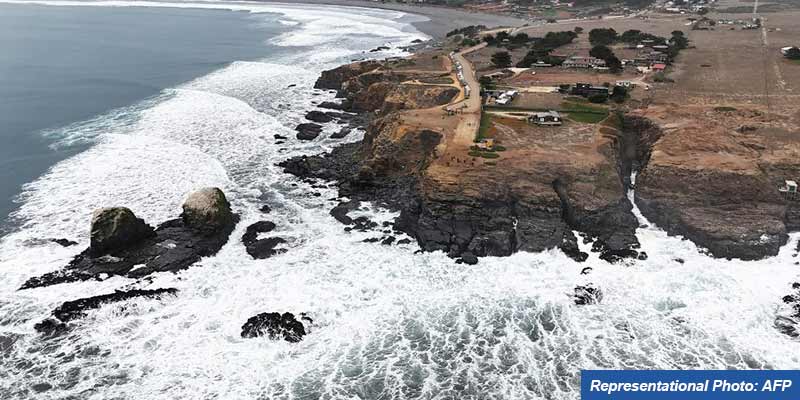
• World leaders approved the UN Declaration on Sea Level Rise by consensus during a high-level plenary meeting of the United Nations General Assembly on September 24.
Impacts of sea-level rise
• Sea-level rise is no longer a distant or abstract threat. It is already affecting communities and economies in every region, intensifying coastal flooding, erosion, saltwater intrusion, and the loss of ecosystems and biodiversity that protect communities and sustain livelihoods.
• These pressures are expected to compound as climate-related hazards become more frequent and severe.
• Global mean sea level reached a record high in 2024 and its rate of rise has doubled, from 2.1 millimeters per year in 1993-2002 to 4.7 millimeters per year in 2015-2024.
• Furthermore, an El Nino event is forecast through late 2026, which will exacerbate extreme weather events.
• Its effects extend to housing, health, food and water security, infrastructure, tourism, fisheries, fiscal stability, culture and heritage.
• It also risks reversing hard-won development gains, deepening inequality and placing additional strain on national institutions and public services.
• The impacts are profoundly unequal and the burden falls disproportionately on those that have contributed least to climate change.
• Countries and communities with limited fiscal space, constrained institutional capacity and restricted access to finance and technology often face the highest exposure and vulnerability.
• Women and girls, children, older persons, persons with disabilities, Indigenous Peoples, migrants and people living in poverty often face disproportionate risks, particularly where public services, land tenure and social protection systems are weak.
• Small Island Developing States are among the most exposed and highly vulnerable. Home to some 65 million people, they face a combination of physical vulnerability, limited land area, narrow economic bases and high dependence on coastal ecosystems and infrastructure.
• Sea levels are rising faster than the global average around many small island developing States, even though small island developing States collectively account for less than 1 per cent of global greenhouse gas emissions.
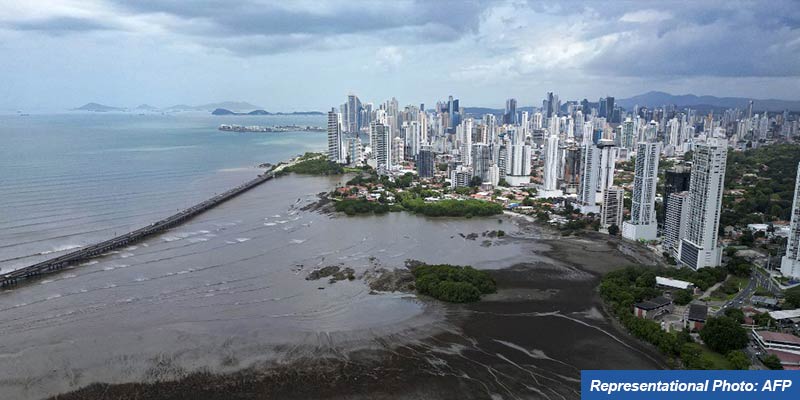
• More broadly, approximately 900 million people, around one in ten people globally, live in low-elevation coastal zones, a figure projected to approach one billion by 2050.
• Sea-level rise is a particular threat to densely populated coastal countries.
The way to declaration
• The UN General Assembly (UNGA) convened the first high-level meeting (HLM) to address existential threats posed by sea level rise on September 25, 2024.
• The goal of the meeting was to strengthen international cooperation and collective action to address sea level rise and to support developing countries, particularly climate-vulnerable ones, as well as coastal communities in building resilience and adapting to its consequences.
• That same year, the Assembly decided to hold a one-day high-level plenary meeting during its 81st session to further consider sea level rise.
• It further decided that the meeting, scheduled for September 24, 2026, would result in a concise, action-oriented, and intergovernmentally negotiated declaration agreed by consensus.