
- World
- Sep 29
UN marks 25 years of Durban Declaration
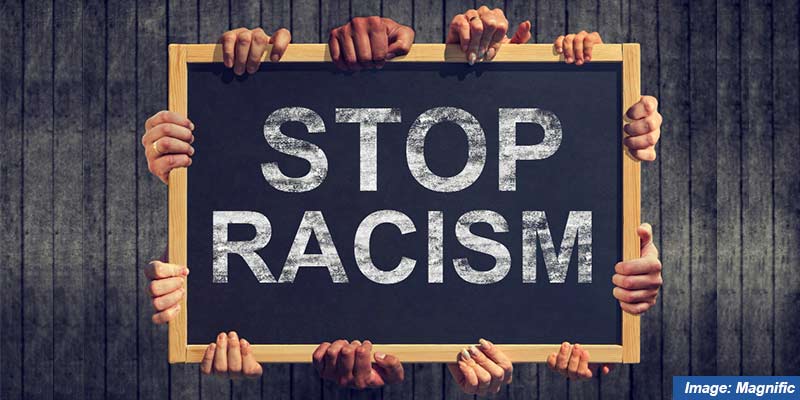
• Leaders assessed how far the world has come in combating racism and how far it still has to go during a high level meeting in the UN General Assembly.
• UN Secretary-General Antonio Guterres called for stronger laws, inclusive institutions and reparatory justice to combat racism.
• During the day-long meeting on September 28, some delegates pointed to new and emerging challenges.
What is Durban Declaration?
• In September 2001, leaders from across the globe came together in Durban, South Africa to address the pernicious effects of racism, racial discrimination, xenophobia, and related intolerance at all levels.
• The World Conference Against Racism, as it was known, led to the adoption of the Durban Declaration and Programme of Action (DDPA).
• The 2001 adoption of the Durban Declaration followed widespread and grave concern over entrenched racism since the UN’s inception, from colonialism to 46 years of South African apartheid.
• The Durban Declaration reaffirms core principles of equality and non-discrimination.
• The Programme of Action emphasizes States’ primary responsibility for combating racism, racial discrimination, xenophobia, and related intolerance, recommending clear mechanisms for achieving a more fair, just, and equitable society.
• The DDPA complements the International Convention on the Elimination of All Forms of Racial Discrimination, one of the most widely ratified treaties with 182 States parties.
• It serves as a practical guide for States to design and implement comprehensive reforms in various sectors at all levels, and honour their commitments towards combatting racism and discrimination.
• In the DDPA, States recognised that racism is not confined to individual acts of prejudice. It can be embedded in laws, institutions, policies and everyday practices, producing unequal access to justice, education, health, housing, decent work and political participation.
• The DDPA recommends that States adopt national action plans to promote diversity, equality, equity, social justice, and the participation of all, with plans that are comprehensive in scope, and address historical wrongs.
• A quarter of a century later, the DDPA remains as relevant as ever. The commitments still stand, as does the need for systemic change.
• Gaps persist in turning those commitments into action, largely because of ongoing discrimination, funding constraints, and a lack of political will.
• Africans and people of African descent, Asians and people of Asian descent, Indigenous Peoples, migrants, refugees, displaced persons, victims of human trafficking, and persons belonging to various minorities continue to face barriers to equality and full enjoyment of their rights.
• Racism persists in societies, political discourse, the media, sport, the workplace, public institutions and the digital environment. It affects access to education, employment, healthcare and housing.
• Important progress has been made in awareness, legal protections and institutional responses. Yet this remains insufficient and uneven, falling short of the scale and depth of the challenge, and has not consistently translated into meaningful change in people’s daily lives.
• The challenge today is not only to confront overt racism and racial discrimination, but also to address its evolving forms and the structural and institutional factors that sustain them.
• Racist hate speech and xenophobic narratives spread rapidly online and significantly shape people’s attitudes and their behaviours offline.
• Social media enables messages of hatred to spread at alarming speed, alongside information and disinformation increasingly amplified by artificial intelligence (AI).
• Discrimination is also sustained when people lack trust in institutions, when incidents go unreported or unchecked, and when laws and policies are absent, weak or not effectively implemented.
• While new technologies can be extremely beneficial for sustainable development if used responsibly, countries must work together to ensure that technological developments contribute to a better world and do not perpetuate or exacerbate existing and structural inequalities.