
- World
- Oct 08
No plague cases in Siberian city, Russia tells WHO
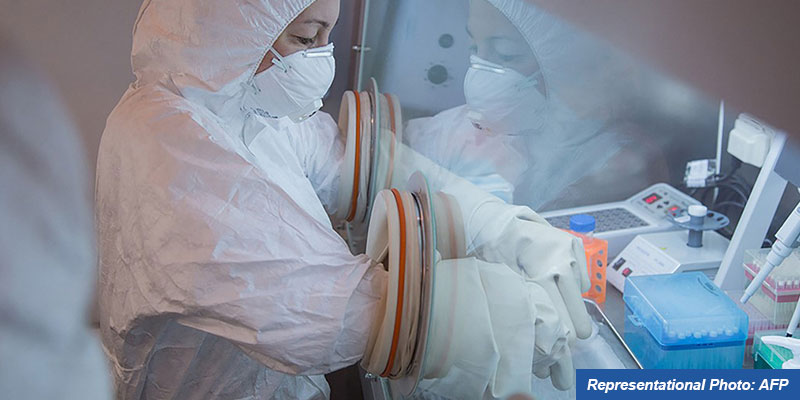
• The death of a lab worker in Russia’s Siberia region has sparked concerns over a possible plague case.
• A woman who worked at the laboratory in Irkutsk Oblast has died, and the authorities are looking into whether pneumonic plague caused her death.
• Her workplace was an institute that studies dangerous pathogens, including plague, in a part of Siberia where plague occurs naturally in wild animals.
• Russian regulators told WHO that there was no evidence pneumonic plague played a part in her death and that no pathogens had been detected.
• About 200 of her contacts have been placed in quarantine.
• When reports emerged of a possible pneumonic plague outbreak in Irkutsk, WHO immediately began monitoring and carrying out risk assessments.

Key points on plague:
• Cases of the deadly plague infection are reported around the world every year.
• Historically, plague was responsible for widespread pandemics with high mortality. It was known as the “Black Death” during the fourteenth century, causing more than 50 million deaths in Europe.
• Plague is caused by the bacteria Yersinia pestis usually found in small mammals and their fleas.
Types of plague:
There are three main clinical forms of plague infection.
1) Bubonic plague: It is the most common form of plague and is caused by the bite of an infected flea. Plague bacillus, Y. pestis, enters at the bite and travels through the lymphatic system to the nearest lymph node where it replicates itself. The lymph node then becomes inflamed, tense and painful, and is called a “bubo”. At advanced stages of the infection, the inflamed lymph nodes can turn into open sores filled with pus. Human-to-human transmission of bubonic plague is rare. Bubonic plague can advance and spread to the lungs, causing pneumonic plague, or to the bloodstream, causing septicaemic plague.
2) Pneumonic plague (lung-based plague): It is the most virulent form of plague. Incubation can be as short as 24 hours. Any person with pneumonic plague may transmit the disease via respiratory particles to other humans. Untreated pneumonic plague, if not diagnosed and treated early, can be fatal. However, recovery rates are high if detected and treated in time (within 24 hours of onset of symptoms).
3) Septicaemic plague: It occurs when Y. pestis multiplies rapidly in the bloodstream. It can develop from any other form of plague. It can lead to severe complications, including organ failure, tissue damage, respiratory distress and bleeding under the skin. Septicaemic plague is fatal if left untreated.
Treatment
• Plague can be a very severe disease in people, with a case-fatality ratio of 30 to 60 per cent for the bubonic type, and it is always fatal for the pneumonic and septicaemic kinds when left untreated.
• Early diagnosis and treatment are essential for survival and reduction of complications.
• Antibiotics and supportive therapy are effective against plague if patients are diagnosed in time.
• Pneumonic plague can be fatal within 18 to 24 hours of disease onset if left untreated, but common antibiotics for enterobacteria (gram negative rods) can effectively cure the disease if they are delivered early.