
- World
- Oct 09
Why World Post Day is observed on October 9?
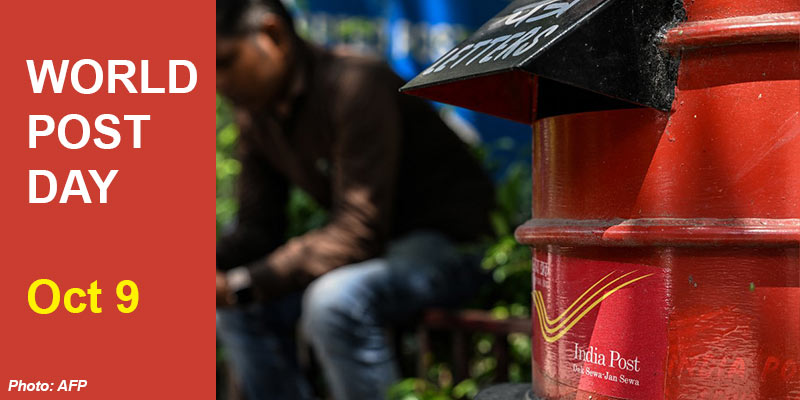
• World Post Day is celebrated every year on October 9.
• It commemorates the establishment of the Universal Postal Union in 1874 in the Swiss Capital, Bern.
• The purpose of World Post Day is to create awareness of the role of the postal sector in people’s and businesses’ everyday lives and its contribution to the social and economic development of countries.
• Under the theme “World Post Day: One postal network, infinite possibilities”, this year’s campaign celebrates the strength of a united global postal network and the many possibilities it creates for people, businesses and communities.
Universal Postal Union
• The Universal Postal Union (UPU), with its headquarters in the Swiss capital Bern, is one of the oldest international organisations.
• It was established in 1874.
• India became a member of the Universal Postal Union in 1876.
• With its 192 member countries, the UPU is the primary forum for cooperation between postal sector players. It helps to ensure a truly universal network of up-to-date products and services.
• It coordinates postal policies among member nations, in addition to the worldwide postal system.
• The UPU became a specialised agency of the United Nations on July 1, 1948.
Key facts on global postal network:
• With a network comprising more than 650,000 offices and 5.3 million staff globally, and a public service mandate from many governments, the Post is unparalleled in its ability to deliver services to anyone, anywhere.
• Over 1.5 billion people worldwide — approximately 28 per cent of the global adult population — access basic financial services (payments, money transfers, and savings) through postal networks.
• The global parcels market has grown from just under $450 billion in 2018 to over $500 billion in 2020.
• About 53 per cent of post offices in the world provide insurance, a critical financial service to strengthen the resilience of low-income individuals faced with irregular and unpredictable levels of revenue.
A brief history on India Post
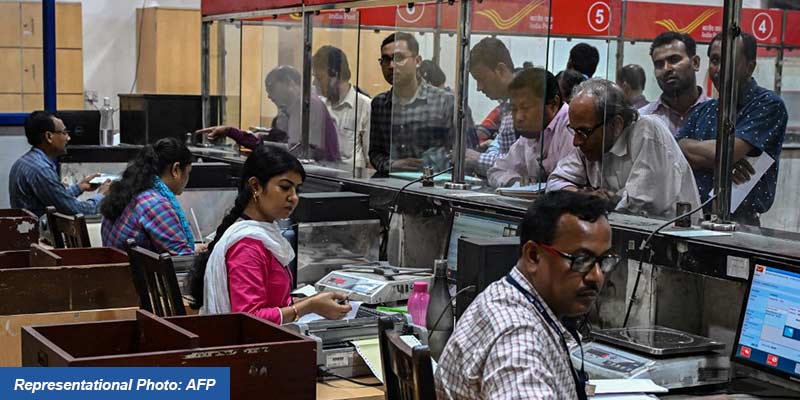
• The Department of Posts, with its network of over 1.64 lakh post offices, is the largest postal network in the world.
• The origin of this vast postal network can be traced back to the year 1727, when the first post office was set up in Calcutta (Kolkata). Subsequently, General Post Offices (GPOs) were set up in the then three Presidencies towns of Calcutta in 1774, Madras in 1786, and Bombay in 1793.
• The Indian Post Office Act of 1837 was enacted to bring about uniformity in postal operations. This Act was followed by the more comprehensive Indian Post Office Act of 1854 which laid the foundation of modern-day postal system in the country.
• In the same year, Railway Mail Service was introduced and the Sea Mail Service started from India to Great Britain and China.
• The Indian Post Office Act of 1898 further strengthened the postal system in the country.
• On February 18, 1911, the world’s first airmail flight took off from Allahabad to Naini. It traversed a distance of 18 kilometers across the river Ganges.
• The first postage stamp valid across the country was issued on October 1, 1854 which provided an affordable and uniform rate of postage based on weight.
• Since then, the Department of Posts has continued to play an important role in the socio-economic development of the nation by connecting the remotest corners of the country.
• As per Article 246(1) of the Constitution of India, the Parliament has exclusive power to make laws with respect to any of the matters enumerated in List I (or the “Union List”) in the Seventh Schedule. Communication is listed as entry number 31 of List I of the Seventh Schedule of the Constitution of India. As such communication is a Union subject and Parliament has exclusive powers to make laws on the matters in respect of communications.
• The Department of Posts is part of the Ministry of Communications.
• The world's highest post office is situated at Hikkim in Himachal Pradesh at an elevation of 4,440 metres (14,567 feet).
Governance System
• For providing postal services, the whole country has been divided into 23 postal circles.
• Each of these circles is headed by a Chief Postmaster General.
• Each circle is further divided into regions comprising field units, called divisions (postal / RMS divisions).
• Each region is headed by a Postmaster General.
• In the circles and regions there are other functional units like Circle Stamp Depots, Postal Stores Depots and Mail Motor Service, etc.
• Besides these 23 circles, there is another circle called Base Circle, to cater to the postal communication needs of the Armed Forces.
• The Base Circle is headed by an Additional Director General, Army Postal Service in the rank of a Major General.
What is PIN Code?
• The PIN Code system was introduced in India by Shriram Bhikaji Velankar, who had served as an additional secretary in the Union ministry of communications.
• Its implementation began from August 15, 1972.
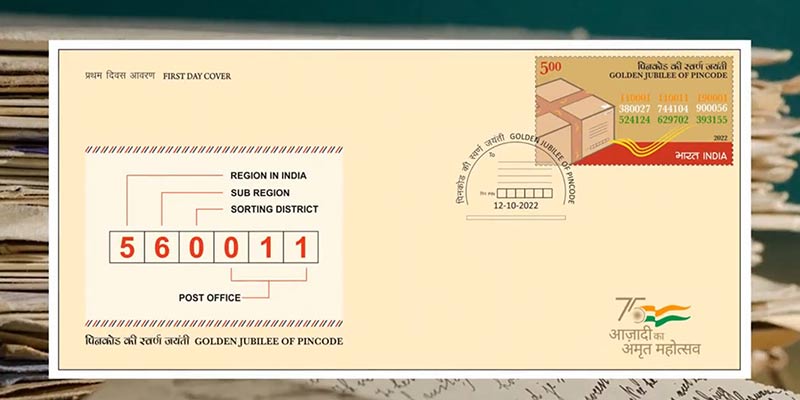
• Postal Index Number (PIN) or PIN Code is a six digit code of post office numbering used by India Post.
Why was the PIN Code introduced?
• There was confusion resulting from the duplication of names of various places across the country. Also, multiple languages were used to write addresses.
• The PIN code aims to simplify sorting of mails, speeding up mail transmission and delivery.
What does the PIN Code mean?
• There are nine PIN regions in the country. The first eight are geographical regions and the digit 9 is reserved for the Army Postal Service.
• The first digit indicates one of the regions. The first two digits together indicate the sub-region or one of the postal circles.
• The first three digits together indicate a sorting/revenue district.
• The last three digits refer to the delivery post office.