
- World
- Oct 23
- Sreesha V.M
France reports first human case of Shamonda virus
• A patient in France has died after being infected with Shamonda virus, the first recorded human case of the disease.
• The unidentified patient, who died in early October, had been receiving treatment for a serious illness and was immunocompromised, making him more vulnerable to infection, according to a statement from the French health and agriculture ministries.
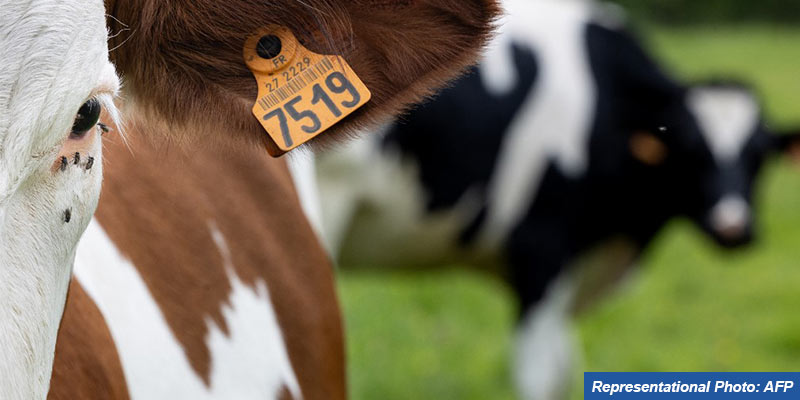
• The virus is mainly found in livestock, especially cattle, sheep, goats, horses and alpacas.
• He had been in an area where the virus was circulating among animals and where Culicoides midges were present.
• French authorities said that no health risk to the general public has been identified so far.
• The World Health Organisation (WHO) is working with French authorities to establish how the patient became infected, possible routes of transmission and any potential risk to public health.
What is Shamonda virus?
• Shamonda virus is a vector-borne virus belonging to the genus Orthobunyavirus in the family Peribunyaviridae.
• It is part of the Simbu serogroup, which also includes Schmallenberg virus.
• Shamonda virus was first isolated from cattle in Nigeria in 1965.
• The virus is understood to spread through bites from Culicoides midges.
• WHO has said further studies are needed to understand how it is transmitted.
• From the early 2000s onwards, the virus has been identified in other regions of Africa and Asia, before the recent identification in Europe.
• Recent reports mainly concern cattle, although cases have also been reported in sheep, goats, horses and alpacas.
• Reported signs in animals include fever, diarrhoea, reduced milk production and reproductive disorders, including abortions and foetal malformations. Neurological signs have also been reported less commonly.
• Laboratory testing is needed to confirm infection, as these signs can resemble those of other diseases.
• The outbreaks in Europe in 2026 have been shown to be caused by two different variants of the virus, designated as Shamonda virus Europe 1 (SHAV-EU1) and Shamonda virus Europe 2 (SHAV-EU2).
• There are currently no commercially available vaccines against Shamonda virus, according to the World Organisation for Animal Health (WOAH).
(The author is a trainer for Civil Services aspirants.)