
- World
- Oct 24
Drastic emission cuts can help return to 1.5°C warming by 2100, says UNEP report
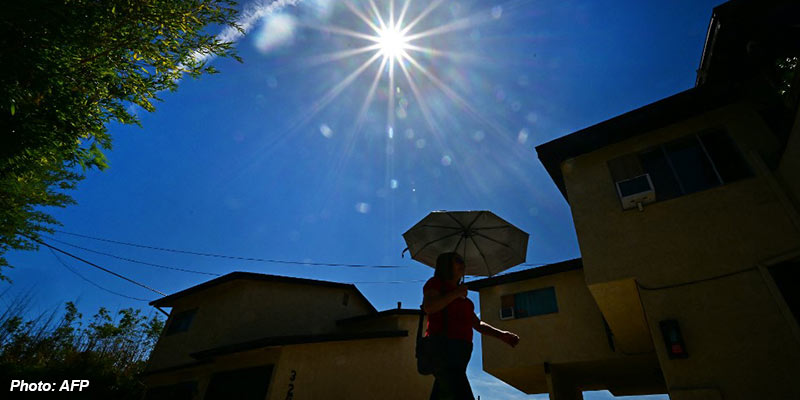
• With global temperature rise set to exceed 1.5°C above pre-industrial levels, urgent and stringent cuts to greenhouse emissions are needed to minimise the magnitude and duration of overshoot.
• The report looks at a lowest possible 1.5°C overshoot scenario, in which peak warming by around the middle of the century is limited to 1.7-1.8°C and global temperature rise is returned to or below 1.5°C by 2100, with about a 50 per cent chance.
• To get onto this pathway, global greenhouse gas (GHG) emissions would have to be reduced by 18 per cent by 2030, 45 per cent by 2035 and 69 per cent by 2040, all relative to 2025 levels.
• By contrast, the full implementation of Nationally Determined Contributions (NDCs) would only reduce emissions by 5-8 per cent by 2030 and 11-15 per cent by 2035, relative to 2025 levels.
Warmer planet, worse outcomes
• If current policies continue, warming could reach 2.8°C within this century and increase thereafter, the report warned.
• Under the Paris Agreement, countries are required to submit national climate action plans and even if all are delivered and similar efforts continue, warming will be limited to 2.6°C.
• These outcomes are worse than projections in 2025, due to the United States withdrawing from the climate deal and revised estimates of historical emissions.
• Meanwhile, new NDCs submitted since the last emissions report have hardly made a difference.

Successful climate efforts need to be scaled up
• The report finds that there are more opportunities than ever to accelerate action.
• Since the adoption of the Paris Agreement, renewable energy has boomed, total energy supply from coal and oil has grown slower than projected and climate policies have cut emissions in many places.
• Returning to or below 1.5°C can be done, particularly since there is growing evidence that climate policies across the world can and have reduced emissions.
• The report links the introduction or strengthening of climate-related policies to dozens of structural shifts in developed and developing countries, resulting in significant emissions reductions.
• More than 220 policy evaluations provide further evidence of what works.
• Evaluated policies in the electricity sector reduced emissions by an average of 9 per cent, while economic instruments, including carbon cap-and-trade schemes and carbon taxes, achieved reductions of 5-13 per cent across sectors in the evaluation period considered.
• Yet these successes remain concentrated in specific sectors, countries and periods.
• Getting onto a lowest possible 1.5°C overshoot pathway requires replicating, extending, and sustaining these successes.
• The report calls for accelerating implementation of goals outlined during the first-ever Global Stocktake – a process held from 2021 to 2023 to assess collective progress towards achieving the Paris Agreement.
These include:
i) Tripling renewable energy capacity and doubling the annual rate of energy efficiency improvements by 2030.
ii) Shifting away from fossil fuels in energy systems.
iii) Reducing non-CO2 (carbon dioxide) emissions.
iv) Halting and reversing deforestation and forest degradation.
• However, progress across most of these goals remains insufficient.
• The second Global Stocktake – which begins in November at the UN COP31 climate conference in Antalya, Turkey – can build on this by reaffirming priority mitigation action areas, extending quantified goals to 2035 and 2040, and making existing action areas more tangible through clearer and, where possible, quantified targets.