
- World
- Oct 24
United Nations celebrates its 81st anniversary on October 24
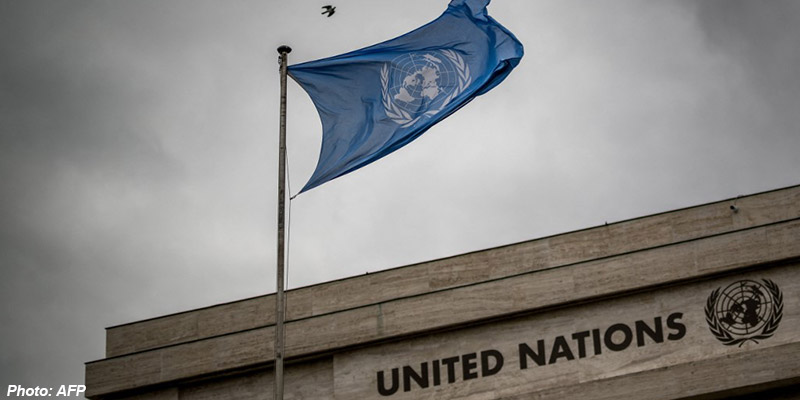
• The United Nations celebrated its 81st anniversary on October 24.
• United Nations Day, on 24 October, marks the anniversary of the entry into force in 1945 of the UN Charter.
• With the ratification of this founding document by the majority of its signatories, including the five permanent members of the Security Council, the United Nations officially came into being.
• October 24 has been celebrated as United Nations Day since 1948.
• The UN is the most universal international organisation, making it truly global in reach.
• The UN faces new challenges. The Organisation is working on ways to adapt and strengthen itself.
Genesis of the UN
• As World War II was about to end in 1945, nations were in ruins, and the world wanted peace.
• Representatives of 50 countries gathered at the United Nations Conference on International Organisation in San Francisco, California from April 25 to June 26, 1945.
• For the next two months, they proceeded to draft and then sign the UN Charter, which created a new international organisation, the United Nations, which, it was hoped, would prevent another world war like the one they had just lived through.
• The Charter is the founding document of the United Nations.
• It was signed on June 26, 1945 and came into force on October 24, 1945.
• India is one of the 51 original founders of the United Nations.
• Since the UN’s founding in 1945, the mission and work of the Organisation have been guided by the purposes and principles contained in its founding Charter, which has been amended three times in 1963, 1965, and 1973.
Main organs of the UN
The United Nations (UN) has six main organs. Five of them — the General Assembly, the Security Council, the Economic and Social Council, the Trusteeship Council and the Secretariat — are based at UN Headquarters in New York. The sixth, the International Court of Justice, is located at The Hague in the Netherlands.
All were established under the UN Charter when the organisation was founded in 1945.
The United Nations is neither a supra-State nor a government of governments. It does not have an army and it imposes no taxes. It depends on the political will of its Member States to have its decisions put into action and relies on the contributions of its Members to carry out its activities.
1) General Assembly
The General Assembly is the main deliberative, policymaking and representative organ of the UN. All 193 Member States of the UN are represented in the General Assembly, making it the only UN body with universal representation. Each year, in September, the full UN membership meets in the General Assembly Hall in New York for the annual General Assembly session, and general debate, which many heads of State attend and address. Decisions on important questions, such as those on peace and security, admission of new members and budgetary matters, require a two-thirds majority of the General Assembly. Decisions on other questions are by simple majority. The General Assembly, each year, elects a GA President to serve a one-year term of office.
2) Security Council
The Security Council, which is charged with maintaining international peace and security, has not changed from its 1945 configuration: 10 non-permanent members from all regions of the world elected for two-year terms without veto power and five countries that were dominant powers at the end of World War II are permanent members with veto power: the United States, Russia, China, Britain, and France. All members of the United Nations agree to accept and carry out the decisions of the Security Council. While other organs of the United Nations make recommendations to Member States, only the Security Council has the power to make decisions that Member States are then obligated to implement under the Charter. The Security Council takes the lead in determining the existence of a threat to the peace or act of aggression. It calls upon the parties to a dispute to settle it by peaceful means and recommends methods of adjustment or terms of settlement.
3) Economic and Social Council (ECOSOC)
The Economic and Social Council (ECOSOC) is the principal body for coordination, policy review, policy dialogue and recommendations on economic, social and environmental issues, as well as implementation of internationally agreed development goals. It serves as the central mechanism for activities of the UN system and its specialised agencies in the economic, social and environmental fields, supervising subsidiary and expert bodies. It has 54 Members, elected by the General Assembly for overlapping three-year terms. It is the United Nations’ central platform for reflection, debate, and innovative thinking on sustainable development.
4) Trusteeship Council
The Trusteeship Council was established in 1945 by the UN Charter to provide international supervision for 11 Trust Territories that had been placed under the administration of seven Member States, and ensure that adequate steps were taken to prepare the Territories for self-government and independence. By 1994, all Trust Territories had attained self-government or independence. The Trusteeship Council suspended its operations on November 1, 1994, a month after the independence of Palau, the last remaining United Nations trust territory. By a resolution adopted on May 25, 1994, the Council amended its rules of procedure to drop the obligation to meet annually and agreed to meet as occasion required — by its decision or the decision of its President, or at the request of a majority of its members or the General Assembly or the Security Council.
5) International Court of Justice
The International Court of Justice is the principal judicial organ of the United Nations. Its seat is at the Peace Palace in the Hague (Netherlands). It is the only one of the six principal organs of the United Nations not located in New York. The Court’s role is to settle, in accordance with international law, legal disputes submitted to it by States and to give advisory opinions on legal questions referred to it by authorised United Nations organs and specialised agencies. The International Court of Justice functions in accordance with its Statute.
6) Secretariat
The Secretariat comprises the Secretary-General and tens of thousands of international UN staff members who carry out the day-to-day work of the UN as mandated by the General Assembly and the organisation’s other principal bodies. The Secretary-General is Chief Administrative Officer of the Organisation, appointed by the General Assembly on the recommendation of the Security Council for a five-year, renewable term. The Secretary-General is also a symbol of the Organisation’s ideals, and an advocate for all the world’s peoples, especially the poor and vulnerable. UN staff members are recruited internationally and locally, and work in duty stations and on peacekeeping missions all around the world.