
- World
- Oct 26
EU awards Sakharov Prize to International Criminal Court
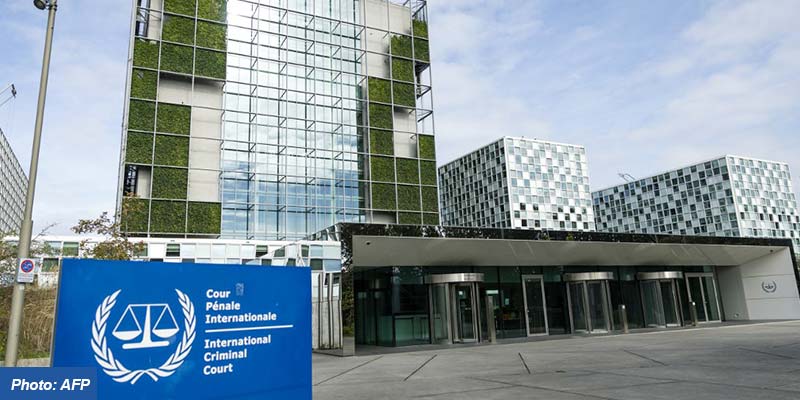
• The European Union has awarded the 2026 Sakharov Prize for Freedom of Thought to the International Criminal Court (ICC) and its officials.
• The award highlights the ICC’s work, including investigations, prosecutions, trials and the issuance or authorisation of arrest warrants.
• The award came just days after the Trump administration announced sweeping new sanctions on the court.
• The Hague-based ICC has long been a target of US President Donald Trump, whose campaign against it has escalated since the court announced in 2024 arrest warrant against Israeli Prime Minister Benjamin Netanyahu.
International Criminal Court (ICC)
• The International Criminal Court (ICC) is an independent judicial body with jurisdiction over persons charged with genocide, crimes against humanity and war crimes.
• Situated in The Hague, Netherlands, the ICC is governed by the Rome Statute adopted by the UN in 1998. It entered into force in 2002 upon ratification by 60 States.
• In addition, the Rome Statute also sets new standards for victims’ representation in the courtroom, and ensures fair trials and the rights of the defence. The court seeks global cooperation to protect all people from the crimes codified in the Rome Statute.
• Currently, 125 countries are State Parties to the Rome Statute of the ICC.
• India has not signed the Rome Statute as it is not a member of the ICC.
The Sakharov Prize for Freedom of Thought
• The EU award, named for Soviet dissident Andrei Sakharov, was created in 1988 to honour individuals or groups who defend human rights and fundamental freedoms.
• It was awarded to Nelson Mandela and Anatoli Marchenko for the first time in 1988.
• The Sakharov Prize for Freedom of Thought is the highest tribute paid by the European Union to human rights work. It gives recognition to individuals, groups and organisations that have made an outstanding contribution to protecting freedom of thought.
• Each of the Parliament’s political groups may nominate candidates, as may individual MEPs (the support of at least 40 MEPs is required for each candidate).
• The nominees are presented at a joint meeting of the Foreign Affairs Committee, the Development Committee and the Human Rights Subcommittee, and the members of the full committees vote on a shortlist of three candidates.
• The final winner or winners of the Sakharov Prize are chosen by the Conference of Presidents, a European Parliament body led by the president, which includes the leaders of all the political groups represented in the Parliament, making the choice of laureates a truly European choice.
• The European Parliament awards the Sakharov Prize at a formal plenary sitting in Strasbourg towards the end of each year.
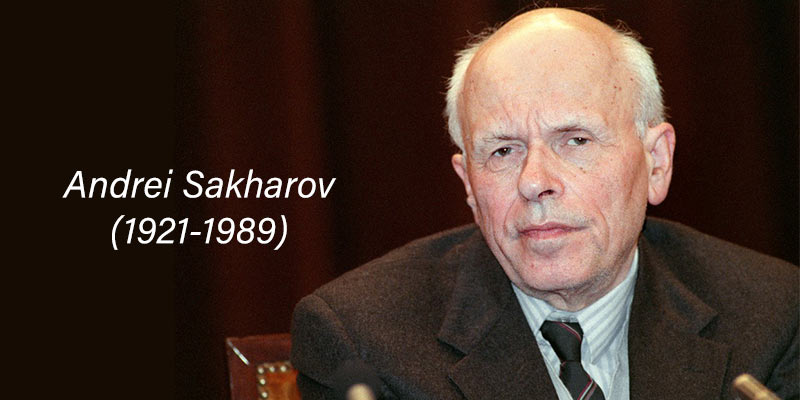
Who was Andrei Sakharov?
• Russian physicist Andrei Sakharov (1921-1989) first came to prominence as “the father of the Soviet hydrogen bomb”.
• Sakharov revealed his talent for theoretical physics at an early age, and got a doctorate in 1945. From 1948 on, under the supervision of the Nobel Laureate Igor Tamm, he worked on the development of a Soviet hydrogen bomb. Sakharov believed it was important to break the American monopoly on nuclear weapons.
• But from the late 1950s on, he issued warnings against the consequences of the arms race, and in the 1960s and 1970s he voiced sharp criticism of the system of Soviet society, which in his opinion departed from fundamental human rights.
• His efforts proved partially successful with the signing of the 1963 nuclear test ban treaty.
• In 1970, he founded a committee to defend human rights and victims of political trials. Despite increasing pressure from the government, Sakharov not only sought the release of dissidents in his country but became one of the regime’s most courageous critics, embodying the crusade against the denial of fundamental rights.
• Sakharov was awarded the Nobel Peace Prize in 1975 for his opposition to the abuse of power and his work for human rights.
• The leaders of the Soviet Union reacted with fury, and refused Sakharov permission to travel to Oslo to receive the Prize. His wife, Jelena Bonner, received it on his behalf.
• Sakharov was subsequently deprived of all his Soviet honorary titles, and the couple was for several years kept under strict surveillance in the town of Gorky. Only when Gorbachev came to power in 1985 were they allowed to return to Moscow.
• Sakharov died in 1989 at the age of 68.