
- World
- Nov 14
1.13 million people died from TB in 2025
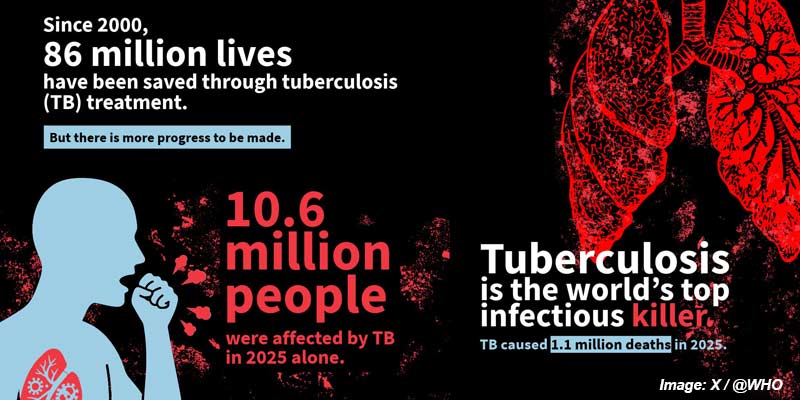
• In 2025, an estimated 10.6 million people developed tuberculosis (TB) and 1.1 million people died from TB, according to the World Health Organisation (WHO) Global Tuberculosis Report 2026 released on November 12.
Key facts about TB:
• Tuberculosis is caused by bacteria (Mycobacterium tuberculosis) that most often affect the lungs. It can spread when people who are sick with TB expel bacteria into the air – for example, by coughing.
• Globally, TB is the world’s leading cause of death from a single infectious agent and ranks 13th among all causes of death.
• TB is the leading cause of death of people with HIV and also a major contributor to antimicrobial resistance.
• Most people who develop the disease are adults.
• TB is preventable and curable. About 85 per cent of people who develop TB disease can be successfully treated with a 4/6-month drug regimen. Treatment has the added benefit of curtailing onward transmission of infection.
• Economic and financial barriers can affect access to health care for TB diagnosis and completion of TB treatment; about half of TB patients and their households face catastrophic total costs due to TB disease.
• Progress towards universal health coverage (UHC), better levels of social protection and multisectoral action on broader TB determinants are all essential to reduce the burden of TB disease.
• In certain countries, the Bacille Calmette-Guerin (BCG) vaccine is given to babies or small children to prevent TB.
• The vaccine prevents deaths from TB and protects children from serious forms of TB.
• In certain countries, the BCG vaccine is given to babies or small children to prevent TB.
• The vaccine prevents deaths from TB and protects children from serious forms of TB.
Key points of Global Tuberculosis Report 2026:
• In 2025, about 54 per cent of people who developed TB were men, 35 per cent were women and 11 per cent were children.
• Major gaps in access to timely diagnosis and treatment remain. Of the estimated 10.6 million people who developed TB in 2025, 8.4 million were diagnosed, leaving an estimated 2.2 million either undiagnosed or unreported.
• Just 59 per cent of newly diagnosed patients were tested using a WHO-recommended rapid diagnostic test, far short of the 100 per cent target for 2027.
• Drug-resistant TB remains a major public health challenge. Of the estimated 370,000 people who developed rifampicin-resistant TB in 2025, only 42 per cent received treatment.
• Among those treated, uptake of the WHO-recommended six-month treatment regimen increased substantially, from 18 per cent in 2024 to 42 per cent in 2025.
• Global efforts to end TB continue to make progress, with fewer people falling ill and dying from the disease.
• This progress comes as domestic funding for TB increased by 14 per cent to $5.6 billion between 2024 and 2025, in part offsetting a decline in international financing of a similar scale.
• This increase underscores the importance of domestic investment in sustaining TB services and protecting hard-won health gains amid a global health funding crunch.
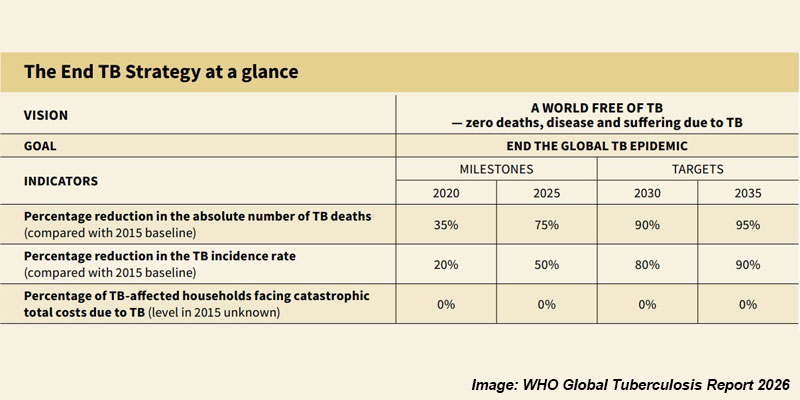
• With deaths falling by 35 per cent since 2015 and treatment saving an estimated 86 million lives since 2000, the world has reached the first mortality milestone of WHO’s End TB Strategy although five years later than planned.
• Since 2015, the global TB incidence rate (new cases per 100,000 population) has declined by 14 per cent, far short of the 50 per cent reduction milestone for 2025, and TB remains the leading cause of death from a single infectious agent.
• The global TB burden remains heavily concentrated in 30 countries, which account for 88 per cent of people who developed TB in 2025.
• Between 2015 and 2025, TB incidence fell by 42 per cent in the WHO European Region and 30 per cent in the African Region, compared with 18 per cent in South-East Asia and just 6.6 per cent in the Eastern Mediterranean.
• Investment in TB research is critically insufficient. Research funding stood at $1.2 billion in 2023, less than one quarter of the required $5 billion annual target for 2027. Greater investment is urgently needed to develop and roll out new vaccines, diagnostics and treatments.