
- World
- Nov 18
US loses measles elimination status after 26 years
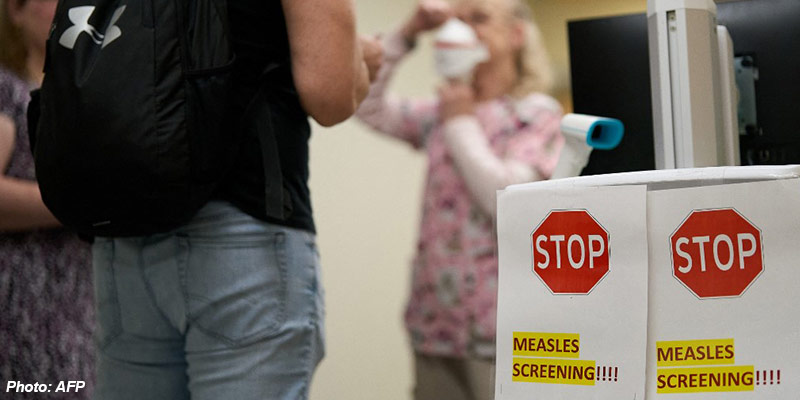
• The United States lost its measles elimination status after 26 years, the Pan American Health Organisation (PAHO) said on November 17.
• Bolivia and Mexico have also lost their measles elimination status, the Americas arm of the World Health Organisation (WHO) said.
What does it mean when a country loses its measles elimination status?
• It means that measles is no longer considered to have been eliminated in that country because the virus has become established in sustained local transmission.
• Epidemiological and laboratory evidence demonstrates that the virus has circulated continuously for at least 12 months, meeting the criteria for the re-establishment of endemic transmission.
• Measles and Rubella Elimination Regional Monitoring and Re-Verification Commission (RVC) reviewed the epidemiological and laboratory evidence for measles in all 47 reporting countries and territories of the Americas at its sixth annual meeting, held from November 10 to 13.
• After reviewing the data for the US, Mexico, and Bolivia, the Commission concluded that all three countries had lost their verification status as free from endemic measles transmission, as the virus had circulated continuously in each country for at least 12 months, indicating that endemic transmission had been re-established.
• In the US, the outbreak began on January 20, 2025. The 12-month threshold was reached on January 20, 2026.
• The Region of the Americas, the first in the world to eliminate measles, regained its elimination status in 2024 after successfully interrupting endemic transmission in Venezuela and Brazil.
• However, the loss of regional status in November 2025, following sustained transmission in Canada, was a major setback.
• The subsequent loss of elimination status by Bolivia, Mexico and the US marks a further deterioration in the regional situation and makes the path towards restoring elimination more challenging.
• As of November 13, the region has reported 58,213 confirmed measles cases and 82 deaths, compared with 12,806 cases during the same period in 2025.
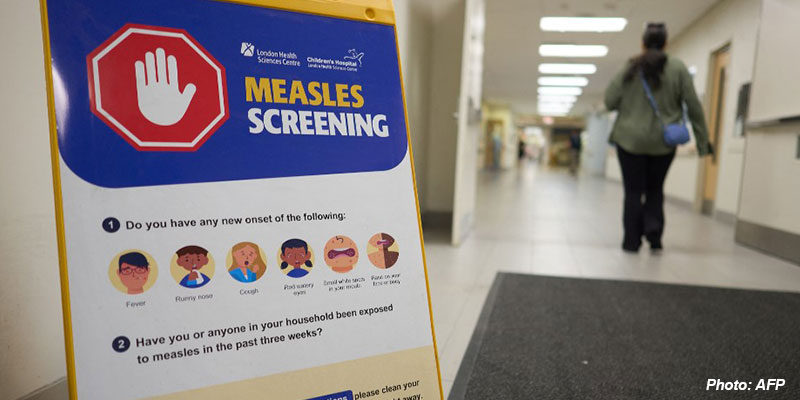
The path back to elimination
• The region of Americas has faced this challenge before. After endemic transmission was re-established in Venezuela and Brazil in 2018 and 2019, respectively, countries worked together to interrupt transmission, and the region regained its measles elimination status in 2024.
• Achieving and sustaining at least 95 per cent coverage with both doses of the measles vaccine in every community, backed by strong surveillance and effective outbreak response, remains the path towards measles elimination.
Measles - one of the most contagious diseases
• Measles is one of the most contagious diseases in the world. One infected person can transmit the virus to as many as 18 susceptible individuals.
• Measles is caused by a virus in the paramyxovirus family. The virus infects the respiratory tract, then spreads throughout the body. Measles is a human disease and is not known to occur in animals.
• It is spread by coughing and sneezing, close personal contact or direct contact with infected nasal or throat secretions.
• Measles can damage the immune system by “erasing” its memory of how to fight infections, leaving survivors vulnerable to other diseases.
• Symptoms of measles usually begin 10-14 days after exposure to the virus. A prominent rash is the most visible symptom. The rash begins about 7-18 days after exposure, usually on the face and upper neck. It spreads over about three days, eventually to the hands and feet. It usually lasts five-six days before fading.
• Even when people survive measles, serious health effects can occur, some of which are lifelong. Infants and young children are at greatest risk of serious complications from the disease, which include blindness, pneumonia, and encephalitis (an infection causing brain swelling and potentially brain damage).
• Before the introduction of the measles vaccine in 1963 and widespread vaccination, major epidemics occurred approximately every 2-3 years and measles caused an estimated 2.6 million deaths each year.
• Measles outbreaks can result in epidemics that cause many deaths, especially among young, malnourished children. In countries where measles has been largely eliminated, cases imported from other countries remain an important source of infection.
• Most measles-related deaths are caused by complications including swelling of the brain and dehydration.
• Serious complications are most serious in children under five and adults over 30.
• There is no specific treatment for measles, but the two-dose vaccine against it is about 97 per cent effective in preventing severe illness and death.
• Measles vaccination averted more than 60 million deaths between 2000 and 2023.
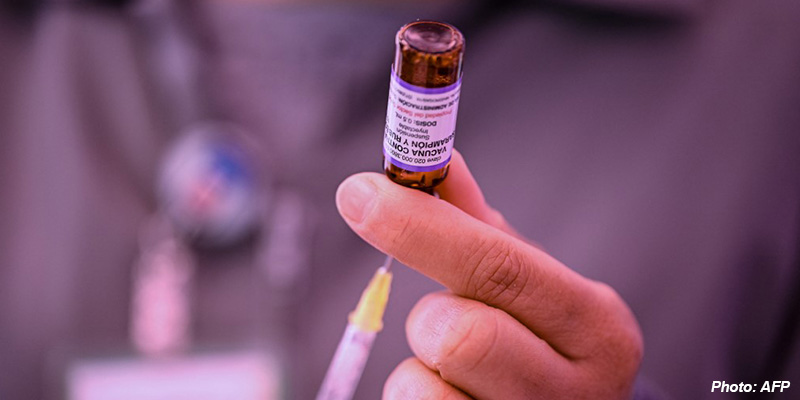
Why are measles cases increasing globally?
• Many countries have not maintained the high two-dose coverage needed to prevent outbreaks.
• Children who missed routine vaccinations during the COVID-19 pandemic and in subsequent years have created immunity gaps.
• National averages can conceal communities or geographical areas where vaccination rates are substantially lower.
• Concerns about vaccine safety and misinformation can reduce acceptance in some communities.
• Poverty, geographical isolation, migration, conflict and weak health infrastructure can prevent children from receiving routine vaccinations.
• Increased movement of people allows measles to spread rapidly across borders, introducing the virus into communities where immunity is insufficient.
Measles cases in India
• India recorded 15,281 measles cases according to provisional monthly surveillance data from the WHO covering the period from April to September 2026.
• Measles and Rubella are highly infectious viral diseases that can lead to serious illnesses, lifelong complications, and even death. Due to their high infection rate,
• India has set a goal to eliminate measles and rubella by 2026.
• Under the Universal Immunisation Programme (UIP), two doses of the Measles-Rubella (MR) vaccine are provided free of cost to all eligible children, at 9-12 months and 16-24 months of age, respectively.
• States are identifying areas of low immunisation coverage and are undertaking supplementary immunisation activities to bridge the immunisation gap.