
- World
- Nov 26
Explainer - Importance of sustainable transport
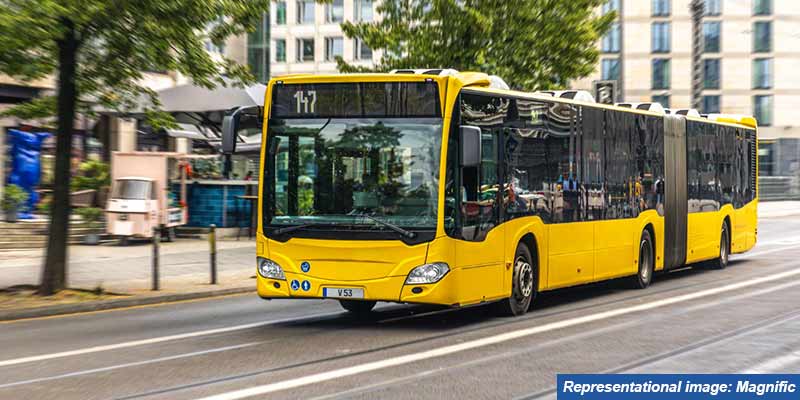
• The United Nations observes World Sustainable Transport Day on November 26.
• It recognises the important role of safe, affordable, accessible and sustainable transport systems for all in supporting sustainable economic growth, improving the social welfare of people and enhancing international cooperation and trade among countries.
What is sustainable transport?
• Transport is vital for promoting connectivity, trade, economic growth and employment.
• Yet, it is also implicated as a significant source of green-house gas emissions.
• Resolving these trade-offs is essential to achieving sustainable transport and, through that, sustainable development.
• Sustainable transport is defined as the provision of services and infrastructure for the mobility of people and goods — advancing economic and social development to benefit today’s and future generations — in a manner that is safe, affordable, accessible, efficient, and resilient, while minimising carbon and other emissions and environmental impacts
• Sustainable transport — with its objectives of universal access, enhanced safety, reduced environmental and climate impact, improved resilience, and greater efficiency — is central to sustainable development.
• It is a cross-cutting accelerator, that can fast-track progress towards other crucial goals, such as eradicating poverty in all its dimensions, reducing inequality, empowering women, and combatting climate change.
• It is vital for achieving the 2030 Agenda for Sustainable Development, and the Paris Climate Change Agreement.
• While there is no single dedicated Sustainable Development Goal (SDG) for transport, it is reflected in several SDG targets and recognised as an enabler for achieving many of the goals.
• Progress to date with regard to sustainable transport has been insufficient.
• Countries in special situations, such as Land-Locked Developing Countries (LLDCs) and Small Island Developing States (SIDS), are particularly dependent on achieving connectivity through
sustainable transport because of their geography and location.
• Over a billion people still lack access to an all-weather road, and only about half the world’s urban population have convenient access to public transport.
• The SDG road safety target — which aimed to halve, by 2020, the number of global deaths and injuries from road traffic accidents — has not been met, with road traffic injuries being the leading cause of death among young people aged 15 to 29.
• Transport is responsible for around a quarter of direct CO2 emissions from fossil fuel combustion.
• Building the resilience of transport systems and infrastructure has become more challenging due to increasingly frequent and more intense extreme weather events.
• Globally, the average annual carbon footprint per individual is 5.9 tonnes.
• Living car-free can reduce your annual carbon footprint by up to 3.6 tonnes.
• Switching from a regular vehicle to an electric vehicle (EV) can reduce your carbon footprint by an average of 2 tonnes per year.

Benefits of sustainable transport:
• Sustainable transport enables the mobility of people and goods.
• It contributes to poverty eradication and inequality reduction by generating jobs, enabling access to jobs, and supporting livelihoods.
• It can ensure food security, improve access to important services, such as health, education, and finance.
• It can enable inclusive economic growth, empower women and vulnerable groups and further the health and well-being of all.
• Sustainable transport allows for community interaction.
• It helps integrate markets and economies, enhances rural-urban linkages, and facilitates international trade.
• It underpins regional and global supply chains and improves their efficiency.
• It contributes to trade competitiveness, and can boost resilience to systemic and external disruptions, including economic shocks, pandemics, and climate-related disasters and extreme weather events.