
- India
- Aug 27
- Mathew Gregory
Status report on Garib Kalyan Rojgar Abhiyaan
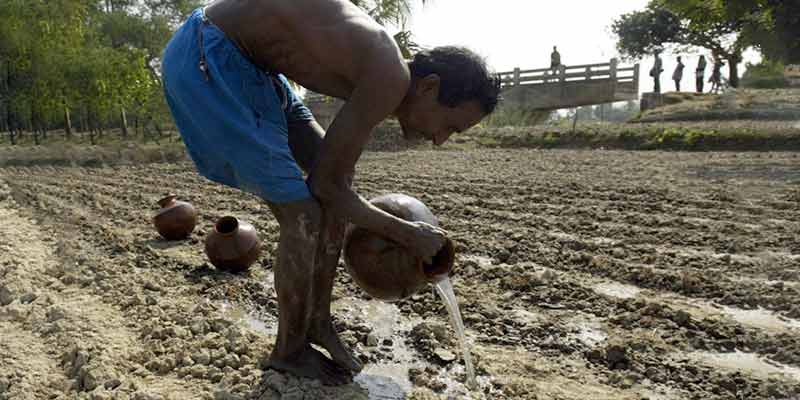
The Garib Kalyan Rojgar Abhiyaan (GKRA) launched on 20 June 2020, in the wake of COVID-19 outbreak, to boost employment and livelihood opportunities for migrant workers returning to villages and similarly affected citizens in rural areas with an initial funding of ₹50,000 crore.
The scheme covers 116 districts in six states, Bihar, Uttar Pradesh, Madhya Pradesh, Rajasthan, Odisha and Jharkhand.
Status so far
• By the 9th week, a total of about 24 crore man-days employment has been provided and Rs.18,862 crore has been spent so far in the pursuit of objectives of the Abhiyaan.
• A large number of structures have been created so far including 85,786 water conservation structures, 2,63,846 rural houses, 19,397 cattle shed, 12,798 farm ponds, and 4,260 Community Sanitary Complexes.
• 6342 works have been taken up through District Mineral Funds, 1002 Gram Panchayats have been provided internet connectivity, a total of 13,022 works related to solid and liquid waste management taken up, and 31,658 candidates have been provided skill training through Krishi Vigyan Kendras (KVKs) during the Abhiyaan.
• The Abhiyaan is set for longer term initiative for jobs and livelihoods for those who choose to stay back.
Work envisaged under the Abhiyaan
1. Community Sanitary Complex
2. Gram Panchayat Bhawan
3. Works under Finance Commission funds
4. National Highway works
5. Water conservation & Harvesting works
6. Construction of Wells
7. Plantation (including through CAMPA Funds)
8. Horticulture
9. Anganwadi Centers
10. Rural Housing(PMAY–Gramin)
11. Rural connectivity (PMGSY) & Border road works
12. Railway works
13. Shyama Prasad Mukherjee RURBAN Mission
14. PM KUSUM works
15. Laying of Fiber Optic Cable under Bharat Net
16. Works under Jal Jeevan Mission
17. Works under PM Urja Ganga Project
18. Training through KVKs for Livelihoods
19. Works through District Mineral Fund
20. Solid and Liquid waste management works
21. Farm ponds
22. Cattle sheds
23. Goat Sheds
24. Poultry sheds
25. Vermicomposting
(The author is a trainer for Civil Services aspirants. The views expressed here are personal.)