
- India
- Aug 02
Explainer - Funding for MGNREGS
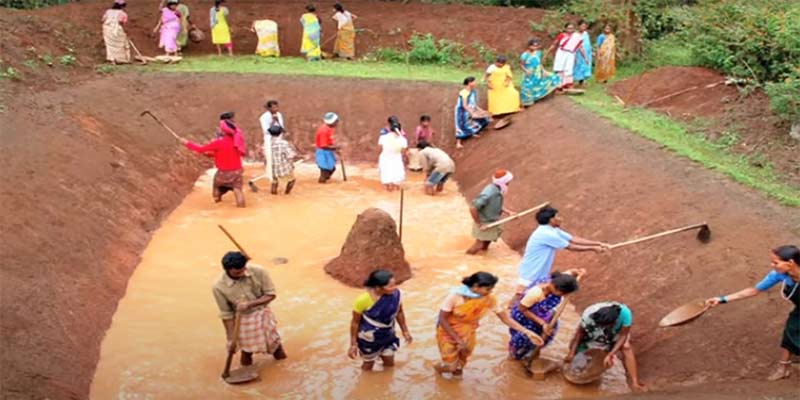
The Union government owes Rs 6,366 crore under the wage component of the Mahatma Gandhi National Rural Employment Guarantee Scheme (MGNREGS) to states/Union Territories, Minister of State for Rural Development Sadhvi Niranjan Jyoti said in a reply in Lok Sabha on August 1.
The minister added that the Centre also has pending liabilities of Rs 6,266 crore for material components to states/UTs.
What is MGNREGS?
• Mahatma Gandhi National Rural Employment Guarantee Scheme (MGNREGS) is a demand driven wage employment programme, which provides for livelihood security by providing at least 100 days of guaranteed wage employment in every financial year to every rural household whose adult members volunteer to do unskilled manual work.
• In case employment is not provided within 15 days from the date of registration of the demand for work or the date from which work has been demanded in case of advance applications, whichever is later, the worker is entitled to a daily unemployment allowance.
• MGNREGS aims to strengthen the livelihood resource base of the rural households while creating productive assets.
• The Parliament passed the Mahatma Gandhi National Rural Employment Guarantee Act (MGNREGA) in August 2005. It came into force on February 2, 2006.
• MGNREGS was initially implemented in 200 districts and extended subsequently to other districts. At present, it covers over 700 districts.
• Wage rates for workers under the MGNREGA are notified and revised annually. MGNREGA wages are paid based on measurement of work done. Every state has its defined Schedule of Rates on the basis of which the work output is defined and used to calculate the wages for MGNREGA beneficiaries. The actual wage payable is calculated based on the output of the worker.
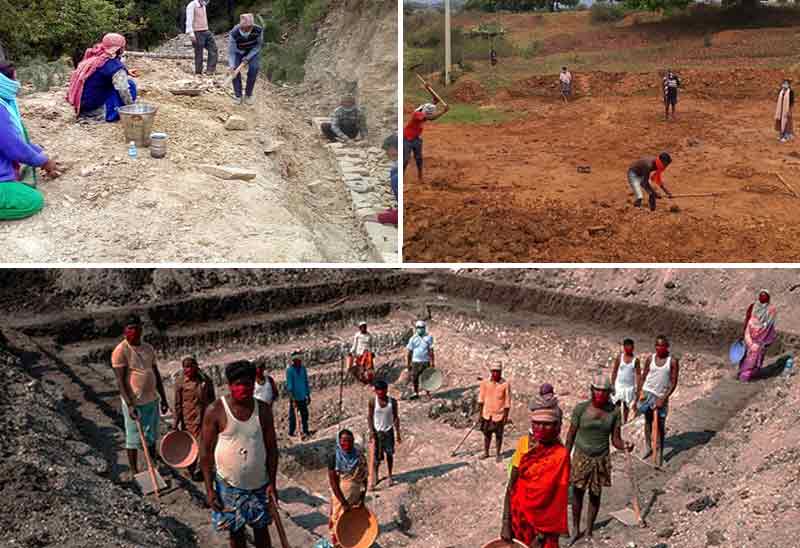
Objectives of the scheme:
i) Social protection for the most vulnerable people living in rural India by guaranteeing wage employment opportunities.
ii) Enhance livelihood security of the rural poor through generation of wage employment opportunities in works leading to creation of durable assets.
iii) Rejuvenate natural resource base of rural areas.
iv) Create a durable and productive rural asset base.
v) Empowerment of the socially disadvantaged, especially, women, Scheduled Castes (SCs) and Scheduled Tribes (STs), through the processes of a rights-based legislation.
vi) Strengthen decentralised, participatory planning through convergence of various anti-poverty and livelihoods initiatives.
vii) Deepen democracy at the grassroots by strengthening Panchayati Raj Institutions.
Funding for the scheme
• It is a demand-driven wage employment scheme.
• The central government releases funds to the states as per the projections made in the approved labour budget which is based on physical and financial performance of the state in the previous financial year.
• As per prescribed norms, the states are required to submit district and month-wise projections as agreed to in the labour budget so that the seasonal trend can be taken care of.
• The first instalment is released in the first half of April after adjusting unspent balance available with the states and considering the pending liabilities, if any.
• The second instalment is released on submission of proposal in the prescribed format by the state and subject to fulfillment of all the prescribed conditions.
• The financial allocation under MGNREGS for financial year 2022-23 was Rs 73,000 crore at Budget Estimate stage, which was enhanced to 89,400 crore at Revised Estimate stage.
• There is a budget allocation of Rs 60,000 crore at Budget Estimate stage for MGNREGS for financial year 2023-24.
Manorama Yearbook app is now available on Google Play Store and iOS App Store