
- India
- Dec 13
- Sreesha V.M
India’s resolution on wildfire management adopted at UNEA-7
• India’s resolution on ‘Strengthening the Global Management of Wildfires’ was adopted at the seventh session of the UN Environment Assembly (UNEA-7) in Nairobi on December 12.
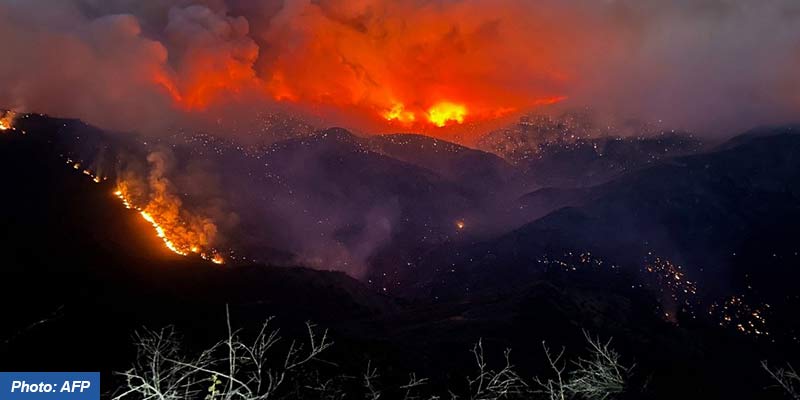
• Wildfires, once seasonal, have become frequent and prolonged due to climate change and human activities.
• Wildfires have now become frequent and prolonged, driven largely by climate change, rising temperatures, extended droughts, and human activities.
• Millions of hectares are affected every year, impacting forests, biodiversity, water resources, soil health, air quality, livelihoods and national economies.
• Wildfires also release large volumes of greenhouse gases and weaken carbon sinks, with serious implications for forest-dependent communities.
• The resolution, moved by India, received wide support from Member States, reaffirming global recognition of the urgent need to address the rising threat of wildfires worldwide.
• The resolution responds to the rising number, scale and intensity of wildfires worldwide and calls for stronger international cooperation, early warning systems and better access to finance for prevention and management.
• India highlighted UNEP’s global report ‘Spreading Like Wildfire’, which warns that wildfires may increase by 14 per cent by 2030, 30 per cent by 2050 and 50 per cent by 2100 if current trends continue.
• These projections, India stressed, show that wildfires are a long-term, climate-driven global risk requiring urgent and coordinated action.
• India also emphasised the need to shift from reactive response to proactive prevention through better planning, early warning and timely risk reduction measures.
• Global efforts are moving towards integrated fire management based on early warning systems, risk mapping and satellite-based monitoring, supported by local communities and frontline personnel.
Key Provisions of India’s Resolution:
The resolution aims to reinforce ongoing global activities under the Global Fire Management Hub and calls for:
i) Strengthened International Cooperation: Development of early warning systems, risk assessment tools, and satellite and ground-based ecosystem monitoring, besides promotion of community-based alert mechanisms.
ii) Enhanced Regional and Global Collaboration: Mechanisms supporting prevention, post-response recovery, and ecosystem restoration.
iii) Knowledge Sharing and Capacity Building: Creation of platforms for best practices, along with training and capacity-building programmes stakeholders.
iv) Support for National and Regional Action Plans: Assistance to Member States in developing and implementing integrated fire management and wildfire resilience strategies.
v) Facilitating Access to International Finance: Support to Member States in preparation of project proposals to access funding through multilateral mechanisms and results-based schemes.
(The author is a trainer for Civil Services aspirants.)