
- India
- Mar 26
- Sreesha V.M
Cabinet clears India’s climate targets for 2031-35
• The Union Cabinet has approved India’s Nationally Determined Contribution (NDC) for the period from 2031 to 2035 to be communicated to the United Nations Framework Convention on Climate Change (UNFCCC) under the Paris Agreement.
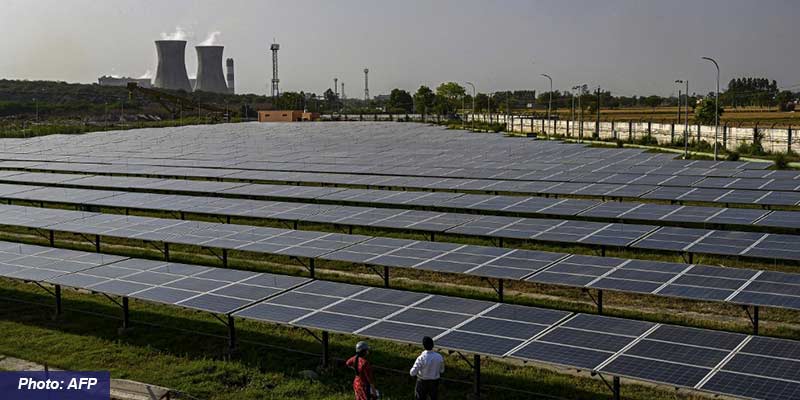
• India has committed to reducing the emissions intensity of its GDP by 47 per cent by 2035 from the 2005 level and plans to achieve 60 per cent cumulative electric power installed capacity from non-fossil fuel-based energy resources by 2035.
• India will create a carbon sink of 3.5 to 4 billion tonnes through forest cover.
What are NDCs?
• The Paris Agreement is a legally binding international treaty on climate change. It was adopted by 196 Parties at the UN Climate Change Conference (COP21) in Paris, France, on December 12, 2015. It entered into force on November 4, 2016.
• Its overarching goal is to hold the increase in the global average temperature to well below 2°C above pre-industrial levels and pursue efforts to limit the temperature increase to 1.5°C above pre-industrial levels.
• To keep global warming to no more than 1.5°C, emissions need to be reduced by 45 per cent by 2030 and reach net zero by 2050.
• The Paris Agreement has established a process by which countries increase their efforts to reduce emissions and increase resilience over time in an effort to achieve the long-term temperature goal of the Paris Agreement.
• Nationally Determined Contributions (NDCs) are at the heart of the Paris Agreement. They embody efforts by each country to reduce national emissions and adapt to the impacts of climate change.
• NDC means national plans and pledges made by a country to meet the goal of maintaining global temperature increases to well below 2°C above pre-industrial levels, while aiming for 1.5°C to avoid the worst impacts of climate change.
• They were agreed to by countries during the Climate Change Conference of the Parties (COP) in Paris in 2015.
• Each Party needs to prepare, communicate and maintain successive NDCs that it intends to achieve. Parties shall pursue domestic mitigation measures, with the aim of achieving the objectives of such contributions.
• Every five years countries are expected to review and enhance their NDCs and submit more ambitious actions to reduce greenhouse gas emissions.
• The plans define how to reach the targets, and elaborate systems to monitor and verify progress so it stays on track.
From early achievement to higher ambition
• India’s successive climate targets build upon India’s earlier commitments, many of which have already been achieved ahead of schedule.
• India has been periodically raising its ambition towards mitigating greenhouse gas emissions.
• After the update in 2022, India has now announced its targets for 2031-35 marking a significant step towards the goal of achieving net-zero by 2070.
• India’s original climate commitments — NDC submitted in 2015, laid a strong foundation, with targets by 2030 of 33-35 per cent reduction in the emissions intensity of GDP and 40 per cent share of non-fossil resources based electric power installed capacity, both of which were met, years ahead of the committed timelines.
• India’s emissions intensity has since been reduced by 36 per cent during 2005 to 2020, and the target has now been enhanced to 47 per cent to be achieved by 2035.
• The country has achieved 52.57 per cent non-fossil capacity (February 2026), and now the ambition has been further raised to 60 per cent share of non-fossil fuel-based energy resources in installed electric power capacity to be achieved by 2035.
• On the NDC goal of creating additional carbon sink through forest and tree cover, India has already created 2.29 billion tonnes of CO2 equivalent by 2021.
• Afforestation and ecosystem restoration efforts continue to contribute towards India’s carbon sink targets while supporting rural livelihoods.
• The afforestation efforts have been duly acknowledged by independent agencies such as Food and Agriculture Organisation (FAO) which has ranked India as third in terms of net gain in forest area and ninth in terms of area under forest.
• Now, the government has further enhanced the ambition of creating carbon sink through forest and tree cover to 3.5 to 4 billion tonnes of CO2 equivalent by 2035 from 2005 level.
• Under its Climate Action framework, India’s NDC is operationalised through the National Action Plan on Climate Change (NAPCC) and its nine national missions, as well as the State Action Plans on Climate Change (SAPCC).
• The framework is implemented in convergence with various schemes and programmes of the central and state governments, ensuring a coordinated, whole-of-government approach for climate-resilient and low-carbon development.
(The author is a trainer for Civil Services aspirants.)