
- India
- Jul 21
What is Cockroach Janata Party? What led to violent protests in Delhi?
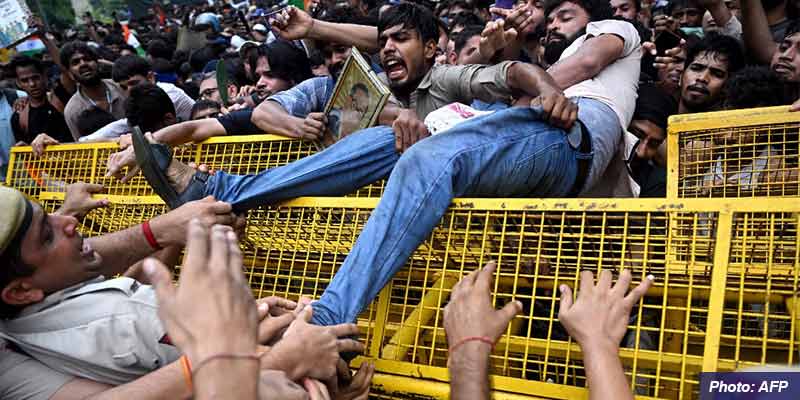
• The Delhi Police cracked down on the protesters gathered at Jantar Mantar for the ‘Chalo Sansad’ march called by the Cockroach Janata Party on July 20.
• People gathered at Jantar Mantar for the march to Parliament despite heavy security arrangements, multi-layered barricades and prohibitory orders under Section 163 of the Bharatiya Nagarik Suraksha Sanhita.
• Scores of CJP supporters were injured in clashes with police who tried to stop their march to Parliament.
• Police used force, including lathicharge and tear gas shells, after protesters attempted to march towards Parliament, with both sides blaming each other for the violence.
• The CJP alleged brutality and accused the security personnel of using excessive force against protesters.
• Delhi Police said nearly 180 people, including 118 security and police personnel and 60 protesters, were injured when they clashed in New Delhi.
• CJP founder Abhijeet Dipke was also picked up from the place.
• Both houses of Parliament were adjourned repeatedly amid an uproar by opposition members over the issue.
What is Cockroach Janata Party?
• The Cockroach Janata Party (CJP) was started with a comment from Chief Justice of India Surya Kant, referring to unemployed youngsters as cockroaches.
• The movement, founded by Abhijeet Dipke, began as an online satire.
• It has drawn the support of millions of young citizens online.
What led to the protests?
• The CJP protesters have been sitting at Jantar Mantar since June 20 demanding the resignation of Union Education Minister Dharmendra Pradhan over alleged irregularities in the NEET examination, reforms in the examination system and justice for affected students.
• The movement galvanised after the support of activist Sonam Wangchuk, who began a hunger strike on June 28.
• On July 18, Wangchuk was forcibly moved to a hospital by the authorities.
• Wangchuk urged people to join the Parliament march on July 20 in large numbers.
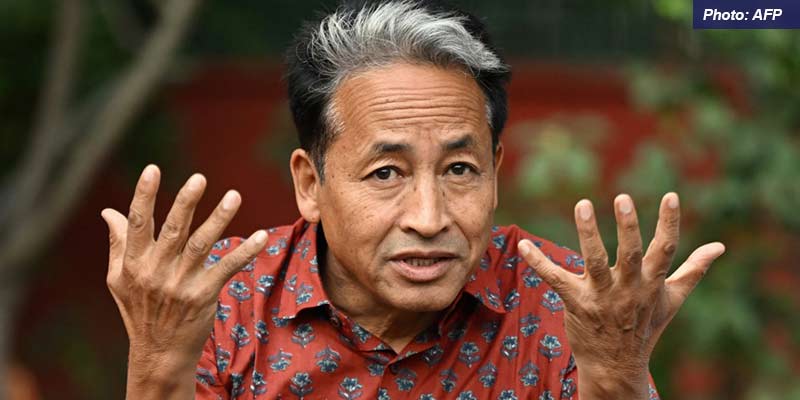
Who is Sonam Wangchuk?
• A mechanical engineer by education, activist Wangchuk has been working in the field of education reform for more than 30 years.
• In 1988 he founded Students’ Educational and Cultural Movement of Ladakh (SECMOL), which aimed to bring reforms in the government school system in Ladakh.
• He was instrumental in the launch of ‘Operation New Hope’, a triangular collaboration of the government, village communities and the civil society to bring reforms in the government schools system.
• The programme involved formation of village education committees to take ownership of state schools, training of teachers in child friendly ways and re-writing and publishing localised text books for Ladakh.
• Wangchuk teaches innovation at the school, where together with the students he designed and built solar heated buildings that are low cost, made of earth and mud but maintain +15°C even when the outside temperature is -15°C in Ladakhi winters.
• In order to solve the water crisis facing mountain regions due to climate change and fast melting glaciers he also invented the Ice Stupa artificial glacier which stores the wasting stream waters in winter in the form of giant ice cones or stupas and releases the water in late spring when farmers need water.
• In September 2025, Wangchuk was detained two days after the protests over demands for statehood for Ladakh and its inclusion under the Sixth Schedule of the Constitution rocked Leh. He was released from Jodhpur Central Jail on March 14, 2026, after the Union government revoked his detention under the National Security Act (NSA).