
- India
- Oct 19
Article 21 and the right to access internet
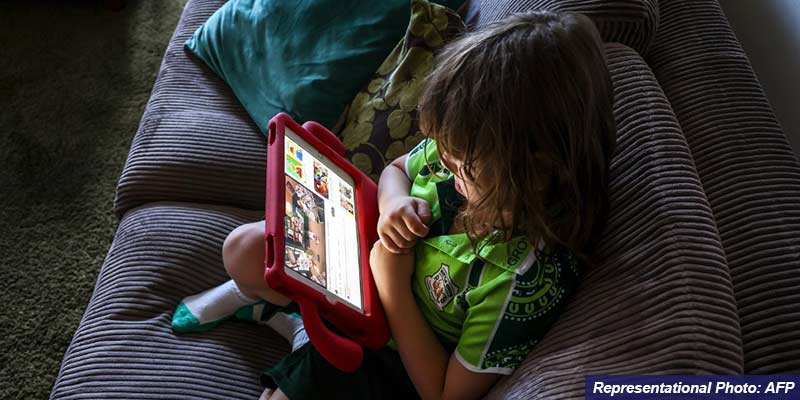
• The Supreme Court has declared the right to access and use the internet as a fundamental right of children.
• A bench of justices J.B Pardiwala and Vinod Chandran directed the Centre to create a national database for detection of sexually explicit visual content depicting minors on digital platforms and their removal.
• The Supreme Court passed the order on a plea of NGO Just Rights for Children Alliance, in which it had taken note of an alarming increase in child sexual exploitation and abuse material (CSEAM) that was being circulated on social media platforms.
Points highlighted by the SC:
• The internet is, without a doubt, the marketplace of ideas, creative expression and information. Its value is priceless, not merely in the information it holds, but in the access it affords, to adults and children alike.
• For many children, particularly in remote areas, it is often the only source of learning and information.
• However, the internet, as it exists today, is far from safe for our children.
• There has been a growing, yet short-lived tendency across the globe in the recent past to limit the access of children below a certain age to the internet, more particularly to social media platforms, in the name of their safety.
• Any measure for the safety of children must be directed at the harmful material and those responsible for the same, and not at the children themselves.
• The wrongdoer is the person who creates, circulates, sells or seeks out such material, and the intermediary which fails to detect and remove the same.
• To keep the child away from the internet on account of such failures would be to mistake the victim for the problem.
• The right to freedom of speech and expression under Article 19(1)(a) of the Constitution has never been understood as being confined to the right to speak alone. It has always been construed to include the right to know and to receive and impart information and ideas.
• In Anuradha Bhasin vs Union of India (2020), a three-Judge bench of the apex court examined the legality of suspension of internet services. It held that the freedom of speech and expression and the freedom to carry on any trade or business through the medium of the internet is constitutionally protected as a fundamental right under Article 19(1)(a) and 19(1)(g) of the Constitution.
• The right to access and use the internet is a fundamental right of every individual under Article 21 read with Article 19(1)(a) of the Constitution.
• The children, irrespective of their age, enjoy the same rights, and to deny the same altogether would be as absurd as saying children below a certain age do not have a conscience worth protecting or a freedom of speech worth expressing.
• The safety of the children and their freedom are not at odds with each other. The children are entitled to both.
• Any blanket restriction on the access of the internet by children is nothing more than unproven measures of proven disproportionality.
• However, this does not mean that there should be no age-based restrictions. Some form of safeguards are necessary for the safety of children online and the moderation of the content accessible at their fingertips.
• There could be a system that places greater emphasis on parental consent, guidance and oversight on the access to social media platforms by children along with a dedicated “child mode” for such accounts with measures proportionate to the object of ensuring their safety.
• These may include accounts being made private by default, restrictions on contacts and messages from unknown adults, moderation of advertising and content accessible to children.
• Such measures may be implemented for pre-teens, with a reasonable and proportionate means to verify parental consent in respect of the same.